Altbau in Cologne: gabled facades, Rhine light
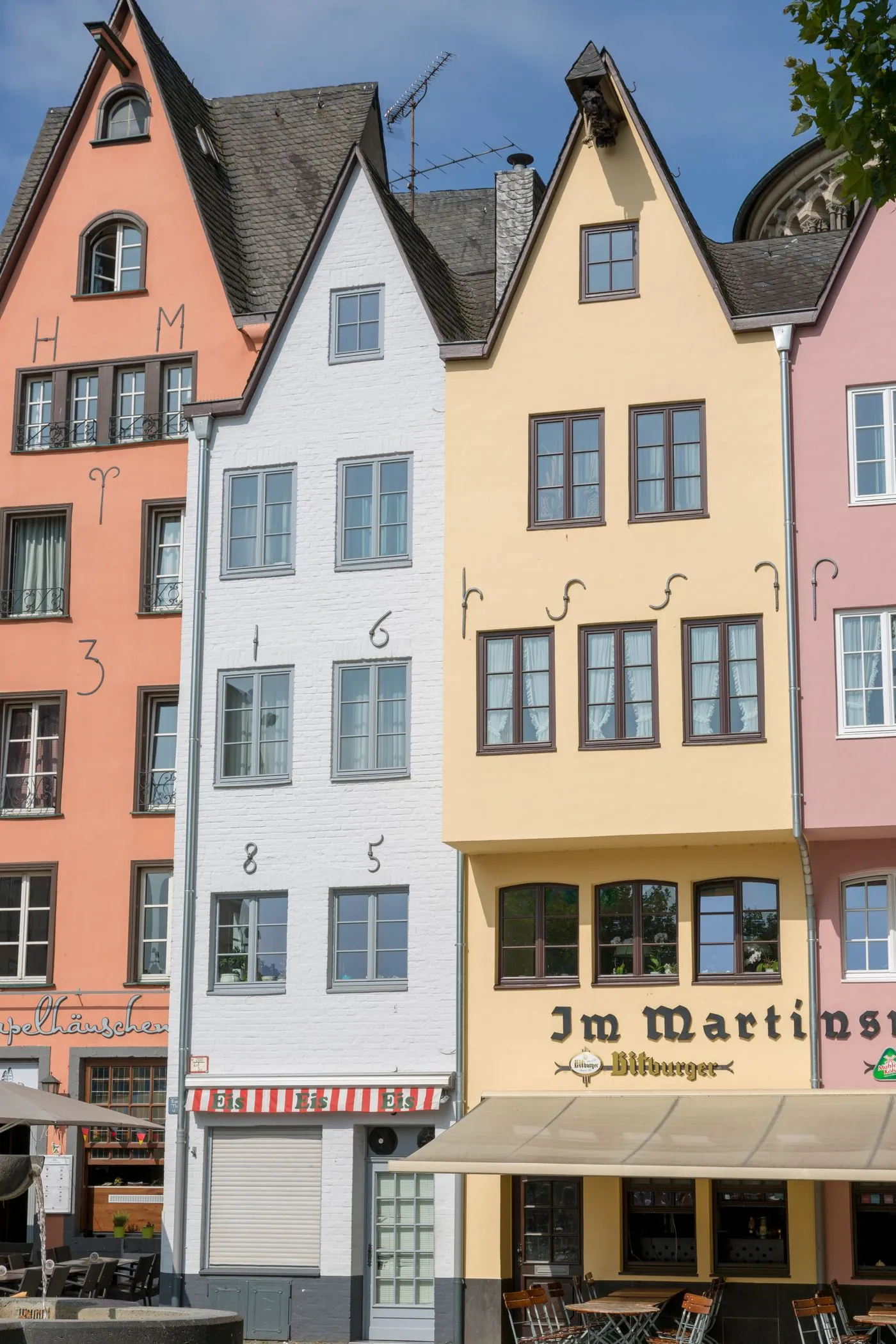
Cologne lost its medieval core to bombs, but the ring belt of Gründerzeit tenements survived almost intact: one of Germany's largest connected Altbau stocks, wrapped around the city in the horseshoe between the Rhine and the outer ring. It's a tenant city — young, media- and trade-fair-driven, and permanently short of flats, which is why rents are climbing even as the asking level paused this quarter.
Where the Altbau is
- Belgisches Viertel & Neustadt-Süd — the showpiece: ornate stucco facades, balconies, high ceilings; the priciest Altbau addresses.
- Ehrenfeld — worker- and merchant-era blocks, rougher but genuine; the main unsanitised-volume market and a long-time student-and-creative quarter.
- Nippes & Agnesviertel — solid mid-range tenements, strong neighbourhood culture, good value between Ehrenfeld and the premium ring.
- Südstadt — canal-side streets and suburban villas near the Rhine; quiet, established, tightly held.
Rents and prices
| Area | Typical rent (renovated) | Purchase, per m² |
|---|---|---|
| Belgisches Viertel | 14–19 €/m² | 5.000–7.000 € |
| Ehrenfeld | 10–14 €/m² | 3.600–5.000 € |
| Nippes / Agnesviertel | 11–15 €/m² | 4.000–5.500 € |
| Südstadt | 12–16 €/m² | 4.500–6.200 € |
Cologne's Q2 2026 asking price for existing flats sits near 4.250 €/m² with existing-stock rents around 13.00 €/m² — roughly Frankfurt levels for rent, at noticeably lower purchase prices. The gap between Cologne rents and Berlin-style purchase prices is one of the more forgiving entry tickets in a top-five German city.
Renovation specifics
- Brick and stucco belt. Facades alternate between brick and render; repointing and stucco restoration are routine Cologne trades. window replacements in the ring belt usually need timber profiles to satisfy the streetscape — aluminium-clad is accepted in most non-listed streets.
- Historic-centre rules. Only fragments of the pre-war core remain; where they do (near the Fischmarkt or the Rhine front), Denkmal or cityscape rules apply and approvals are strict. The ring belt itself is mostly ensemble-light — the easiest approvals among Germany's big cities.
- Trade prices: mid-range. A deep trade market and NRW competition keep prices close to the national average, slightly above Leipzig, well below Munich. Trade-fair season can squeeze scheduling.
Unrenovated Ehrenfeld stock trades 25–40% below renovated ring-belt equivalents, and the renovation-to-rent uplift there is proven: modest budgets, real rent steps. The main risks are damp party walls and inherited owner-community work. Run your object through the calculator before bidding.
Who Cologne suits
Buyers who want a top-five city Altbau market at the friendliest entry price; investors betting on continued rent growth (+5.4% YoY is the strongest signal in the current radar); landlords comfortable with tenant-heavy, young demand. Who it doesn't suit: buyers who need anonymity and order (Cologne is loud, alive and kölsch) and those expecting villa-quality quiet in the ring belt.
Building history and fabric in Cologne
Cologne's Gründerzeit belt grew once the city could expand beyond its levelled medieval fortifications. In Ehrenfeld, Nippes, the Südstadt and the Belgisches Viertel, four- and five-storey apartment houses with rendered or brick facades, decorated ground floors and narrow, deep plots still line the streets. Perimeter blocks are closed and inner courtyards tight — an urban layout that gives plenty of daylight at the front and very little at the rear.
One difference from other Altbau cities matters: Cologne was hit hard in the Second World War. Many quarters are a mix of surviving Gründerzeit houses, rebuilt facades and post-war buildings on the same street. For renovators that means construction year, floor build-up and wall thickness can change from house to house even behind identical facades. Original timber beam floors, cap ceilings over corridors and lime plaster sit alongside massive post-war slabs and different plaster systems — a building survey before purchase is essential.
Renovating in Cologne: heritage, Rhine, mixed fabric
City heritage officers and the state authority list numerous individual monuments and monument areas, especially in the closed Gründerzeit ensembles. Practical issues from the Rhine location join them: damp in plinths and cellars, flood preparedness in nearby streets, and the question of how a cellar can be used without damaging the fabric.
- Check the year per building — reconstruction and post-war infill change structural behaviour and insulation, even where the facade looks Gründerzeit.
- Agree the facade — cornices, stucco and window divisions are often fixed in monument areas; speak to heritage officers early.
- Cellar and plinth — measure damp and salt loading before insulating, lining or converting to living space.
- Use available funding — federal grants for envelope and heating plus North Rhine-Westphalia state programmes, applied for before commissioning.
Cologne's Altbau flats are sought after, so keeping original details pays: restored stucco ceilings, refinished floorboards and repaired box windows often do more on the market than a full gutting. Technically too, it makes sense to fix the envelope first and size the heating afterwards.
Run the Ehrenfeld numbers
Choose the mid-range region factor for Cologne pricing and model your flat line by line.
Open the calculatorRent and price figures are researched indicative ranges (October 2026) and vary strongly by street, condition and floor. No paid recommendations.