Altbau in Dresden: craftsmanship under heritage rules
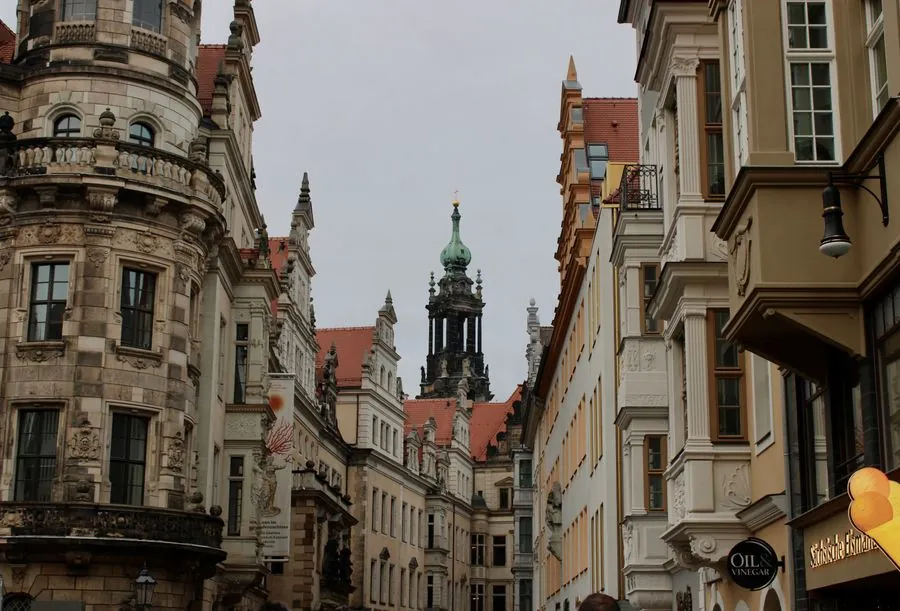
Dresden's Altbau story is unusual: the great Gründerzeit belt sits around a rebuilt baroque core, and the city's rebirth since 1990 has created a restoration culture few places can match. For Altbau owners this means outstanding craftspeople and demanding rules — usually at prices below Berlin and Munich.
Where the Altbau is
- Äußere Neustadt — the largest closed Gründerzeit quarter in Saxony: bars, courtyards, the famous Kunsthofpassage, high heritage density.
- Innere Neustadt — the baroque-adjacent quarter next to the Elbe: quieter, partly protected, premium.
- Striesen & Johannstadt — the family belt east of the centre: solid stock, generous flats, good value.
- Blasewitz — the dignified villa district across the Blue Wonder bridge.
Rents and prices
| Area | Typical rent (renovated) | Purchase, per m² |
|---|---|---|
| Innere Neustadt | 10–14 €/m² | 4.200–6.000 € |
| Äußere Neustadt | 9–13 €/m² | 3.800–5.500 € |
| Striesen / Johannstadt | 8–11 €/m² | 3.200–4.500 € |
| Blasewitz | 9–13 €/m² | 3.800–5.800 € |
Renovation specifics
- Façade craftsmanship is a Dresden signature. The rebuilt Altstadt trained a generation of stucco, sandstone and façade specialists — the best in eastern Germany, at reasonable rates.
- Elbe valley climate. Fog and river humidity make moisture management the number-one renovation topic: breathable lime plaster, functioning cross-ventilation and sound window reveals matter more than here than in drier cities.
- WWII and GDR layering. Many buildings mix 19th-century fabric, war repairs and prefab-era retrofits. Have the layering mapped before you plan; surprises live in the wall build-ups.
Dresden enforces façade and roofscape rules more consistently than most cities — especially in the Neustadt ensembles. The upside: the city maintains dedicated grant programmes for heritage façade work on top of federal funding.
Who Dresden suits
Owners who value craftsmanship and are willing to work within heritage processes; buyers wanting big-city culture at Saxon prices; anyone whose renovation priority is façade and substance restoration. Who it doesn't suit: fast movers who want to swap windows and paint in a fortnight — heritage processes take longer here.
Building history and fabric in Dresden
Dresden's Altbau has two faces: the densely built Gründerzeit quarters of the Äußere Neustadt and Striesen with closed perimeter blocks, stucco facades and rear courtyards — and the leafy villa streets of Blasewitz, Weißer Hirsch and the Elbe slopes. One offers tall storeys and tight courtyards, the other broad floor plans, large windows and deep front gardens. Between them lie the reconstructed inner-city areas, where historic facade images meet post-war structures.
Wartime destruction and subsequent rebuilding make the survey especially important: plaster, masonry and floors can differ within a single street. Surviving Gründerzeit houses typically have timber beam floors, lime plaster, floorboards and tall windows; villa districts add elaborate roofscapes, sandstone elements and conservatories. Proximity to the Elbe brings damp and flood questions that should be settled before any cellar conversion.
Renovating in Dresden: ensembles and the Elbe
The Saxony state heritage office and city heritage officers look after numerous individual monuments and ensembles, including whole Gründerzeit streets. Facade changes, loft conversions and window replacement are worth agreeing in advance; near the Elbe, flood protection, plinth damp and insurance questions join the list.
- Check the ensemble — in closed streets, facade rhythm, window divisions and roof form are often protected together.
- Distinguish construction periods — reconstruction and original fabric need different plaster and insulation systems.
- Maintain the roofscape — dormers, chimneys and tiles are defining features of the villas and heritage-relevant.
- Align funding — bring federal grants, Saxony programmes and heritage conditions together before applying.
With Dresden's Altbau it pays to treat original details as part of the concept: restored stucco ceilings, repaired windows and a fixed roof frame preserve character and prevent the moisture problems that dense, incompatible materials create in historic masonry.
Price your Dresden project
Run your flat through the calculator — Saxon trade rates keep the numbers friendly.
Open the calculatorRent and price figures are researched indicative ranges (October 2026) and vary strongly by street, condition and floor. No paid recommendations.