Altbau in Frankfurt: villas, blocks and banker's money
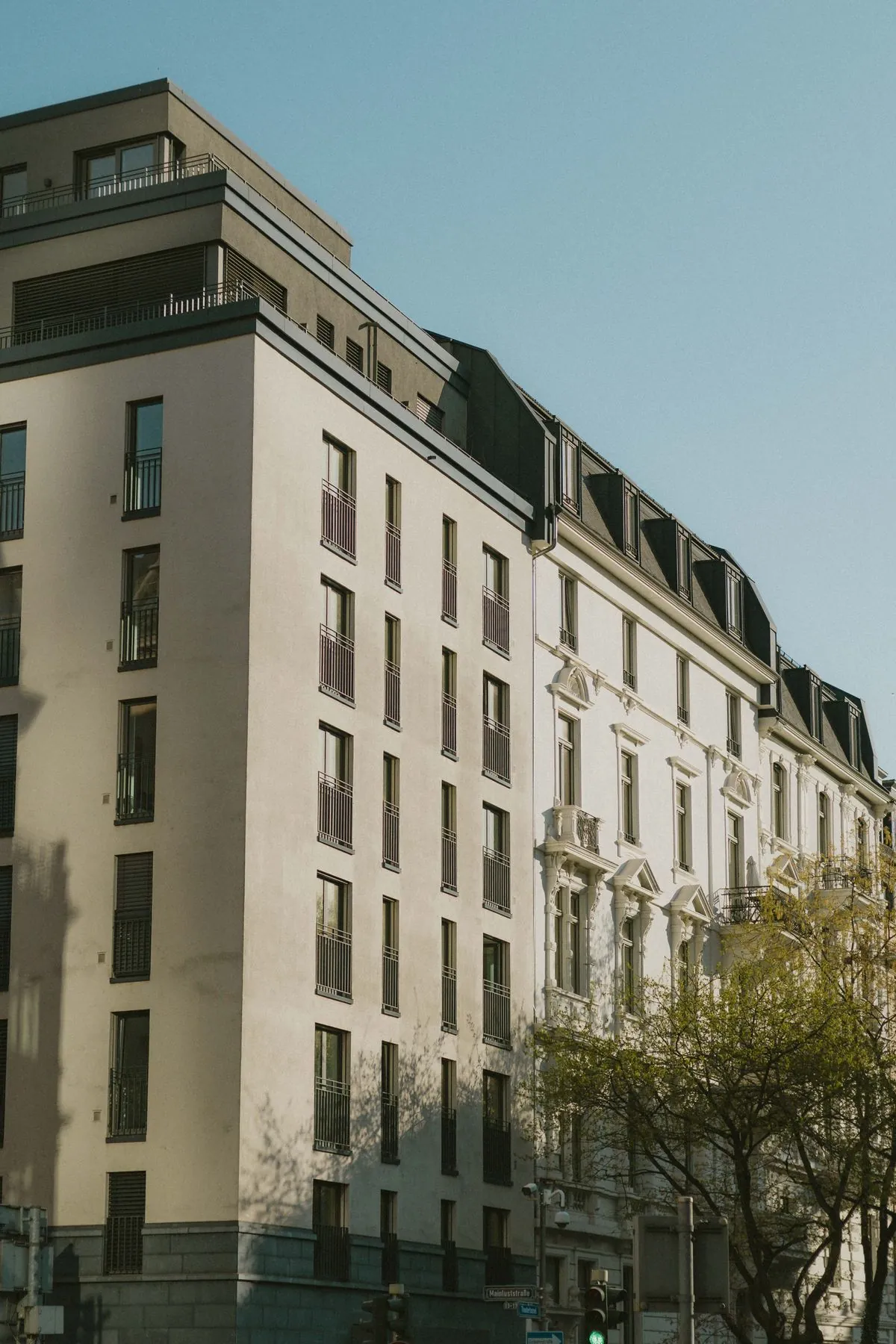
Frankfurt is a city of contrasts, and its Altbau is no exception: the Westend holds Germany's densest collection of Gründerzeit villas — the quarter that survived because its palais later housed offices — while the Nordend and Ostend carry classic tenement blocks at more civilised prices. The skyline of the financial capital rises right behind them.
Where the Altbau is
- Westend — the villa belt: freestanding Gründerzeit palais, tree-lined avenues, the most prestigious (and priciest) addresses, much of it converted from offices back to housing.
- Nordend — the large tenement belt north of the centre: dense block-edge construction, good substance, the volume market for Altbau flats.
- Ostend & Bornheim — lively, slightly cheaper, Berger Straße culture, many unrenovated back buildings.
- Bockenheim & Sachsenhausen — solid worker- and merchant-era stock at the edges of the premium zones.
Rents and prices
| Area | Typical rent (renovated) | Purchase, per m² |
|---|---|---|
| Westend (villa / palais) | 18–26 €/m² | 8.500–13.000 € |
| Nordend | 13–18 €/m² | 6.000–8.500 € |
| Sachsenhausen / Bockenheim | 12–16 €/m² | 5.500–8.000 € |
| Ostend / Bornheim | 11–15 €/m² | 5.000–7.500 € |
The banking economy sets the ceiling: expat relocations and corporate leases keep demand for renovated Westend units permanently high. On the other hand, Frankfurt's stock of unrenovated Nordend flats is one of the last meaningful renovation-value gaps in a German metropolis of this size.
Renovation specifics
- Office-conversion expertise. Decades of converting palais to offices — and back — left Frankfurt's trades unusually good at services routing, floor rebuilds and fire-sound upgrades inside old fabric. The skill exists; it is billed accordingly.
- Ensemble protection in the Westend. The Westend is a protected cityscape ensemble (Gesamtanlage): façade changes, roof windows and window replacements need approval, though the practice is less doctrinaire than Munich's.
- Metropolitan trade prices. Expect the calculator's "metropolis" factor: 10–25% over the national average, with Rhine-Main scheduling pressure around banking-finance project peaks.
Unrenovated Nordend flats sell at 20–35% below renovated neighbours. With trade prices between Leipzig and Munich and strong tenant demand after completion, the numbers often work — if you budget the full envelope and the stairwell (still owner-community territory). Run yours through the calculator before offering.
Who Frankfurt suits
Buyers who want metropolis infrastructure with a genuine renovation market; investors focused on rental yield rather than lifestyle stories; anyone tied to the airport or the financial district. Who it doesn't suit: bargain hunters in the Westend (that ship sailed) and people who want a Berlin-style neighbourhood culture at Leipzig prices.
Building history and fabric in Frankfurt
Frankfurt's Altbau concentrates in the Gründerzeit belts outside the destroyed old town: Westend, Nordend, Bornheim, Bockenheim and Sachsenhausen. Between 1870 and 1914, apartment houses appeared with representative sandstone and rendered facades, tall storeys, bay windows and richly detailed stairwells. The Westend was bourgeois and generously cut from the start, Bornheim and Bockenheim denser and more craft-based — a difference still legible in floor plans and daylight.
Wartime destruction hit Frankfurt harder than almost any other German city: few complete ensembles survived. Many houses are therefore individual survivors among post-war buildings, and stairwell, facade or roof can date from different periods. That is an invitation to look closely: where original fabric remains, lime plaster, timber beam floors, tall windows and stucco are the valuable parts; where rebuilding took place afterwards, different rules apply for insulation and moisture.
Renovating in Frankfurt: density, heritage, funding
Frankfurt combines a very tight housing market with an unusually high concentration of listed individual buildings. Facade work, window replacement or loft conversion should start with a status check at the Hesse state heritage office; municipal bylaws and, for rented flats, tenancy law and the local rent index also apply.
- Treat each case separately — because of wartime gaps, fabric differs by building; standard renovation recipes often point the wrong way here.
- Prioritise sound insulation — inner-city traffic makes windows and reveal seals the most effective first measure.
- Envelope before services — plan windows, roof and facade first, then size the heating; a heat pump in an unsanitised building ends up oversized.
- Combine funding — KfW/BAFA programmes with Hessian state funds and heritage approvals.
High square-metre prices tempt owners to convert every loft and courtyard edge. Technically and legally, careful repair of the existing floor plans is usually the better calculation: it preserves proportions, avoids permission risk and respects the city's grown, interrupted structure.
Run the Nordend numbers
Choose the "metropolis" region factor for Frankfurt pricing and model your flat line by line.
Open the calculatorRent and price figures are researched indicative ranges (October 2026) and vary strongly by street, condition and floor. No paid recommendations.