Altbau in Hamburg: brick, water and premium standards
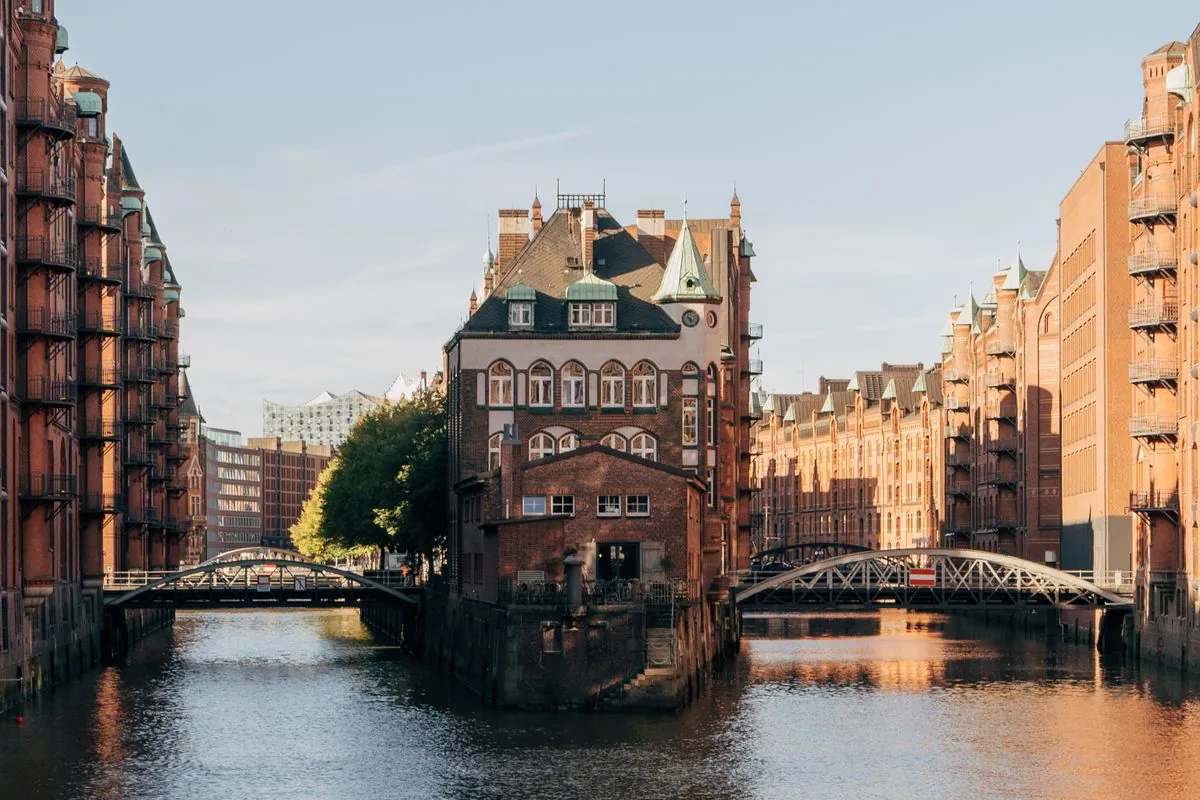
Hamburg's Altbau tradition is its own: less tenement, more merchant. Grand Gründerzeit blocks around the Alster, brick façades influenced by the warehouse districts, and a building culture shaped by money, water and north-German restraint. Premium rents meet a premium renovation standard.
Where the Altbau is
- Winterhude & Eppendorf — the Alster belt: elegant blocks, canals at the doorstep, the city's most desirable Altbau addresses.
- St. Pauli & Altona — the harbour-side belt: rawer stock, more tenement character, livelier and cheaper.
- Barmbek & Uhlenhorst — solid mix of Gründerzeit and early-20th-century blocks, good value east of the Alster.
- Ottensen — the small-town quarter: dense blocks, boutiques, strong demand.
Rents and prices
| Area | Typical rent (renovated) | Purchase, per m² |
|---|---|---|
| Winterhude / Eppendorf | 15–21 €/m² | 6.500–9.500 € |
| Ottensen | 13–18 €/m² | 5.500–8.000 € |
| St. Pauli / Altona | 12–16 €/m² | 5.000–7.500 € |
| Barmbek / Uhlenhorst | 11–14 €/m² | 4.300–6.000 € |
Renovation specifics
- Moisture is the master topic. Maritime rain and North Sea humidity make façade condition, roof drainage and window reveals the first checks in any Hamburg survey. Breathable plaster systems and well-detailed sills are the local standard.
- Brick needs different care. Many façades are clinker brick, not plaster: repointing with the correct lime mortar replaces repainting as the recurring maintenance task.
- Hanseatic quality expectations. Hamburg buyers and tenants expect flawless execution; shortcuts on materials show up directly in resale value. Trade prices sit at Berlin levels or slightly above.
Parts of the city near the Elbe carry residual flood risk. Ground-floor storage and heating placement, plus insurance terms, should be part of any purchase due diligence in low-lying streets.
Who Hamburg suits
Buyers with a solid budget who want the Altbau experience with top execution; owners who value long-term, low-drama maintenance; anyone tied to Hamburg's job market. Who it doesn't suit: value hunters — the city's Altbau is loved and priced accordingly.
Building history and fabric in Hamburg
Hamburg's Altbau was built by trade, not by the tenement barracks. Prosperous merchants erected generous apartment houses around the Alster with broad facades, tall storeys and representative stairwells; the harbour and warehouse districts produced sturdy brick and clinker structures with generous clear heights. The Speicherstadt and the Kontorhaus quarters show industrial thinking at its clearest: load-bearing frames, large window openings and floors designed for cargo loads no apartment would ever carry.
The residential quarters of the Gründerzeit and the 1920s add a distinctly north German feature: exposed masonry rather than rendered facades. Clinker brick with carefully tooled joints, glazed bricks and brick expressionism define whole streets. That changes renovation fundamentally — here you repoint rather than repaint, and the right lime mortar matters more than any coat of paint. The fabric was designed from the outset for a damp climate, with steep roofs, generous eaves and drainage that has to be reconsidered at every alteration.
Renovating in Hamburg: climate, heritage, flood risk
The first question for any Hamburg property is how the building sheds water. Driving rain from the Elbe, persistent humidity and salty winds stress facades, window reveals and gutters year round. On listed brick buildings, mortar, brick format and cleaning method must be agreed with the heritage authority; a hard cement mortar or abrasive blasting causes more damage than the dirt itself.
- Facade and joints — repoint clinker with soft lime mortar; avoid cement-rich or film-forming coatings.
- Roof drainage — check gutters, downpipes and reveal flashings before adding internal insulation or new windows.
- Position relative to the Elbe — in low-lying streets, clarify flood exposure, cellar use and insurance terms before purchase.
- Funding routes — federal grants for efficient buildings plus Hamburg state programmes; envelope before heating remains the right order.
Because Hamburg's Altbau addresses are in high demand, workmanship errors feed straight into resale value. Quality here is not a luxury but part of preserving value: properly flashed window sills, vapour-open interior plasters and documented repointing are the first things a surveyor will look at later.
Budget for a Hamburg renovation
Tick "major city" in the calculator to reflect Hamburg's trade prices.
Open the calculatorRent and price figures are researched indicative ranges (October 2026) and vary strongly by street, condition and floor. No paid recommendations.