Altbau in Leipzig: the value play
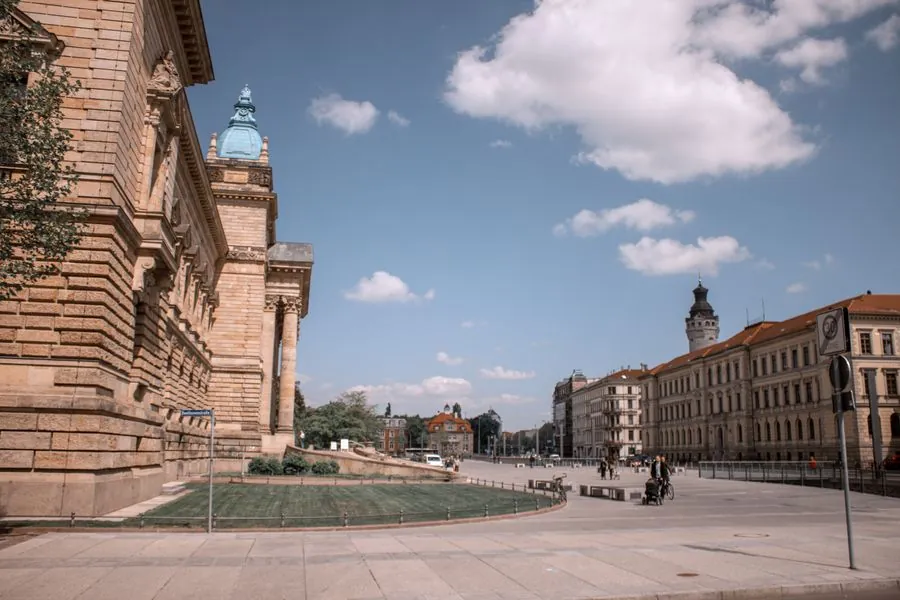
If Berlin is where Altbau prices peaked, Leipzig is where they stayed reasonable. The city has one of Germany's largest surviving Gründerzeit stocks — whole quarters that survived the war, the GDR era and the 1990s vacancy wave. For buyers and self-renovators, that makes Leipzig the most interesting Altbau market in the country.
Where the Altbau is
- Plagwitz & Schleußig — the canal district, worker-era Gründerzeit, water on three sides, the creative quarter with rising prices.
- Bachviertel & Waldstraßenviertel — the elegant west: villa-like blocks, near the Clara-Zetkin park, protected ensemble.
- Südvorstadt & Connewitz — the lively south: dense block structure, cafés, the student belt.
- Reudnitz & Volkmarsdorf — the east: raw stock, still affordable, the biggest renovation upside.
Rents and prices
| Area | Typical rent (renovated) | Purchase, per m² |
|---|---|---|
| Waldstraßenviertel / Bachviertel | 9–12 €/m² | 3.500–5.000 € |
| Plagwitz / Schleußig | 9–13 €/m² | 3.200–4.800 € |
| Südvorstadt | 8–12 €/m² | 3.000–4.500 € |
| Reudnitz / Volkmarsdorf (raw) | 6–9 €/m² | 2.200–3.500 € |
A fully renovated 100 m² Altbau flat in a good quarter can still be had for the price of 40 m² in Berlin. But Leipzig has been the fastest-rising market in eastern Germany for years — the gap is narrowing.
Renovation specifics
The city's twentieth-century history left a specific renovation profile:
- Vacancy damage. Flats empty since the 1990s often have water damage through open roofs and windows — check ceiling timbers and floor structures carefully.
- Original substance intact. Parquet, panel doors, stucco and tiled stoves often survived untouched. What looks like neglect is frequently a time capsule worth preserving.
- Cheap, available trades. Saxon trade prices run 20–30% below Berlin levels, and waiting times are measured in weeks, not seasons.
Germany's largest contiguous protected Gründerzeit ensemble rewards careful renovation: heritage-accurate façade and window work is grant-eligible, and restored properties hold their value best.
Who Leipzig suits
Self-renovators with a medium budget and tolerance for project work; buyers priced out of Berlin who want the same building culture; investors betting on continued eastern-German urbanisation. Who it doesn't suit: anyone expecting Berlin-style rents on day one — Leipzig rewards patience.
Building history and fabric in Leipzig
Leipzig has one of the most complete Gründerzeit landscapes in Germany. In the Südvorstadt, Plagwitz, Connewitz, Gohlis and the Waldstraßenviertel, perimeter blocks present representative street facades with courtyards holding workshops and commercial buildings behind them — the city grew as a trading and industrial centre, not only as a place to live. Many plots therefore combine housing and trade, with correspondingly different floor loads and access arrangements.
The fabric is classic: brick masonry, timber beam floors, lime plaster, floorboards, tall windows and often rich stucco and Jugendstil decoration. Because a substantial share of these houses went decades with only minimal maintenance, Leipzig is simultaneously a city with a great deal of original fabric and a great deal of renovation backlog. That is exactly why sequence matters: roof and drainage first, then facade and windows, then heating and interiors. Starting inside risks losing finished surfaces to moisture arriving later.
Renovating in Leipzig: monument density and redevelopment areas
A large proportion of the Gründerzeit stock is listed, frequently as an ensemble or whole complex; formally designated redevelopment areas add their own permission and funding logic. Before purchase it is worth checking the monument list and municipal bylaws — they help decide whether a loft conversion, balcony or external insulation is possible at all.
- Roof and drainage — in long-vacant buildings, inspect roof timbers and floors for moisture damage first.
- Plan for workshop courtyards — former workshops have different floor loads, finishes and fire requirements from flats.
- Keep original fabric — stucco, doors, floorboards and box windows are abundant in Leipzig and usually repairable.
- Bundle funding — coordinate KfW/BAFA, Saxony state programmes and any redevelopment-area funds.
The appeal of Leipzig's Altbau lies in the fabric, not in fast modernisation. Careful renovation with vapour-open materials and repaired rather than replaced components preserves the room heights and proportions that define the city plan — and avoids the damp damage sealed modern systems cause in old brick walls.
Plan your Leipzig renovation
The calculator's estimates run well below Berlin — try your flat's numbers.
Open the calculatorRent and price figures are researched indicative ranges (October 2026) and vary strongly by street, condition and floor. No paid recommendations.