Altbau in Stuttgart: limestone, slopes and quiet money
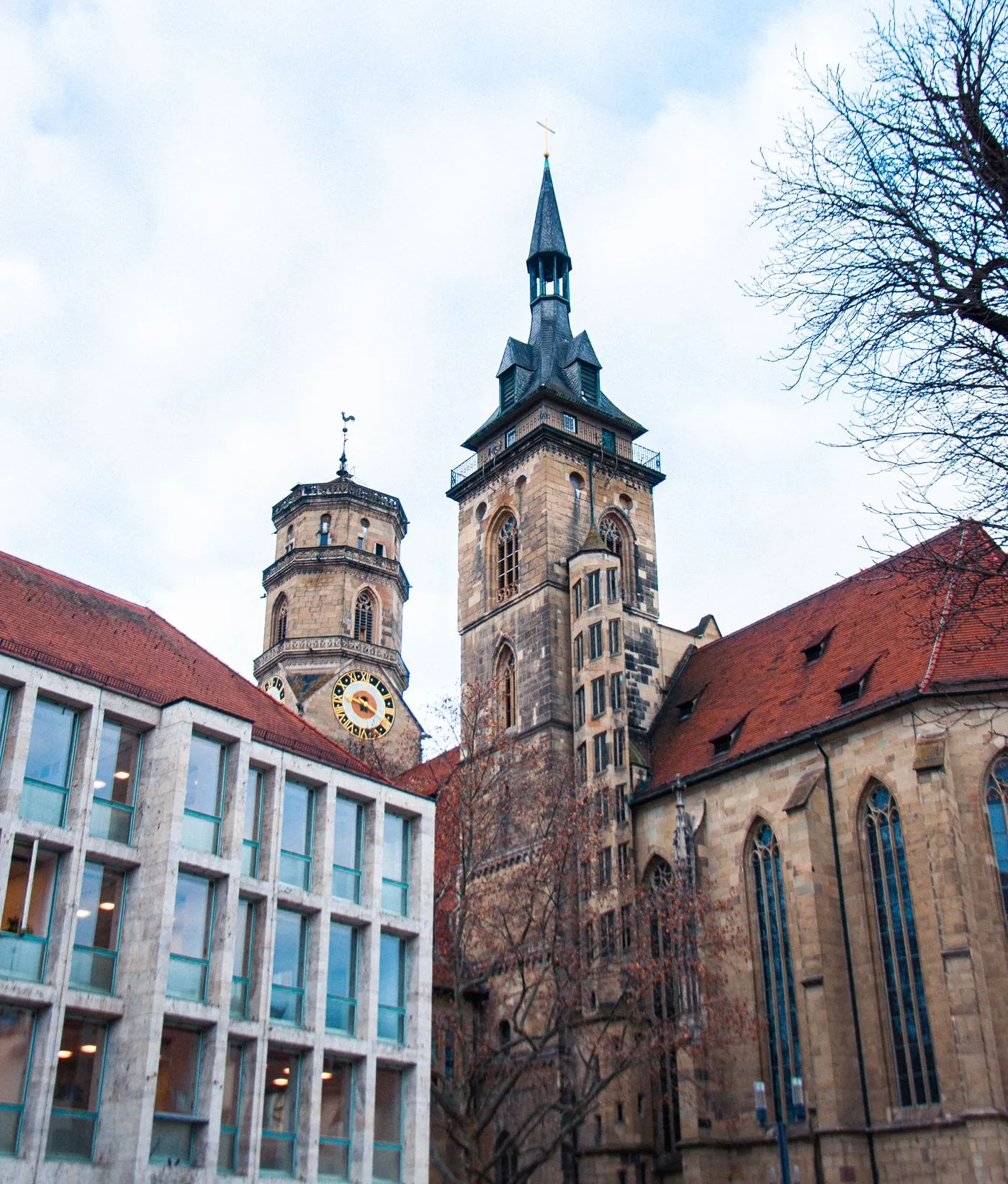
Stuttgart sits in its Kessel — the bowl of hills that makes the city both compact and vertical — and its Altbau follows the topography: west of the centre lies the city's great Gründerzeit belt, block after block of sandstone-axed tenements built for the workers and clerks of the early industrial boom. Prices here are soft-Swabian: less theatrical than Munich, more stable than almost anywhere.
Where the Altbau is
- Stuttgart-West — the Altbau quarter: dense tenement blocks, small shops, the highest density of classic flats; half-renovated stock everywhere.
- Stuttgart-Süd & Ost — slightly quieter, good substance, many owner-occupied Gründerzeit buildings with unmortgaged common property.
- Bad Cannstatt — the oldest district, spa-town facades, cheaper, with a genuine unsanitised stock on the curative-water streets.
- Fire-terrace slopes (Weinsteige, Haussmannstraße) — villas and mansion blocks with views; small volume, high price per square metre.
Rents and prices
| Area | Typical rent (renovated) | Purchase, per m² |
|---|---|---|
| Stuttgart-West / Süd | 13–18 €/m² | 4.800–6.500 € |
| Bad Cannstatt | 11–15 €/m² | 4.000–5.500 € |
| Ost / Nord | 12–16 €/m² | 4.500–6.000 € |
| Slope villas (Weinsteige) | 16–22 €/m² | 7.000–10.000 € |
The region's employer structure — Daimler, Bosch, Porsche, and their supplier ecosystems — delivers a permanent, income-stable tenant base with little speculative churn. Q2 2026 asking prices for existing flats cluster around 4.700 €/m², roughly half of Munich's, while asking rents for existing stock average 15.00 €/m².
Renovation specifics
- Sandstone window detailing. Many Stuttgart blocks have axed sandstone reveals and keystone lintels. Replacing windows means getting the reveal junction right — replica timber or slimline aluminium-clad units, planned with the Denkmalbehörde only in listed ensembles, but with the neighbours' eye everywhere.
- Slopes and moisture. Hillside buildings often show rising damp where the terrain faces them; drain and seal before finishing interior work. Basements (Keller) are common but frequently damp.
- Swabian trade discipline. Trades are meticulous and busy — the car industry's standards culture spills into building work. Expect mid-to-high prices, clean documentation, and real waiting times for good firms.
Unrenovated Stuttgart-West flats trade roughly 20–30% below renovated ones. With strong local demand from the industrial region and moderate trade prices relative to Munich or Frankfurt, the renovation-spread is dependable — budget carefully for damp treatment and the windows. Model it in the calculator.
Who Stuttgart suits
Buyers who want big-city substance without big-city volatility; investors prioritising tenant quality and long holding periods; anyone tied to the region's industry. Who it doesn't suit: yield-hunters chasing double-digit spreads (the market is too efficient) and anyone who needs nightlife density at walking distance.
Building history and fabric in Stuttgart
Stuttgart is not a classic tenement city. A narrow basin, steep slopes and a tradition of villas and workshop buildings produced a different Altbau topography: Gründerzeit apartment houses with rendered facades and stucco in the western and southern districts, villas and multi-family houses with sandstone plinths, bay windows and deeply recessed reveals on the hillsides. Where other cities have closed perimeter blocks, here storey counts, orientation and levels change from one street to the next.
The slope is the defining factor for the fabric. Rear walls often sit partly against the ground, plinths and cellars carry corresponding damp loads, and drainage decides whether an alteration works in the long term. Add timber beam floors, sometimes natural stone masonry at basement level, and steep roofs with later loft conversions. Anyone renovating here sensibly starts at the bottom: waterproofing, drainage, and establishing which walls are actually dry.
Renovating in Stuttgart: slope, structure, permissions
Besides the usual heritage and building-code questions, ground stability and drainage matter more in Stuttgart than in flat cities. Opening up load-bearing walls, adding storeys and converting lofts should always begin with a structural assessment, because slope loads and earlier alterations may have changed how the building transfers loads.
- Moisture first — check plinth, cellar and uphill walls for damp and salts before insulating or converting.
- Clarify structure — only open walls or rebuild roofs after sign-off; in Altbauten load-bearing and partition walls look identical.
- Plan the insulation — where a rendered facade must be kept, internal insulation has to be detailed carefully around reveals and floor junctions.
- Check funding — federal grants for efficient buildings and state programmes, each applied for before work is commissioned.
The slope rewards careful renovation twice over: dry plinths, functioning drainage and a coherent facade protect both the fabric and the view — and with it the value of the flat. Investing in new services first and addressing damp later means renovating twice.
Run the West numbers
Choose a southern-west Germany region factor and model your Stuttgart flat line by line.
Open the calculatorRent and price figures are researched indicative ranges (October 2026) and vary strongly by street, condition and floor. No paid recommendations.