Asbestos in old buildings: spotting it, assessing it, reacting correctly
Why asbestos comes up in period buildings at all
Asbestos is not something that appears automatically when you move into an old flat. It becomes an issue when someone drills, cuts, grinds, breaks out masonry or opens a wall. The difficulty with period buildings is that the fabric grew through several decades of work: a Gründerzeit building with a kitchen installed in the 1960s contains different materials from the untouched original structure.
Restrictions on asbestos were introduced step by step, not on a single cut-off date. The year a building was completed is therefore no proof either way, but a useful clue. Knowing the construction history helps narrow down where to look before the first wall is opened. BAuA documents the development of the rules, and TRGS 519 sets out how demolition, renovation and maintenance work must be handled.
Where to expect it
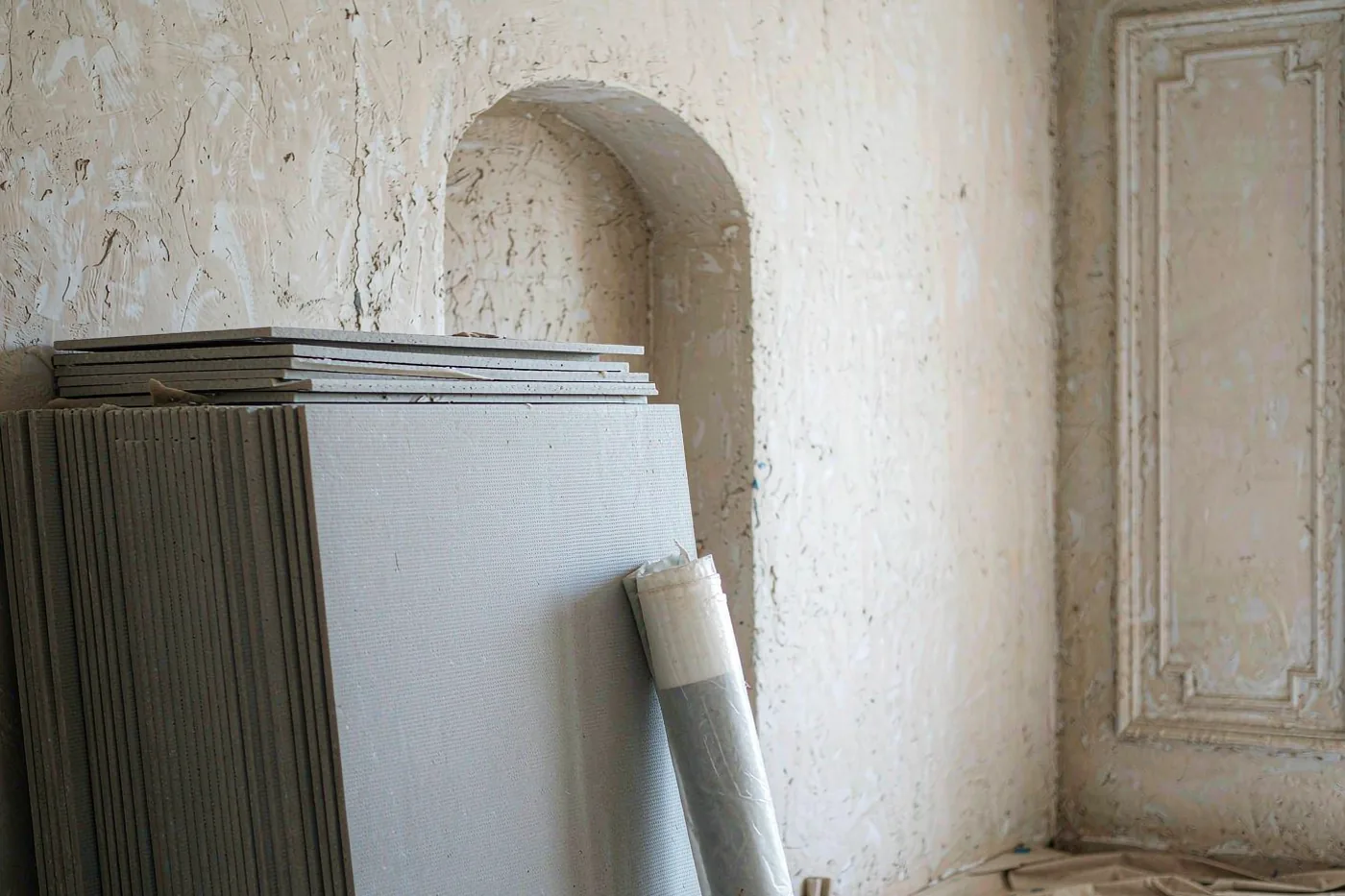
In older buildings asbestos-containing materials are found mainly where fire, moisture or temperature protection was needed: fibre-cement sheets on facades and roofs, corrugated panels and roof tiles, tile adhesives and fillers, PVC flooring and the adhesive beneath it, fire-resistant boards, insulation around radiators and pipes, and seals or linings.
One easily overlooked place is the fuse box. In many buildings asbestos board was used as a back panel or insulation well into later decades — exactly where work starts when the electrics are modernised. Anyone replacing old wiring should know what is behind the cover before removing it. Old renders and sprayed coatings can also be affected, and the handling of weakly bound material differs sharply from that of a compact fibre-cement sheet.
The limits of a visual check
Asbestos cannot be identified reliably by looking. Fibre-cement sheets may be grey, pale or coated depending on age; an adhesive under tiles is invisible anyway. Even specialists can only estimate a likelihood by eye. A dependable statement comes from a technical survey with sampling and analysis by a suitable laboratory.
That does not mean every suspect surface needs testing immediately. A survey makes sense where work is planned and where the construction phase makes it likely. Keep the results in writing: when another trade follows or the property is sold later, the documentation avoids repeated sampling. The measure matrix helps keep survey, protective measures and follow-up work as separate line items.
If you suspect it: do not drill, grind or sweep
The most important rule is simple: do not move the suspect material. Drilling, sawing, grinding, chiselling and dry sweeping can release fibres. An ordinary vacuum cleaner is not a solution either, because it whips fine fibres back into the room air. If a spot is damaged, cordon it off, do not pick up the debris, and clarify the next step before anyone continues.
Then comes the organisational side: note the year and the construction phases, take photographs, tell the property manager or landlord, and alert the contractor before work begins. Commissioning work on an older property carries information and cooperation duties; conversely, if information is insufficient, the contractor must assume asbestos conditions and protect accordingly. That is set out in the hazardous-substances rules, not buried in a specialist footnote.
Who is responsible and what the rules require
Work involving asbestos is governed by the Hazardous Substances Ordinance; TRGS 519 specifies it for demolition, renovation and maintenance. It covers risk assessment, working methods, protective equipment, instruction, waste disposal and release after completion. Depending on the risk category and the federal state, notification or approval duties apply in addition.
For owners and anyone commissioning work, the key point is that duties cannot simply be passed to the contractor. Anyone ordering work on older fabric must supply the information available and cooperate. Which authority is responsible and which notification is required depends on location and risk category — the local occupational safety authority can answer that.
How proper remediation works
The sequence starts not with removal but with the survey: record the material, take samples, analyse, document. A risk assessment follows, asking whether the material is intact and firmly bound or weakly bound and friable. That distinction determines the working method and the level of protection; far stricter requirements apply to high-risk activities.
Next comes setting up the work area with containment and extraction, removal using suitable methods and personal protective equipment, packaging and disposal as hazardous waste, then cleaning and release of the area. Only after documented release does the follow-up work begin. Every stage produces records that matter for later works and for the building file.
Tenancy, purchase and documentation
In a tenancy, who arranges asbestos remediation and how it relates to modernisation or repair is a matter of contract. For tenants the first step is to report the suspicion in writing to the landlord or managing agent and not to work on it themselves. Reducing rent purely on an unproven suspicion is not a robust strategy; a professional assessment provides the basis.
When buying a period property, ask whether records on the fabric, previous works and sampling exist. If they do not, that is not an automatic reason to walk away, but it belongs in the planning. The viewing checklist gives a structure for asking about such documents systematically instead of missing them until after completion.
Cost types rather than prices
This guide deliberately gives no figures. The effort depends on the type of material, its extent, accessibility, risk category, protective measures, disposal route and the work that follows. What holds up is the structure: survey and laboratory analysis, risk assessment and planning, notification and approval, setting up the work area, removal, packaging and disposal, cleaning and release measurement, and reinstatement of the affected surfaces.
Two quotes only become comparable when the same items are included. A quote without a survey is often not cheaper but rests on a silent assumption. Check which records are delivered and who confirms the release — not just how many square metres are named.
Limits of this guide
Whether asbestos is present in a specific case, which protective measures are required and which authority is responsible is decided by the technical survey or the competent authority — not by an article online. Legal requirements can also change; the primary sources linked below are the starting point for verification.
This is general orientation, not legal, occupational, health or remediation advice. It contains no paid recommendations and links to no service providers. For decisions on site, sampling, professional planning and a written quote are what count.
Sources and verification
- BAuA: Hazardous Substances Ordinance (GefStoffV) — overview and asbestos amendments
- BAuA: TRGS 519 — asbestos demolition, renovation and maintenance work (German original)
- Gesetze im Internet: GefStoffV, consolidated German text
These primary sources are starting points for verifying the framework; requirements and deadlines are set by the responsible authority in each case. No paid recommendations.
Frequently asked questions
Can you identify asbestos in an old building yourself?
No. A visual check can only raise a suspicion. Fibre-cement sheets, adhesive under tiles and old insulation look different depending on age and coating. Only a technical survey with sampling and analysis by a suitable laboratory gives a reliable answer.
May I drill or grind if I suspect asbestos?
No. Drilling, sawing, grinding, chiselling and dry sweeping can release fibres, and an ordinary vacuum cleaner does not help. Cordon off the area, document the suspicion, inform the landlord or managing agent and have a suitably qualified contractor assess the work.
What happens after remediation?
After removal, packaging and disposal, the work area is cleaned and release is documented. Only then does reinstatement begin. Keep the records in the building file so later trades do not need to sample again.
Planning work on an old building?
Windows, wiring, heating, floors — model every line item before you get quotes.
Open the calculatorFor orientation only — requirements depend on the building, the state and the lease. No legal, tax or energy advice. Questions for the editors: hello@altbau.com