Lead pipes in period buildings: identify, test, replace
Why an old material still matters
Lead was long valued as a material for water pipes because it was easy to work with and appeared resistant to corrosion. In period buildings it is found mainly in the domestic installation: from the water meter to the taps, sometimes in the supply lines to individual floors. The Drinking Water Ordinance requires operators of water supply systems to remove or decommission lead pipes by 12 January 2026; extensions are possible in defined cases.
The critical section is the last stretch to the tap. Water that has stood in the pipe overnight picks up more lead than water that has just run through. Flushing stagnant water is therefore a simple but not a permanent solution. Anyone renovating the domestic installation should ask about the pipe material early, rather than waiting for the first unusual test result.
How to recognise lead pipes — and why appearance is not enough
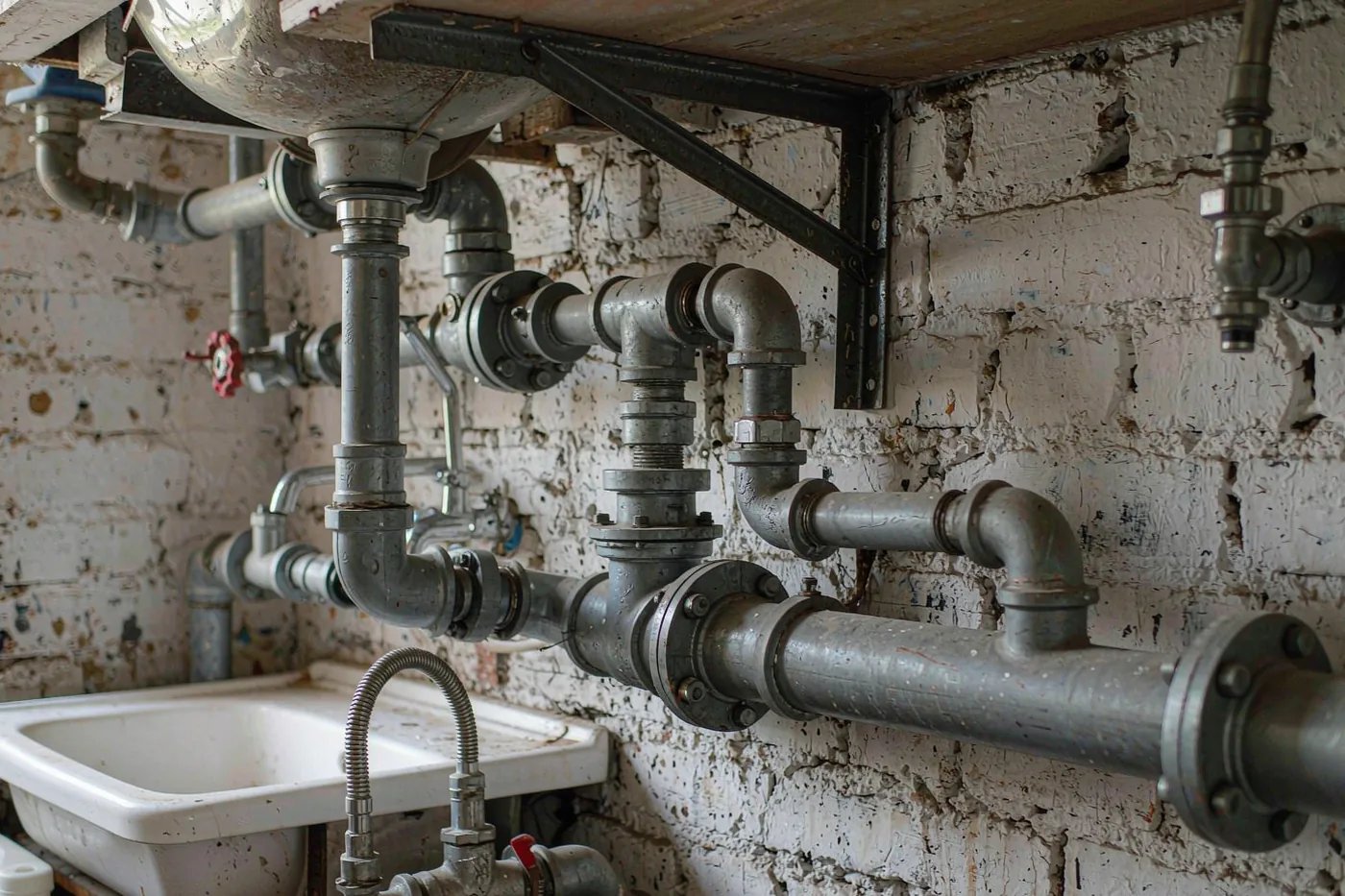
Lead pipes are often grey and matt, can be scratched with a fingernail and tend to have thick, irregular joints where sections meet. Those clues help where pipework is exposed. In most period buildings the pipes run behind plaster, in shafts or under floor coverings, and a short visible length of copper says nothing about the rest of the route.
Fittings and smaller components may also contain lead alloys. A reliable statement comes from inspection by a specialist company or an accredited laboratory — through material analysis, targeted water sampling, or both. If you suspect lead, document it in writing and do not work on the pipes yourself; in many older buildings the wiring and the water routes run close together anyway.
What is measured in the water and what the result means
What matters is not the material alone but the value at the tap. The Drinking Water Ordinance sets a limit for lead, and the Umweltbundesamt points out that lead pipes in practice regularly cannot meet it. The limit is being lowered further. A measurement always has to be assessed in the specific building and at the specific draw-off point.
Sampling technique matters: water that has stood in the pipes and a sample taken after flushing can give different results. A single sample is therefore a snapshot, not a statement about the whole house. To interpret the results you need an assessment by the public health office or an accredited laboratory — and a willingness to look at the cause, not just the number.
What operators and owners should know
The operator of a water supply system is responsible for its condition. In a detached house that is usually the owner; in a block it is the owners' association or the managing agent. The Drinking Water Ordinance covers not only removing lead pipes but also duties to inform consumers and to provide evidence to the public health office.
The deadline and any extensions are set out in the law and are not a matter for negotiation. For owners this means: collect documents on the domestic installation, establish the state of the pipework and plan the commissioning of a registered installation company in good time. The measure matrix helps treat survey, pipework, wall openings and reinstatement as separate items.
What tenants can do — and what they should not
Tenants have no access to the domestic installation but a legitimate interest in a sound drinking-water connection. The right route is a written report to the landlord or managing agent asking for a check, together with a note about unrestricted drinking water and the option of a measurement.
If you arrange a sample yourself, insist on an accredited analysis and share the result with the owner. Until matters are clarified, running the water briefly in the morning and after long periods of standing helps; for infant formula, use a secure alternative. Unilateral rent reduction or replacing pipes at your own cost are not sensible steps. The viewing checklist and the glossary help you use the right technical terms in the conversation.
Replacement: a sequence, not DIY
Replacement starts with a survey: which runs are affected, where do they lie, which taps are fed from them, and which areas need opening up? Planning follows with a registered installation company carrying out the work to generally accepted standards of good practice. In blocks, coordination with the managing agent and the tenants is added.
Then come exposing and replacing the pipes, pressure testing, flushing and disinfection, and reinstating plaster, tiles and flooring. Only after release is the system back in service. Every stage produces records that help with later works and with a future sale. If the old wiring is being renewed in the same period, coordinate both trades — the openings are often in the same places.
At purchase and during renovation
When buying a period property, the question about pipe material is more concrete than many others: it can be answered and has direct consequences. Records of previous works, installer directories and earlier water analyses belong in due diligence. If they are missing, the survey becomes part of planning rather than a surprise item after completion.
A renovation that is happening anyway is also a good moment: walls are already open, tiles are removed and coordination with heating and ventilation is easier. Planning should therefore establish early whether the water pipes are being renewed at the same time — and whether a single solution is better than two consecutive sites.
Cost types rather than prices
This guide gives no figures. The effort depends on the length and position of the pipes, the number of draw-off points, the openings required, the work of flushing and disinfection, and reinstatement. What holds up is the structure: survey and analysis, planning and release, pipework, fittings, pressure testing and disinfection, reinstatement of surfaces, and documentation.
When comparing quotes, what matters is whether reinstatement is included and who confirms the release. A quote covering only the pipes is rarely the last word.
Limits of this guide
Whether lead pipes are present, which limit applies in a given case and which deadline the public health office confirms is decided by measurement or by the competent authority — not by an article online. The requirements of the Drinking Water Ordinance may also change further.
This is general orientation, not legal, health or installation advice. There are no paid recommendations and no links to installation companies. What counts is inspection on site, a written quote and assessment by the public health office or an accredited laboratory.
Sources and verification
- Umweltbundesamt: Distributing drinking water — lead in the last few metres
- Gesetze im Internet: Drinking Water Ordinance (TrinkwV), official translation
- Federal Ministry of Health: The new Drinking Water Ordinance
These primary sources are starting points for verifying the framework; requirements and deadlines are set by the responsible authority in each case. No paid recommendations.
Frequently asked questions
How do I recognise lead pipes?
They are often grey and matt, can be scratched with a fingernail and have thick, irregular joints where sections meet. Because pipes are usually concealed, a short visible stretch proves nothing about the rest. A specialist company or an accredited laboratory can identify the material reliably.
What does a water sample tell me about lead pipes?
It measures the value at one draw-off point at one moment. Stagnant water and a sample taken after flushing can differ, so a single sample is a snapshot. Assessment is a job for the public health office or an accredited laboratory.
Do I need to do anything as a tenant?
You can report the suspicion in writing to the landlord or managing agent and ask for a check. Until it is clarified, running the tap briefly after stagnation helps. Replacing the pipes is the operator's task — usually the owner or the owners' association.
Planning work on an old building?
Windows, wiring, heating, floors — model every line item before you get quotes.
Open the calculatorFor orientation only — requirements depend on the building, the state and the lease. No legal, tax or energy advice. Questions for the editors: hello@altbau.com