Restoring old doors in period buildings: keep rather than replace
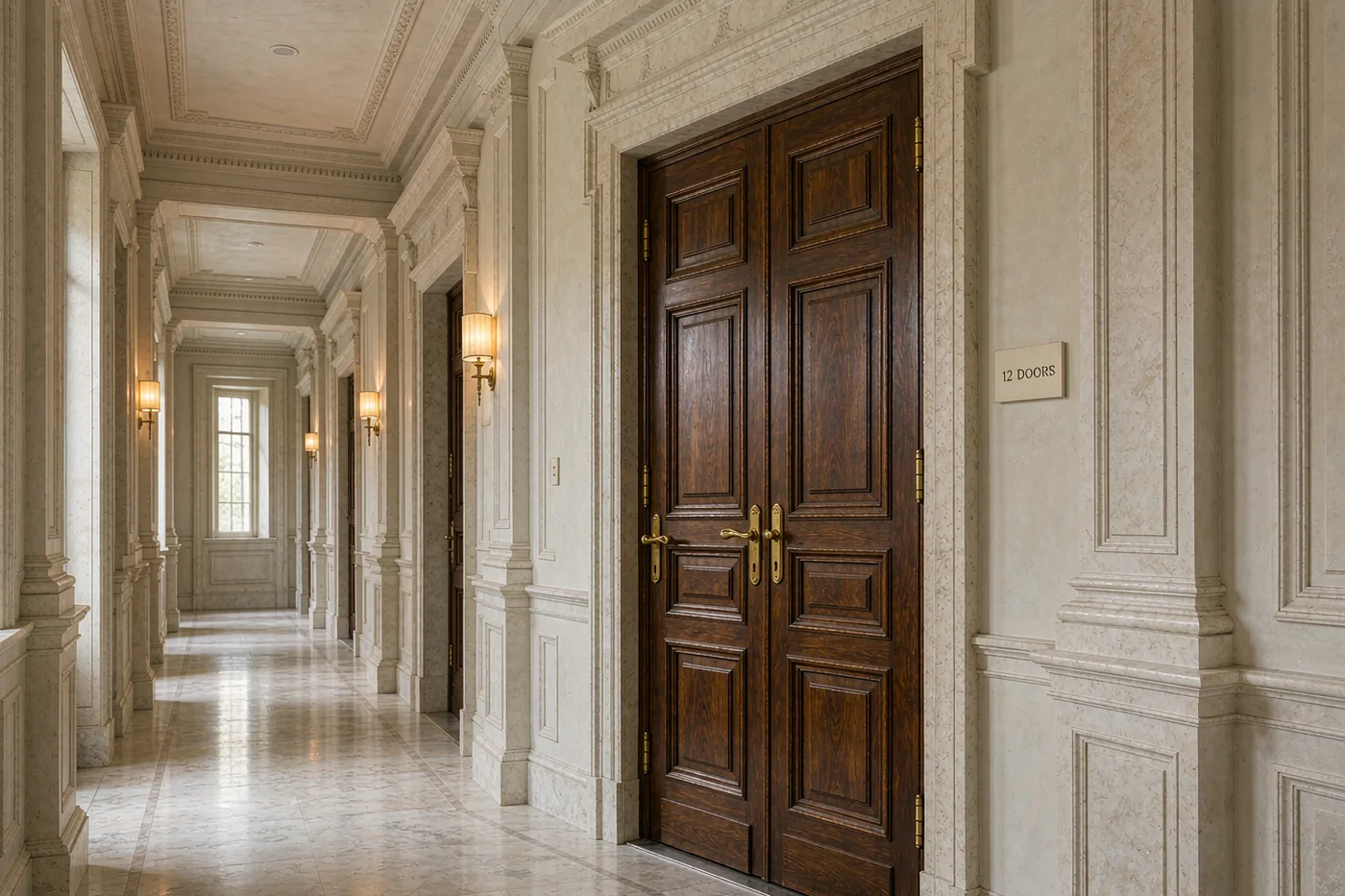
Why old doors are more than a room closure
Doors in period buildings are often solid, made from grown timber and fitted with profiles, panels and hardware no longer available in the same form. They separate rooms, shape the enfilade and carry part of the sound insulation. Replacing one with a thin standard door loses more than appearance.
The thought of a new door usually arises because of draughts, sticking leaves or poor sound insulation. Those symptoms are often a problem of hardware, seals and fitting — not of the fabric. The soundproofing page describes how sound actually travels in older buildings and why mass matters.
Three damage patterns and their causes
The first is a warped or sagging leaf: it scrapes the floor or no longer closes flush. The second is worn hinge points and loose hardware, often the result of decades of use without maintenance. The third is cracking, lifted panels or soft areas in the timber caused by moisture.
Again: three patterns, three answers. Warping can often be fixed by adjustment and re-fitting, worn hinges by repair or replacement, and moisture by clarifying the cause. Full replacement makes sense only when the fabric is no longer sound.
What moisture does to an old door
Moisture acts at the bottom edge and around hinges and locks. Timber swells, the leaf sticks and hardware loses its firm seat. Permanent moisture can become the trigger for fungal attack; the dry rot and timber pests article shows why the moisture source is clarified before repair.
The difference from a window sill is interesting: doors indoors are less exposed to rain but mechanically more stressed. Sanding and repainting the bottom edge without finding the cause means the sticking leaf returns next season.
Measure first, then decide
The sequence starts with a survey: photographs of both sides, dimensions of leaf and frame, condition of hinges, lock and seal, gaps at floor and sides. Then comes the function check: where does the door hang, where does it draught, where is sound audible?
Only then does the decision follow. Often a combination of adjustment, a new seal and a small timber repair is enough. If the door is protected, the monument authority should be consulted before intervention; the monument protection page explains the principle. The viewing checklist helps assess doors systematically when buying.
Limits of DIY work
Adjusting hardware, replacing a seal and cleaning hinges are feasible with care. Lightly removing loose paint is possible if the timber beneath is sound. Once timber is replaced, the frame moved or a door re-fitted, experience is required.
The reason is geometry: a leaf must have even gaps on three sides and still move freely. A millimetre too much in the wrong place means scraping or draughts. Working without measurements means trial and error at the expense of the fabric.
What proper restoration consists of
A sound restoration starts with a moisture check, continues with repair of timber and hardware and ends with fitting that respects gaps and seals. On old doors the coating is not purely aesthetic: it protects the timber but must not seal moisture in completely.
Completion includes a function check over several days: does the door close without force? Does it stay where left? Is the floor gap even? Photographs and measurements are later the basis for further works and for assessment at sale.
Use, tenancy and value retention
In tenancies, door maintenance is often shared: minor care may sit with tenants while fabric and replacement rest with the landlord. A sticking or damp door should be reported in writing before an adjustable problem becomes consequential damage.
For owners, retained doors are a quality signal. They show the house has been treated with care. At sale, documented restoration is more credible than a new door that does not suit the period.
Cost types rather than prices
This guide deliberately gives no figures. The effort depends on whether only hardware and seals are worked on, whether timber is repaired, the frame adapted or a new finish needed. What holds up is the structure: survey, moisture check, timber work, hardware work, fitting, documentation.
Do not compare quotes only per unit. A quote for a standard door and one for restoration describe different tasks and different service lives of the fabric. Check whether the moisture cause and the fitting appear in the quote at all.
Limits of this guide
Whether a door can be retained, how a profile should be repaired and what applies to fire, acoustic or smoke protection is decided by inspection on site and the responsible authority — not by an article online. Requirements can change; the linked institutions are the starting point for verification.
This is general orientation, not construction, timber-protection or monument advice. There are no paid recommendations and no links to door dealers. What counts are the survey, a written quote and documented execution.
Sources and verification
- dena — German Energy Agency: retrofits in existing buildings
- Verbraucherzentrale — consumer advice (German original)
- DIBt — German Institute for Building Technology (German original)
These primary sources are starting points for verifying the framework; requirements and deadlines are set by the responsible authority in each case. No paid recommendations.
Frequently asked questions
Does a new door always improve sound insulation?
No. Sound also travels through the frame, gaps and adjacent walls. A heavy door helps little if the seal is missing or the floor gap is wide. Only mass, sealing and fitting together work.
Can I repaint an old door myself?
If the timber is dry and sound, careful cleaning and repainting are possible. What matters is not trapping moisture and removing hardware first. With unclear fabric, check before painting.
When should a door be replaced?
If the fabric is soft, cracked or no longer structurally sound, or if requirements such as fire or smoke protection cannot be met. Before that, repair of hardware, seals and timber is often worthwhile.
Planning work on an old building?
Windows, wiring, heating, floors — model every line item before you get quotes.
Open the calculatorFor orientation only — requirements depend on the building, the state and the lease. No legal, tax or energy advice. Questions for the editors: hello@altbau.com