Denkmalschutz: buying and renovating a listed building
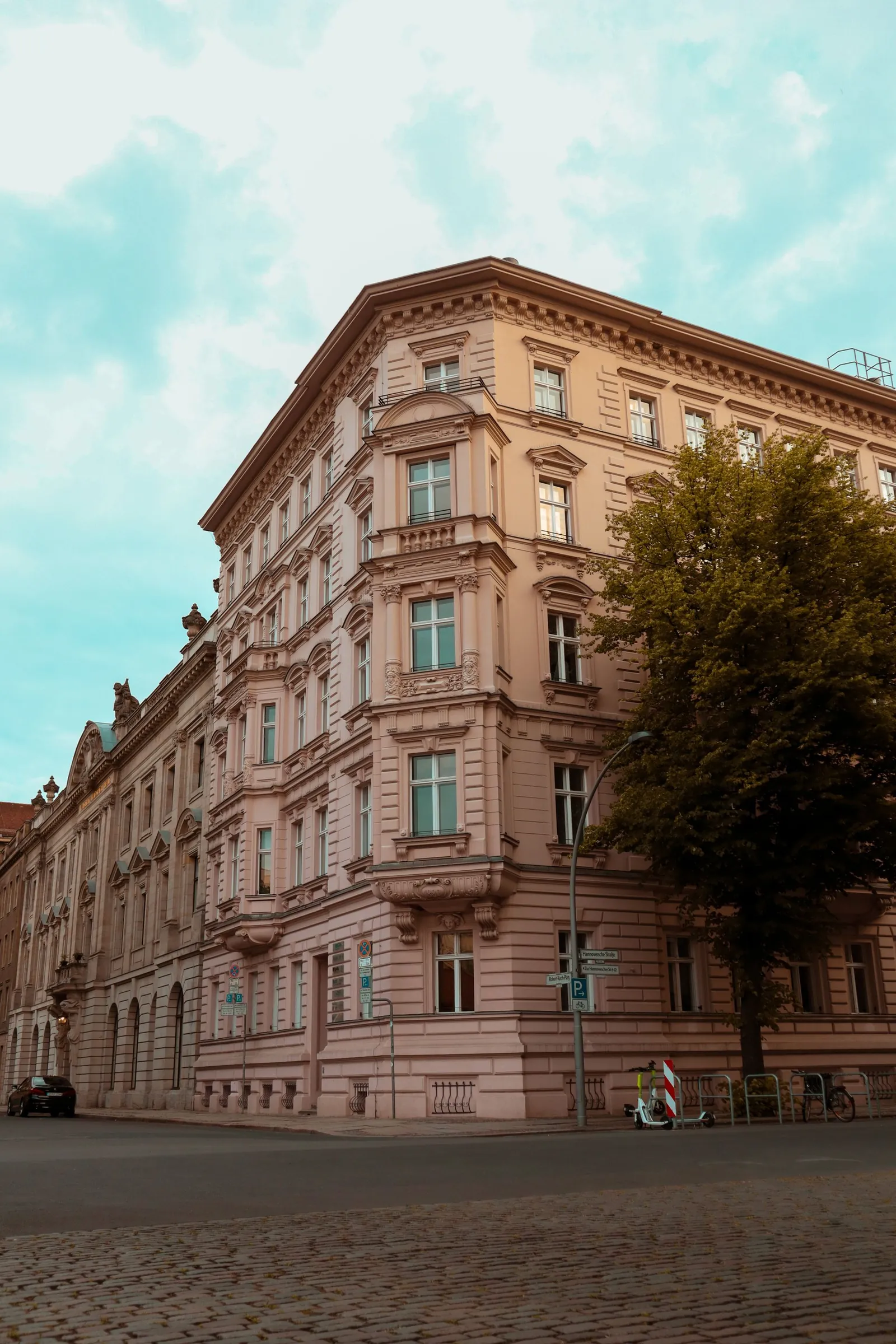
A listed building (denkmalgeschützte Immobilie) is the most consequential version of an Altbau. Buy one and you get craftsmanship no new build can offer, an address that rarely loses its character — and a second, unelected co-owner: the Denkmalbehörde, the heritage authority, which has a say over windows, facade, roof and sometimes the floor plan. In return, German tax law offers one of the most generous renovation subsidies in Europe, written directly into the income tax code. Whether the deal is worth it depends almost entirely on doing your homework before signing. This guide explains what protection actually covers, what the §7i EStG special depreciation really requires, and which documents you must verify as a buyer.
What "denkmalgeschützt" actually means
Heritage protection is state law (Landesrecht) — every Bundesland has its own Denkmalschutzgesetz, and the details differ. But the structure is similar everywhere, and it distinguishes two levels of protection:
- Baudenkmal (the object). The individual building itself is listed in the Denkmalliste because of its historical, artistic or scientific significance. This is the strong form: the protected substance — original stucco, stairwell, window frames, sometimes interior fixtures — may not be altered without permission.
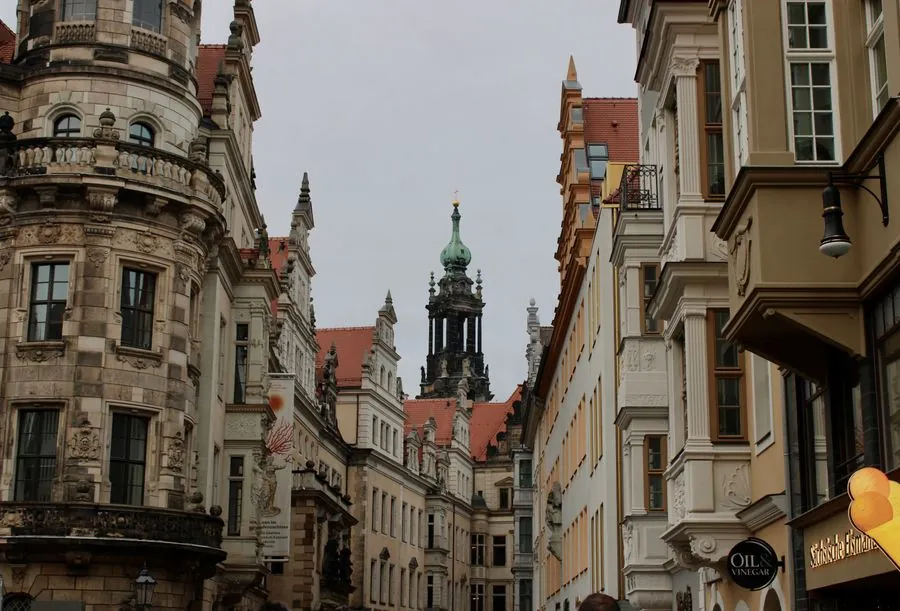
- Ensemble, Ensembleschutz or Erhaltungssatzung (the setting). Whole streets or quarters are protected as a group. The individual building may not be a listed object, but its facade, roof shape and proportions still shape the protected streetscape, so changes are restricted. Many Altbau quarters in Berlin, Munich, Dresden or Leipzig fall under this weaker but real form of protection.
Where do you check which level applies? Every Bundesland maintains a Denkmalliste (many as an online atlas or map service — from Liste B in Saxony to the BayernAtlas and Berlin's list of architectural monuments). The land registry extract and the local Untere Denkmalschutzbehörde are the second checkpoint. Never rely on the seller's word: status determines both your obligations and your eligibility for the tax benefits described below.
What needs the heritage authority's approval
The rule of thumb: anything that changes the protected substance or the protected appearance needs an Erlaubnis (approval) from the heritage authority — usually the Untere Denkmalschutzbehörde, with the state office (Landesamt für Denkmalpflege) consulted on substance questions. In practice this means:
- Facade: replastering, colour schemes, exposing brick, adding insulation — all approval matters, often with prescribed materials and colours.
- Windows: almost never a like-for-like swap. Profile, glazing bars, dividing lights and reflection behaviour are regulated (see the window cost guide for what that does to the price).
- Roof shape and dormers, stairwell, doors, balconies — anything visible from the street, plus everything defined as protected substance.
- Interior of the protected part: in a Baudenkmal this can include stucco ceilings, parquet, historic tiling, even door fittings — while a merely protected exterior may leave your bathroom untouched. The exact scope is decided per building.
Procedurally, works on a listed building usually run parallel to, not after, the building permit: the heritage approval feeds into the Bauantrag. Realistic timelines vary widely by Bundesland and authority — a simple repainting may clear in weeks, a facade renovation with material samples and expert reports often takes months of correspondence before the first scaffold goes up. Buyers should assume that every visible element is slower and more expensive than in an unlisted building, and that "the authority decides" is not a negotiating position but a planning fact.
The tax benefits: §7i and §7h EStG
This is why listed buildings have their own investor market. The state compensates the extra cost of heritage-appropriate renovation through special depreciation — taken on top of normal building depreciation, on renovation costs rather than the purchase price:
| Instrument | What it covers | The benefit | Key precondition |
|---|---|---|---|
| §7i EStG — special depreciation | Sanierungskosten of a Baudenkmal (or part of one) after measures "zur Erhaltung, Renovierung, sinnvollen Widmung oder Nutzung" | Depreciation of up to 9% per year over 12 years (or, since the 2020 model change, alternatively 9 years × 7% + 4 years × 3.5%) on the measures measure-by-measure | Sanierungskonzept prepared by a sachverständige Stelle (an expert body, typically the state heritage office) before the works; Erklärung zur Denkmalpflege |
| §7h EStG — Instandsetzung | Costs of restoring a building that has been damaged by its listed status or by age-related heritage-worthy decay (Instandsetzung) | Same special depreciation of 9% × 12 years on the costs | Recognition of the measures as Instandsetzung; Bescheinigung of the heritage authority |
The preconditions are where buyers stumble:
- Before or income-producing. §7i applies if the measures are carried out on a not-yet-used building (purchase plus renovation "im Ganzen", with initial use by the owner-occupier or landlord) or on a building already generating income. The measure must be completed before initial use.
- The Sanierungskonzept. For §7i, a qualified expert body must define the renovation in advance — scope, substance, cost estimate. Deviating from the concept without agreement can cost the benefit entirely.
- The Erklärung zur Denkmalpflege (owner's declaration of heritage care, commitment to the use and maintenance), and afterwards the Bescheinigung of the authority confirming which costs qualify — the tax office binds itself to that certificate.
- Only Sanierungskosten, never the purchase price and not land value. What counts as qualifying cost is decided measure by measure.
Run the numbers with a Steuerberater before you buy, not after: the benefit only pays for high marginal tax rates and long horizons (see the grandfathering rules for what else you may keep untouched).
Money pitfalls: what the brochure leaves out
- Sanierungskosten can exceed the purchase price. In heavily decayed listed objects it is not unusual that the heritage-appropriate renovation costs more than what was paid for the building. The tax benefit softens this for high earners — it does not cap it.
- Maintenance is a permanent obligation. The Denkmaleigentümer must keep the monument sound — indefinitely, at Denkmal-window prices. Plan a permanent reserve, and check whether an Altbau insurance setup covers the special risks.
- §7i fails if the concept is not followed. Changed scope, materials or contractors without re-approval can void the special depreciation retroactively. Document everything.
- KfW/BAFA grants usually excluded. Federal subsidy programmes — KfW funding, BAFA efficiency grants — generally exclude the same works for which §7i special depreciation is claimed, and also exclude certain Denkmal works from their funding scope. In practice you choose one track: tax depreciation or grant, rarely both on the same measure. Exceptions are narrow; get this confirmed in writing before planning.
- The window example. A standard replacement window costs a few hundred euros per unit; a Denkmal window — custom profile, two-pane box construction, approved glazing, matching reflection behaviour — routinely runs at a multiple of that, plus longer lead times (the cost mechanics are in the window guide). Multiply that across a full facade and the special character of the object becomes a line item.
The GEG exemption for Baudenkmale
The Building Energy Act (GEG) largely spares listed buildings: Baudenkmale and parts of Baudenkmale are exempt from GEG requirements soweit — insofar as — compliance would endanger the monument's substance or disproportionately alter its appearance. In practice: no obligation to insulate the protected facade, no forced window replacement where the original window is part of the monument, and heating planning gets more freedom than in any unlisted Altbau. The exemption is decided per case by the authority, and ordinary building parts (an added rear building, a modernised attic) may still fall under normal rules. For choosing a heating system it means you can weigh monument care, running costs and comfort freely — our heating guide shows the options — but you still carry the full energy bill. The exemption is a design freedom, not an efficiency subsidy.
Who a Denkmal suits — and who it doesn't
A good fit: buyers with high and stable income who can absorb the full renovation cost and use the special depreciation over twelve years; people with a long horizon who want to live in or hold the object for decades; anyone who genuinely loves the building and accepts the authority as a permanent project partner.
A poor fit: buyers who need the subsidy to make the numbers work (if the deal only closes with §7i, it doesn't close); anyone planning a quick resale — the circle of buyers for listed buildings is small, financing is harder, and the next buyer does your due diligence all over again; and anyone unwilling to wait months for window approvals. Compare openly with unlisted Altbau in the same quarter: the market radar and our viewing checklist help to put the premium into numbers.
Buyer due-diligence checklist
| Document / item | Where to verify | What you are looking for |
|---|---|---|
| Denkmalliste extract / atlas entry | State heritage office, Untere Denkmalschutzbehörde | Baudenkmal vs. ensemble/Erhaltungssatzung — scope of the protected substance |
| Sanierungskonzept + cost estimate | Seller / sachverständige Stelle | Exists at all, is current, and its cost basis is realistic — not the 2012 version |
| Bauantrag / Erlaubnis status | Building authority, heritage authority | Open violations, rejected applications, works done without approval |
| Erklärung zur Denkmalpflege / prior Bescheinigungen | Seller, tax files of the seller | Obligations attached to the object; whether prior owners claimed the depreciation |
| Real tax assessment | Independent Steuerberater | Your actual benefit at your marginal rate — not the marketing brochure's 9% story |
| Reserve calculation | Own budget (see renovation budget) | Permanent maintenance reserve at Denkmal prices, plus timeline buffer |
A Baudenkmal is protected as an object: substance and appearance need the heritage authority's approval, and §7i/§7h tax benefits apply. An Erhaltungssatzung (or ensemble protection) protects the streetscape: your flat may be freely renovable inside, but facade, roof shape and visible changes are restricted via the building permit — and no tax special depreciation flows from it. Two different regimes, often confused even by agents.
Frequently asked questions
Does monument protection cover interior doors and plasterwork?
Often yes. Protection can apply to the whole fabric, not just the facade; what matters is the listing entry and the accompanying description of the protected features.
Do I need permission for every repair?
For pure maintenance using the same materials and appearance, coordination with the monument authority is often enough. Changes require permission — when in doubt, ask in writing first.
How do I find out whether my building is listed?
Through the state monument register and the local monument authority. Preservation or design statutes may also apply even when the building itself is not listed.
Planning work on an old building?
Windows, wiring, heating, floors — model every line item before you get quotes.
Open the calculatorGuide to heritage law and tax instruments at federal level — the sixteen Bundesländer differ in detail, and tax treatment depends on your personal situation. This is editorial information, not tax advice; have your specific case assessed by a Steuerberater. Questions for the editors: hello@altbau.com