Chimneys in period buildings: condition, use and repair
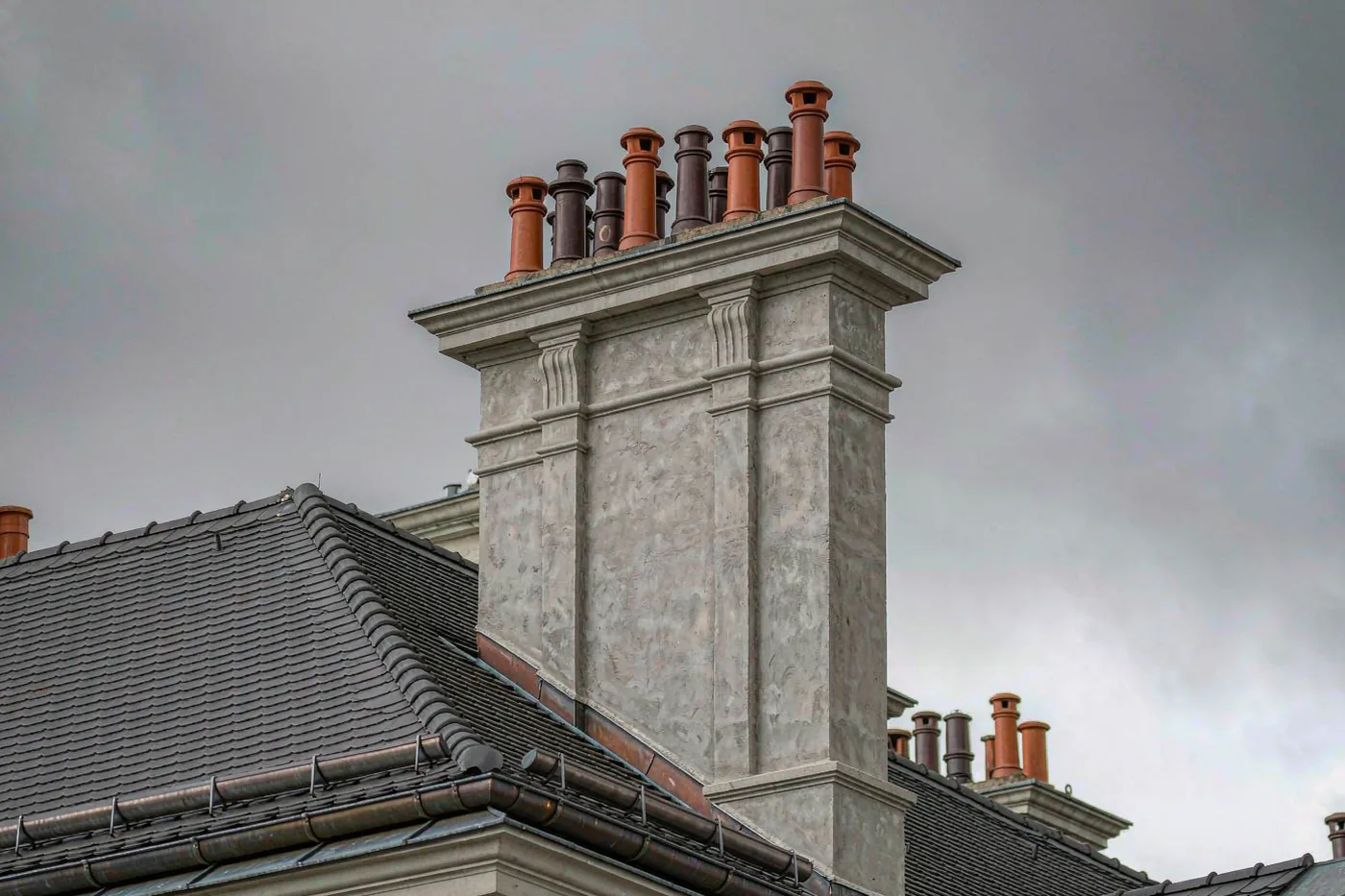
Why a chimney is a structure
A chimney in a period building is not an accessory on the roof but a masonry structure with its own demands on heat, moisture and stability. It runs from the boiler room or fireplace through several floors to above the roof, crossing zones with very different temperatures.
That length makes it sensitive. Where warm flue gases meet cold components, condensation forms; where rain enters from above, moisture remains in the masonry. Together they can damage render, mortar and surrounding timber. Anyone seeing the chimney only as a roof detail misses its structural nature.
Three condition patterns worth knowing
The first is a dry, cleanly built chimney with an intact cap. The second shows moisture marks, efflorescence or crumbling render outside — a sign of penetrating water or condensation inside. The third is cracking in the masonry or a visible lean, which is more than an aesthetic question.
The three patterns call for different steps: care and observation, moisture cause analysis or structural assessment. A new cap helps against rain from above but not against condensation from operation. Cracks in masonry cannot be covered with paint.
What moisture and use have to do with each other
Reactivating a chimney after years of disuse changes the conditions inside. Flue gases, temperature swings and condensation act on components designed for a different operation. Moisture that went unnoticed before becomes visible — or conversely, a dry chimney becomes damp through new use.
That is why the question before any reactivation is what the chimney is intended for and what records exist. The insulating heating pipes page describes how closely heating technology and building fabric interact; at the chimney this interface is even more sensitive.
Assess first, then decide
The sequence begins with documentation: photographs of the roof outlet, cap, masonry and junction with the building; notes on cracks, moisture and smell. Then comes the intended use — open, decommissioned, or planned with which appliance. Only from that does it follow whether cleaning, sealing, relining or full rebuild makes sense.
In protected buildings, coordination with the responsible office is added. An old chimney often shapes the roof silhouette; a repair that works technically but destroys the appearance is a poor compromise. The monument protection guide explains the principle.
Limits of DIY work
Observing, photographing and reporting changes are useful. Coarse cleaning of visible areas can be feasible if access is safe. Anyone who works on the roof, removes caps or climbs the chimney underestimates the risk of falling and falling components.
Work inside chimneys, installing new liners and making connections to appliances are specialist tasks. Draught, cross-section, tightness and material compatibility decide the result. A wrong installation can lead to smoke in the room or moisture in the masonry.
What proper repair consists of
A sound repair starts with assessment of masonry and moisture, continues with clarifying the intended use and ends with execution that keeps rain out above while accounting for condensation in operation. That includes cap, joint pattern, junction with the roof covering and records of the condition before intervention.
Completion is followed by a function check within the intended use. Only when draught and tightness are right is the job finished. Photographs and written records matter later for further works, insurance questions and sale.
Use, tenancy and responsibility
In a tenancy responsibility for the chimney is often unclear because it affects several flats or trades. Damage to the outside, moisture in a room or smell of smoke should be reported in writing. Doing the work yourself makes later assessment harder — especially when an appliance is involved.
For owners the building file is decisive: are there documents on construction, earlier repairs, decommissioning or the last inspection? When buying a period property the chimney belongs on the viewing checklist — not as a deal-breaker but as a planning item.
Cost types rather than prices
This guide deliberately gives no figures. The effort depends on whether only the cap is renewed, joints and render repaired, moisture removed at source or a full rebuild needed. What holds up is the structure: survey, moisture assessment, use clarification, design, execution, inspection, documentation.
Do not compare quotes only by visible roof work. A quote for a new cap and one for a repaired flue path describe different tasks. What matters is whether the moisture cause and the intended use appear in the quote at all.
Limits of this guide
Whether a chimney is stable, which use is admissible and what applies to execution and inspection is decided by assessment on site and by the responsible authority — not by an article online. Requirements can change; the linked institutions are the starting point for verification.
This is general orientation, not construction, fire, structural or legal advice. There are no paid recommendations and no links to chimney firms. What counts are the survey, a written scope and documented inspection.
Sources and verification
- DIBt — German Institute for Building Technology (German original)
- dena — German Energy Agency: heating in existing buildings
- Verbraucherzentrale — consumer advice (German original)
These primary sources are starting points for verifying the framework; requirements and deadlines are set by the responsible authority in each case. No paid recommendations.
Frequently asked questions
Can I reactivate a decommissioned chimney?
Not without inspection. Condition, cross-section, moisture and records must be clarified before an appliance is connected. Something idle for decades is not automatically suitable again.
Is moisture on the outside always rain?
No. It can enter from above but can also come from condensation in operation. The two require different measures: a better cap helps against rain, not against condensation. Only clarifying the cause decides.
Why does the chimney belong on a buying checklist?
Because it is a structure running through several floors and can cause consequential damage to masonry and timber. Missing documents are no deal-breaker but a planning item worth knowing before purchase.
Planning work on an old building?
Windows, wiring, heating, floors — model every line item before you get quotes.
Open the calculatorFor orientation only — requirements depend on the building, the state and the lease. No legal, tax or energy advice. Questions for the editors: hello@altbau.com