Insulating heating pipes in period buildings: where it works and where it does not
Why location decides the effect
A heating pipe inside a heated room gives its heat to exactly the room it is meant to serve. Insulating there can even be counterproductive. A pipe in an unheated cellar, in the screed or in a shaft, by contrast, carries heat where it is not needed.
Every sensible insulation job therefore starts with a question: where does the pipe run, and what temperature is there? The heating costs page explains why losses in the distribution system are often easier to find than at the radiator itself.
Three typical situations
First: pipes in an unheated cellar. There, uninsulated heat loss is real and insulation works directly. Second: pipes in a heated room. There the loss is usually wanted, and insulation can change how quickly the room warms. Third: pipes in shafts or wall recesses. There it depends on draughts and on whether the shaft belongs to the outside air.
Three situations, three decisions. Saying "insulate all pipes" treats a cellar run and a living-room riser alike although they have different jobs. The KfW funding page explains why such measures are checked within an overall concept.
What uninsulated runs really cost
Heat given to an unheated surroundings has to be produced additionally by the system. That shows up in heating costs and in comfort: a riser in a cold shaft heats the shaft, not the flat. In extreme cases an unprotected section freezes and causes water damage.
At the same time insulation is no substitute for a wrongly sized system or a leaking valve. Adding insulation without checking hydraulic balancing and flow temperature often misses the larger levers.
Survey first, then insulate
The sequence starts with a walk-around: where do the pipes run, where do they pass through unheated areas, where are valves and fittings? Then comes a check of flow temperature, control and hydraulic balancing. Only once the losses are clear are the runs selected that should actually be insulated.
This order matters also because old insulation is often still present. It can crumble, hold moisture or contain asbestos. There are no paid recommendations; unclear material should be professionally checked before removal.
Limits of DIY work
Visual inspection, feeling the pipe temperature and photographing routes are possible. Re-insulating accessible straight sections in the cellar can be feasible with care if the material suits the temperature and fire requirements.
It becomes critical at penetrations, in shafts, at fittings and in areas with fire-safety requirements. Execution decides tightness, condensation and safety. Incorrectly fitted insulation can trap moisture at the pipe surface and promote corrosion.
What proper insulation consists of
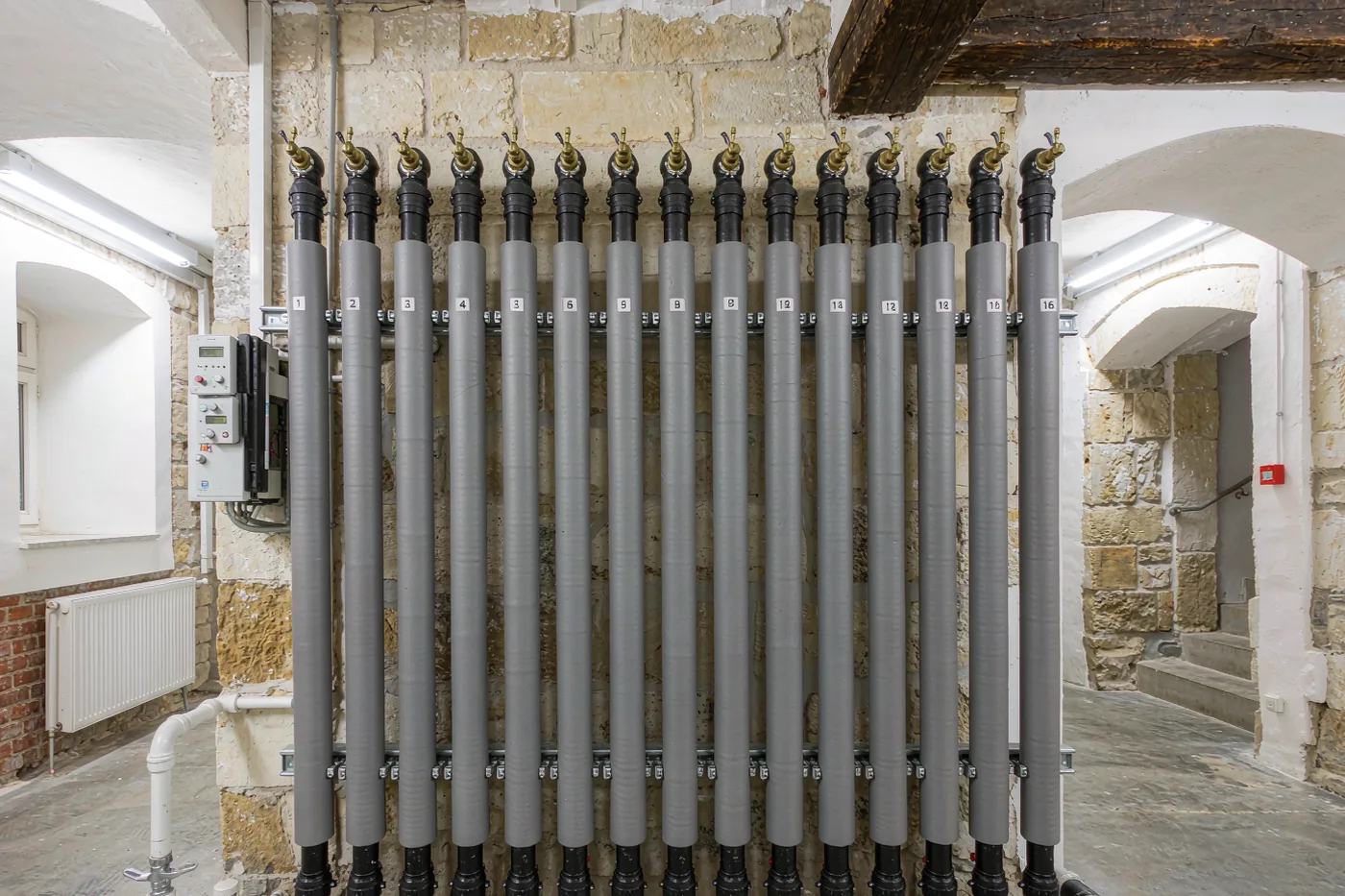
A sound measure matches thickness and material to temperature and location. It is closed with no gaps at joints, keeps fittings operable and is coordinated with fire protection where pipes pass walls and slabs.
Completion includes a surface-temperature check and a walk-around after some operating time. If the outside of the pipe stays cool, the insulation is working. If moisture marks appear, execution or vapour tightness was wrong. The measure matrix helps keep insulation, control and fittings as separate records.
Use, tenancy and records
In a tenancy, heating costs feed directly into the service-charge account. Insulation of the distribution is therefore a shared interest, but it also alters the property. Anyone planning a measure should coordinate with the managing agent and keep the necessary records.
For owners documentation matters: which runs were insulated, with which material, at what thickness, and where are the transitions? That information is valuable when later work touches old wiring or the cellar.
Cost types rather than prices
This guide deliberately gives no figures. The effort depends on the length of accessible runs, the type of insulation, fittings and penetrations, and whether old material must be removed. What holds up is the structure: survey, check of control and balancing, material choice, execution, inspection, documentation.
Two quotes are comparable only when they describe the same sections and the same fire and vapour requirements. A price per metre says little if it is not clear which runs are meant at all.
Limits of this guide
Which insulation is admissible and sensible in a specific heating system is decided by professional assessment on site and by the responsible authority — not by an article online. Requirements for fire safety and efficiency can change; the linked institutions are the starting point for verification.
This is general orientation, not heating, energy or safety advice. There are no paid recommendations and no links to heating firms. What counts are the survey, a written scope and documented execution.
Sources and verification
- dena — German Energy Agency: heating in existing buildings
- KfW — German development bank, programme information (German original)
- Bundesnetzagentur — federal network agency, consumer information (German original)
These primary sources are starting points for verifying the framework; requirements and deadlines are set by the responsible authority in each case. No paid recommendations.
Frequently asked questions
Should I insulate all heating pipes?
No. Pipes in a heated room give heat to the room they are meant to serve. Insulation is mainly for runs in unheated areas such as cellar, shaft or screed. Location decides.
How do I spot unnecessary heat loss?
A pipe in a cold cellar that feels warm outside is losing heat where it is not needed. Cold rooms despite high flow temperature are another sign. Measurement and a walk-around are more reliable than feeling.
Does insulation replace hydraulic balancing?
No. Insulation reduces distribution losses; balancing makes sure each room gets the right amount. Both work together; doing only one often leaves the biggest lever unused.
Planning work on an old building?
Windows, wiring, heating, floors — model every line item before you get quotes.
Open the calculatorFor orientation only — requirements depend on the building, the state and the lease. No legal, tax or energy advice. Questions for the editors: hello@altbau.com