Dry rot and timber pests in period buildings: spotting, assessing, professional treatment
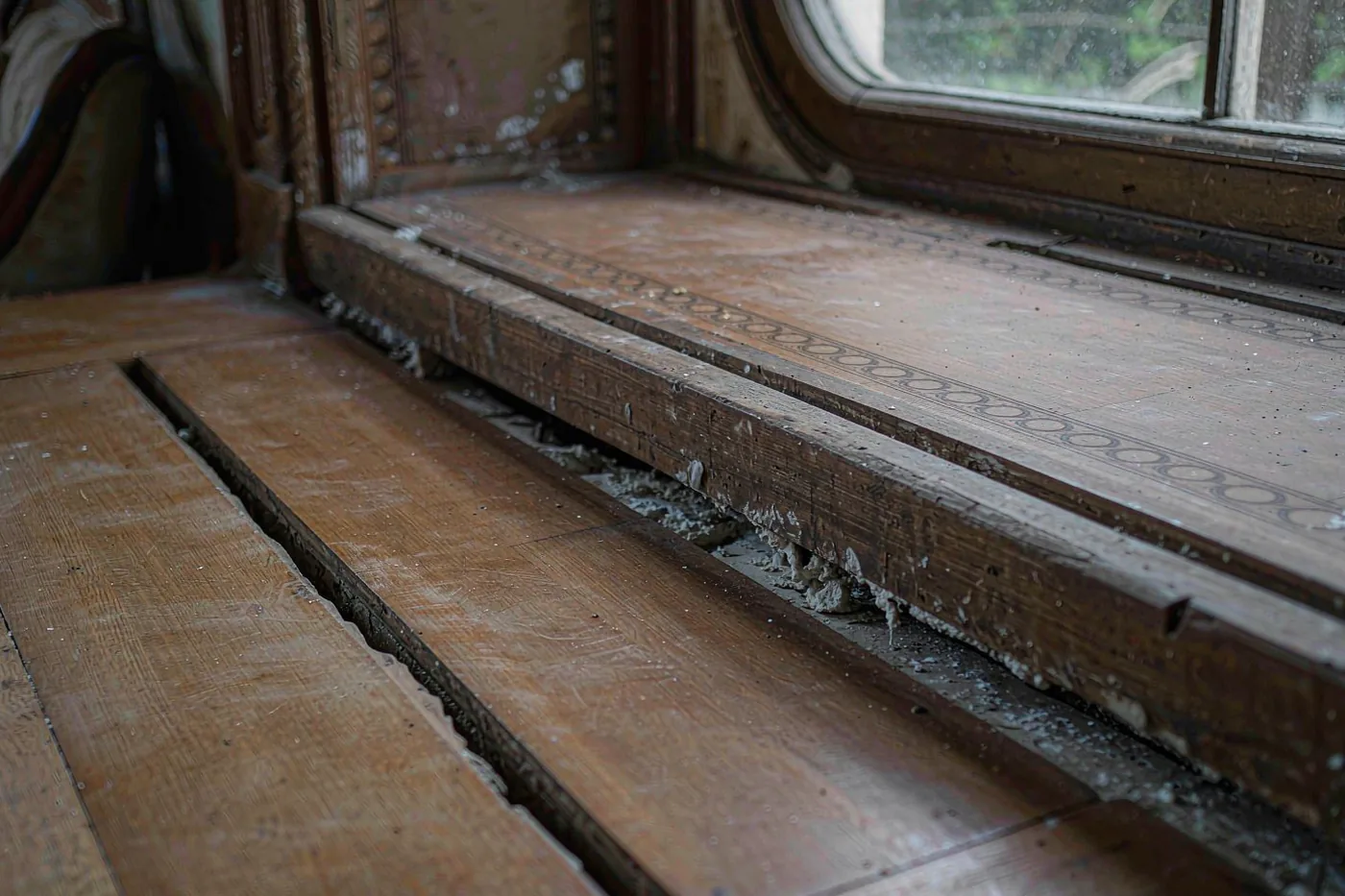
Two very different opponents: fungi and insects
Timber damage in period buildings has two very different causes. On one side stand wood-destroying fungi, above all true dry rot and cellar fungus: organisms that break down the cellulose in wood and can de-stabilise whole joist ends and floor constructions. On the other side stand wood-destroying insects such as the house longhorn beetle and the common furniture beetle, whose larvae eat galleries through the timber.
The distinction is not optional. Fungi need continuous moisture in the wood, so their treatment is aimed first at the water source. Insects have different conditions: the longhorn beetle attacks preferably fresh softwood in roof structures, the furniture beetle old, already weakened wood. The two groups are tackled with entirely different methods — and both can attack the same timber surface, which makes diagnosis without expertise close to impossible.
Where to look: typical attack points in a period building
Attack concentrates where timber and moisture meet: sill and sole plates at the transition to masonry, joist ends embedded in damp walls, constructions under showers and kitchens, in the zone of leaks, and in ground-floor floors above an unventilated cellar. In the roof structure the longhorn beetle is the classic risk; in cellars and wet rooms it is the fungi.
Then come the concealed places: floor constructions under coverings, cavities behind linings, infilled intermediate floors. Exactly there an attack often stays unnoticed for years, until a covering is opened or a smell appears. Anyone viewing a period property should have precisely those spots looked at — the viewing checklist lists the critical points.
Why moisture is the key
Wood-destroying fungi can only establish themselves in moist timber: dry rot needs a wood moisture that stays well above the range normal for indoor use over long periods. The reverse conclusion holds: where rot grows, a moisture source has been at work beforehand — a leak, rising damp, condensation or a water damage. The fungus is the symptom, not the cause.
Fighting only the fungus and leaving the moisture earns the next attack. Every serious treatment therefore starts with the question of the water: where does it come from, since when, and what happens once the source is gone? The damp and mould page describes the moisture sources in living space; in timber construction the same sources are the prelude to a far more expensive damage.
Warning signs — and their limits
Indicators of fungal attack are the typical musty smell, cobweb-like or stranded mycelium, brown discolouration in the wood, cracks following the fungal growth, and in advanced cases fruiting bodies on timber or masonry. Insect attack shows as bore dust below the wood, fresh flight holes and the dull sound of affected surfaces. All of this a layperson can see — and all of it a layperson can misread.
Bore dust can be old, flight holes can stem from an attack long finished, and discolouration in timber often has mechanical or structural reasons. Conversely, attack behind intact coverings stays invisible. A reliable statement on type, activity and extent comes only from an investigation by a competent person — typically a targeted opening and inspection of the construction.
What an attack means — and what it does not
Not every attack is a structural problem, and not every affected piece must be replaced immediately. With insects the depth matters: the longhorn beetle prefers sapwood, while dense old heartwood timbers are often only superficially attacked. With fungi, extent and the structural role of the component decide. Load-bearing joists de-stabilised at their bearings are a different matter from an affected board in a non-structural lining.
The classification is the business of specialists: a structural engineer or a timber-protection surveyor assesses whether remaining cross-sections carry, whether strengthening, replacement or treatment suffices. Demolishing whole constructions on suspicion pays for substance that never was at risk; doing nothing on suspicion risks load capacity. Both are avoidable — with an investigation instead of a feeling.
Treatment is specialist work: the sequence
Proper treatment starts with the survey: establishing the attack, opening the affected construction, defining the attack zone and clarifying the moisture source. The intervention itself follows — chemical, thermal or by replacement, depending on the attack, the timber, the installation situation and the protection goal. With dry rot, treating the surrounding masonry is routinely part of the job, because the mycelium survives there too.
The job ends with reinstatement, control and documentation: what was opened, treated, replaced, and who declared the release. These records pay off in later works and in a sale. Combining the measure with other trades — old wiring often runs in the same walls — should be coordinated; the measure matrix helps keep the items apart.
Purchase, tenancy and duties
When buying a period property, timber attack is one of the questions that can be answered clearly: are there surveys, timber-protection reports, records of treatment? If not, an investigation of the critical constructions belongs in due diligence. The fact that a house had rot decades ago is no reason to walk away — decisive is whether the treatment is documented and the moisture source was removed.
In tenancies the rules on defects and maintenance apply: attack in the flat or in shared components is to be reported to the management, not treated by tenants themselves. Tenants should report the suspicion in writing and leave the spot untouched — any unofficial treatment makes the later survey harder. When the landlord renovates, the treatment belongs in a record that protects both sides.
Cost types rather than prices
This guide gives no figures. The effort depends on the type and extent of the attack, on the number of surfaces to open, on whether load-bearing parts are affected, on the treatment method and on reinstatement. What holds up is the structure: attack survey and report, opening and exposure, treatment of timber and masonry, replacement or strengthening of components, reinstatement of surfaces, and documentation.
When comparing quotes, what matters is whether removal of the moisture sources is included and who declares the release after completion. A quote that treats only the timber is rarely the whole job — with dry rot, the work preferably starts where the water comes from.
Limits of this guide
Whether an attack exists in a specific case, how active it is and which measures will hold is decided by the survey on site — not by an article online. Requirements for timber protection and for records can change; the linked institutions are the starting point for verification.
This is general orientation, not construction, legal or timber-protection advice. There are no paid recommendations and no links to treatment companies. What counts is the survey report, a written quote and a documented execution.
Sources and verification
- UBA — German Environment Agency: health in indoor spaces
- dena — German Energy Agency: building renovation topics
- DIBt — German Institute for Building Technology (German original)
These primary sources are starting points for verifying the framework; requirements and deadlines are set by the responsible authority in each case. No paid recommendations.
Frequently asked questions
Can I treat dry rot myself?
That is not advisable. The attack zone must be professionally established and the surrounding construction opened; with dry rot the masonry belongs in the treatment. An amateur treatment conceals the attack and makes the later survey harder. The moisture source has to be found first anyway.
Are fresh flight holes in the roof always an active attack?
Not necessarily. Flight holes can stem from an attack long finished, and bore dust can be old. Conversely, attack behind coverings can stay invisible. Whether an attack is active is settled by a survey — not by the eye alone.
Does affected timber always have to be replaced?
No. What matters is the type and extent of the attack and the structural role of the component. Superficially affected, non-structural parts can stay after treatment; de-stabilised load-bearing sections need strengthening or replacement. The classification belongs in the hands of a competent surveyor.
Planning work on an old building?
Windows, wiring, heating, floors — model every line item before you get quotes.
Open the calculatorFor orientation only — requirements depend on the building, the state and the lease. No legal, tax or energy advice. Questions for the editors: hello@altbau.com