Water damage in period buildings: drying properly instead of only at the surface
Why older buildings react differently to water
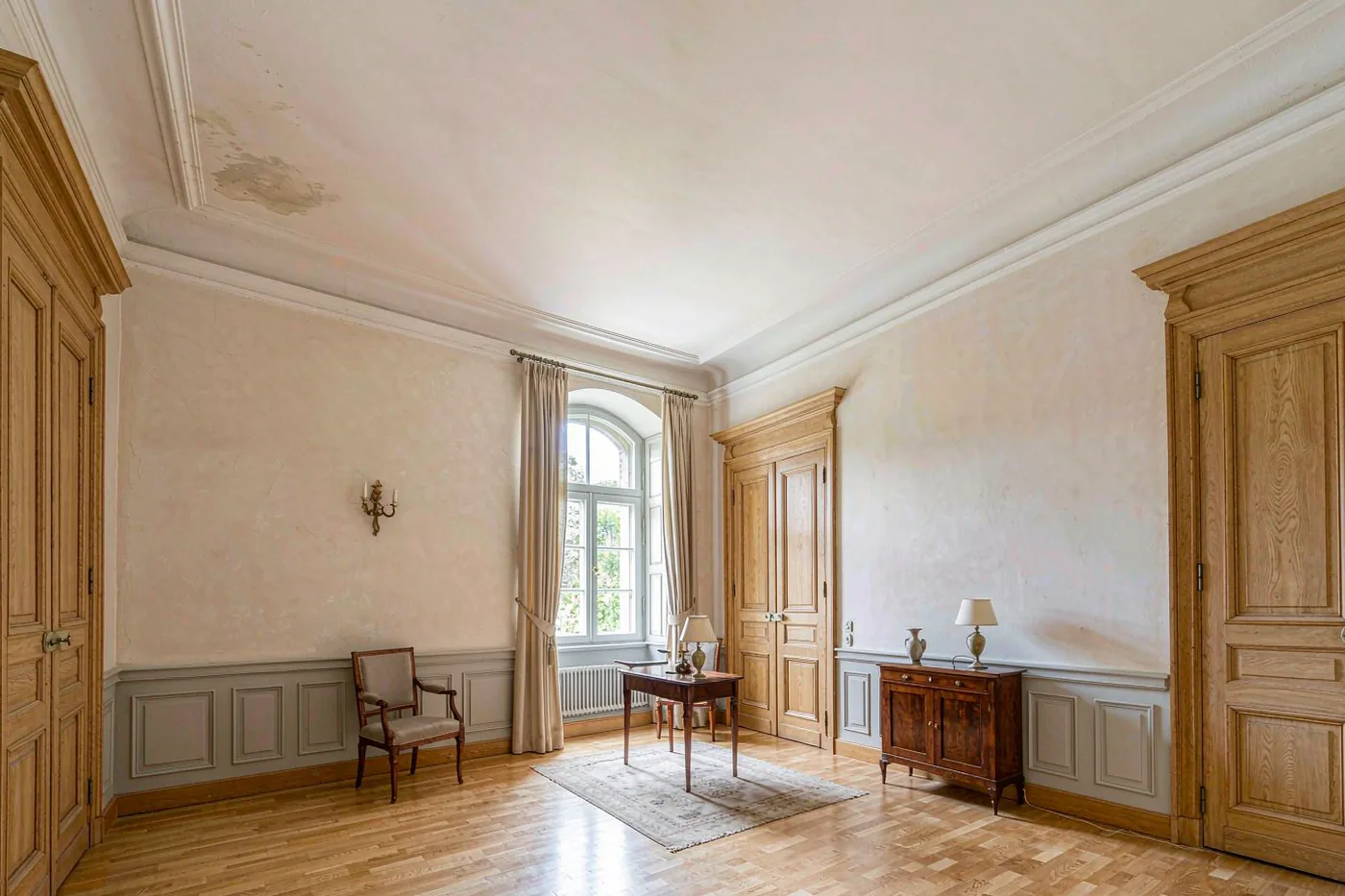
Water in a period building does not spread as it would in a new, uniform build-up. Old renders, cavities behind linings, uninsulated cellar ceilings and highly absorbent masonry take up moisture differently and release it at different rates.
Superficial drying is therefore a deceptive goal. A wall can feel dry after a few days while moisture remains in the masonry or behind a lining. The damp and mould page explains why the source is always clarified before any measure.
Three moisture types in a damage case
First free water from a leaking pipe, an overflowing basin or a roof defect that collects in cavities and low points. Second bound moisture held inside render, timber and masonry long after the surface appears dry. Third condensation, created because a room is suddenly heated or ventilated differently.
These three types require different steps. Free water must be removed and the source stopped. Bound water needs time and controlled conditions. Condensation does not disappear through heating alone when the air humidity stays high.
What drying too fast does
Heating hard and airing intensively dries the surface quickly while moisture remains inside. It then migrates into adjacent components, cavities or timber — and often becomes visible only weeks later. Mould on the apparently dry wall is the result.
Fast drying can also make render and paint peel because the outer layer shrinks while the substrate is still damp. Keeping damage small means working slowly and with measurements, not at maximum power.
Stop the source first, then measure
The sequence starts by stopping the cause: close the water pipe, temporarily secure a roof defect, clarify backflow. Then comes the survey with photographs, moisture readings and a sketch of the affected areas. Only from that does a drying concept follow.
What matters is which components are affected: render, screed, timber floor, balcony door or cellar wall? The cellar renovation guide describes how differently moisture acts there. The viewing checklist helps record later consequential damage systematically.
Limits of DIY work
Shutting off a pipe, removing loose items and photographing the damage are useful first steps. Gentle airing with suitable outside air is possible too. Once walls are opened, screed lifted or technical drying equipment used, specialist work is needed.
The reason is simple: machines create heat and air movement that can carry moisture further if used wrongly. With timber there is also the risk of missing fungal attack; the dry rot and timber pests article shows why a survey is often better than drying yourself.
What proper drying consists of
Sound drying starts by removing the cause, continues with a moisture map of all affected components and works with controlled temperature, air movement and dehumidification. It is guided over time, not by feeling, and ends only when repeated readings and the actual component condition agree with each other.
Completion includes a new measurement, photographs and a written assessment of which areas can be restored and which must be opened. Those records protect in insurance questions and in later works in the same area.
Use, tenancy and records
In a tenancies, water damage must be reported immediately. Drying yourself without stopping the source or informing the managing agent makes settlement harder. Tenants should take photographs and record the time in writing.
For owners the damage file is decisive: when did what happen, who stopped the source, which readings exist, which components were opened? Without that chain, a small loss turns into a dispute about responsibility.
Cost types rather than prices
This guide deliberately gives no figures. The effort depends on the affected area, the components, the duration of drying, opening works and reinstatement. What holds up is the structure: stop the source, damage survey, moisture map, drying concept, execution, final measurement, documentation.
Do not compare quotes only by equipment days. A quote without a moisture map and a final measurement describes the use of technology, not a completed drying job.
Limits of this guide
How a specific loss is assessed, which components must be opened and what records are required is decided by assessment on site and by the responsible body — not by an article online. Requirements can change; the linked institutions are the starting point for verification.
This is general orientation, not construction, moisture or insurance advice. There are no paid recommendations and no links to drying firms. What counts are stopping the source, a measurement log, a written scope and documented execution.
Sources and verification
- UBA — German Environment Agency: health in indoor spaces
- Verbraucherzentrale — consumer advice (German original)
- DIBt — German Institute for Building Technology (German original)
These primary sources are starting points for verifying the framework; requirements and deadlines are set by the responsible authority in each case. No paid recommendations.
Frequently asked questions
Why not simply heat the room hard?
Because the surface dries quickly while moisture remains in the component. It then migrates into cavities or timber and becomes visible later. Controlled, measured drying is slower but more durable.
When does a component need to be opened?
When moisture does not fall within a reasonable time, mould is visible, or timber and cavities are affected. That decision belongs to the damage survey on site, not to a feeling after a few days.
Why take photographs at the very start?
Because the condition before drying cannot be reproduced later. Dated photos, a sketch and initial readings protect in insurance questions and help assess which components are affected.
Planning work on an old building?
Windows, wiring, heating, floors — model every line item before you get quotes.
Open the calculatorFor orientation only — requirements depend on the building, the state and the lease. No legal, tax or energy advice. Questions for the editors: hello@altbau.com