Nebenkosten in an Altbau: what you pay on top of rent
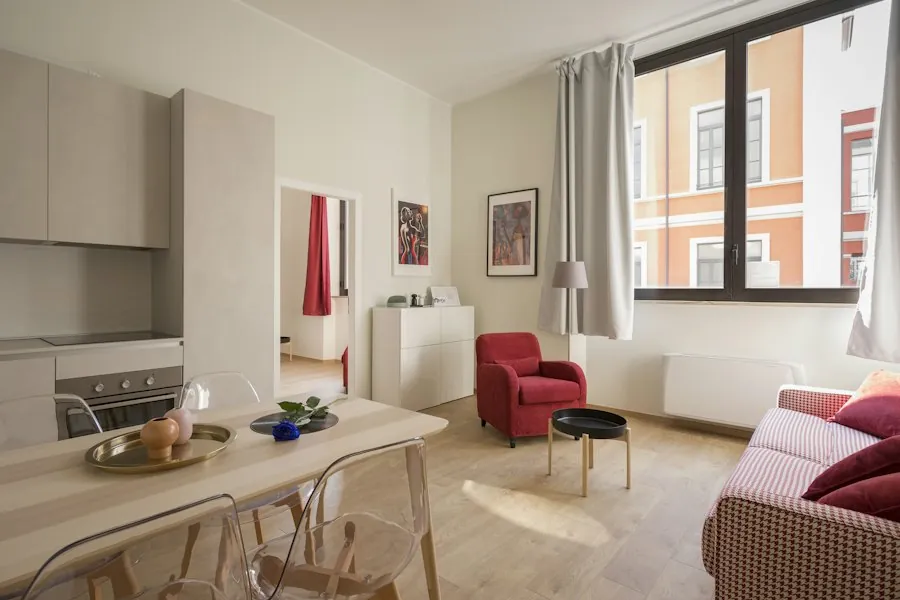
Nebenkosten — the additional charges on top of your base rent — are where an Altbau flat quietly becomes expensive. High ceilings, single glazing that survived a "heritage" argument and an oil boiler from the eighties can push the second bill far above the German average. Here is what belongs in the bill, what is typical for an old building, and how to check your annual statement before the deadline passes.
What Nebenkosten actually contain
The law that governs the bill is the Betriebskostenverordnung (BetrKV). It lists exactly 17 categories a landlord may pass on — and anything not in the lease and not in the BetrKV, you do not owe. The big ones in practice:
- Heating and hot water (§ 2 Nos. 3–4): usually the largest single item — in a badly insulated Altbau often half of the entire bill.
- Cold running costs: water and sewage, stairwell electricity, waste collection, street cleaning, chimney sweep, insurance for the building, garden maintenance, and where applicable the caretaker or the lift.
- Broadcasting fee (Rundfunkbeitrag): only if a communal satellite or cable system exists — 6.30 €/month per flat for the communal plant, not the full 18.36 €.
- Property tax may be passed on per the lease; administration costs of the landlord may not, ever.
What is normal: guide values
| Flat type | Cold operating costs | Heating (typical winter) | Total realistic |
|---|---|---|---|
| Altbau, unrenovated, oil or coal-era system | 1.30–1.90 €/m² | 1.50–2.60 €/m² | 2.80–4.50 €/m² |
| Altbau, new windows, gas | 1.10–1.60 €/m² | 0.95–1.60 €/m² | 2.05–3.20 €/m² |
| Altbau, partially renovated + Fernwärme | 1.10–1.60 €/m² | 0.80–1.30 €/m² | 1.90–2.90 €/m² |
| German average, all building ages | approx. 2.20–2.60 €/m² | — | |
The frequently quoted "2.19 €/m² in the lease" is a cool-rent cap story, not a prediction: it refers to what a landlord may write into a new lease as an unspecific flat-rate. The actual bill for an unrenovated Altbau can easily be twice that once heating is included.
The annual statement (Jahresabrechnung) must reach you within 12 months of the end of the billing period. Late means the landlord can no longer claim a back-payment — but also loses the right to credit you a refund. You have 30 days after receiving it to object. Miss that window and a formally correct statement is generally accepted, errors included. Check the arithmetic, the m² figure, and every position against your lease.
How a 100 € back-payment happens
Statement mechanics, briefly: you pay a monthly advance (Abschlag) all year; the annual statement reconciles actual costs against those advances. If your advance was set years ago and energy prices or consumption moved, the gap lands in one lump sum. The three most common traps:
- An advance that was never raised. Painful in an unrenovated Altbau: energy prices rise, the advance stays, December brings a four-figure bill. You may demand a new, realistic advance — and after a back-payment the landlord may adjust it unilaterally anyway.
- Heating billed by m² only. Where no consumption meters exist, the BetrKV allows up to 50% by area and at least 50% by metered consumption. If a pre-1981 building has no meters at all, area billing is legal — and you pay for the corner flat's heat loss whether you live there or not.
- Mixed-price gas contracts. With a central boiler, the landlord may bill the gas price that applies to the whole building — including the "basic supply" tariff if that is what the building has. Compare against the building's invoice, not the cheapest online tariff.
Altbau-specific: what you can actually do about it
- Kreuzlüftung, properly. Ten minutes of cross-ventilation replaces the humid air without cooling the 50 cm brick walls. Tilting windows all day in winter costs more heating money than almost anything else on this page.
- Thermostats at 19–21 °C, night setback 5 K. Each degree less saves roughly 6% heating energy. Do not fully turn off radiators in rooms with exterior walls — that is how mould starts, and mould damage can become your problem under the lease.
- As a tenant, demand efficiency data. You can ask the landlord for the building's heating consumption figures (Heizkostenverordnung). As an owner, the path is the renovation route — our renovation budget guide and the cost calculator put numbers on the windows-first strategy described in heating an Altbau.
- Check the Rundfunkbeitrag position. 18.36 €/month belongs on your own broadcasting-service fee, not the Nebenkosten bill — only the ~6.30 € communal-plant share does. It appears on statements surprisingly often.
Know your second bill before you sign
Ask for the last annual statement at the viewing — it tells you more about the real cost of the flat than the rent does.
Open the viewing checklistGuide values researched October 2026 (BetrKV, German tenancy practice); individual statements vary with building condition, region and tariff. No legal advice — for a concrete dispute, consult a Mieterverein or a tenancy lawyer. No paid recommendations.