Getting radiators ready for winter: bleed, balance, set
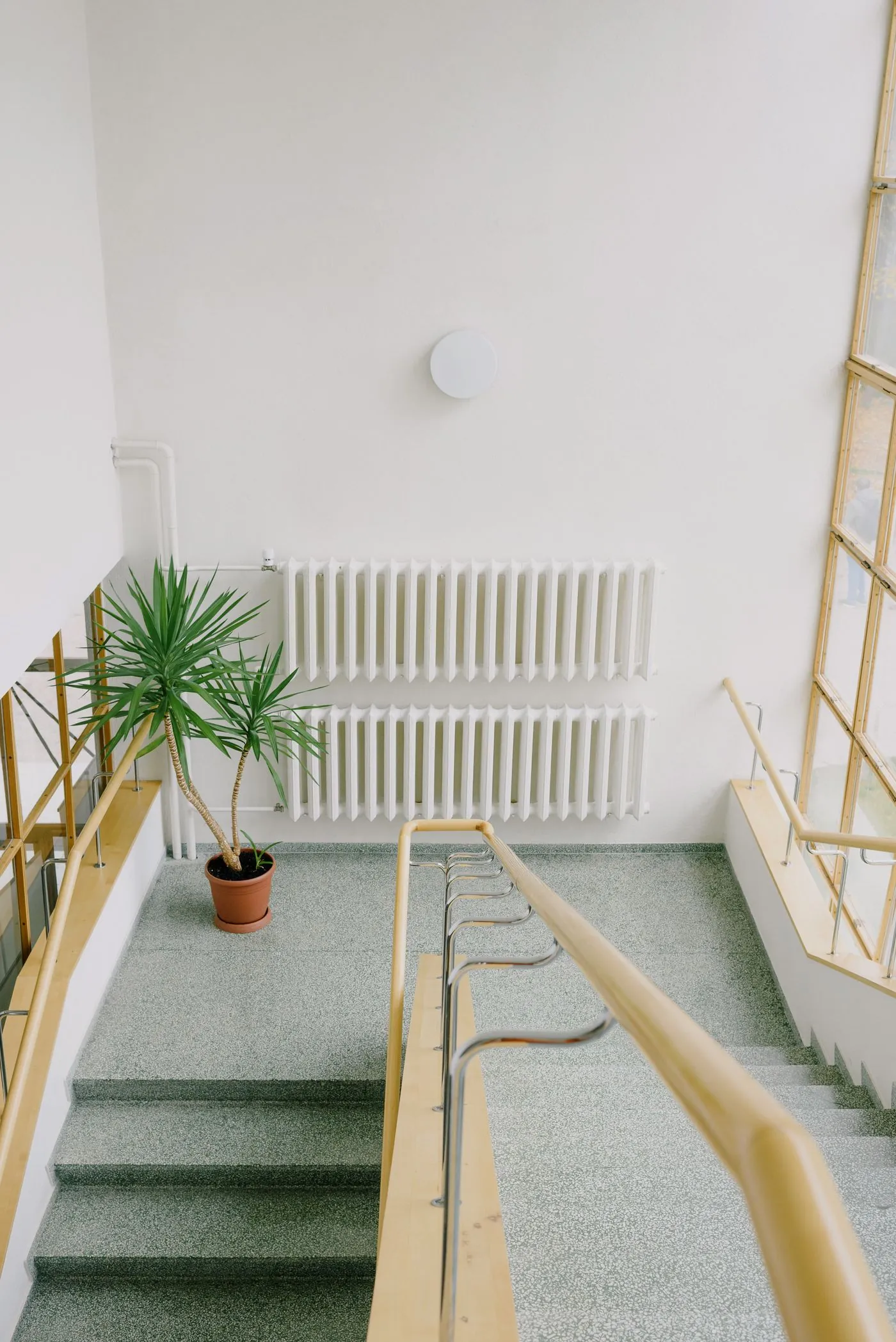
November is when it becomes noticeable again: the living-room radiator gets hot, the bedroom one stays lukewarm, and somewhere behind a panel there is a quiet gurgling. In an old building this is rarely a genuine defect. It is usually a setting that has been forgotten over the summer. The good news is that most of it can be sorted out in an afternoon without calling anyone. The bad news is that simply turning the thermostat up further means paying all winter for a problem that a quarter-turn on a bleed valve would have solved.
Why November specifically
The system has stood idle for months. When it is fired up for the first time, air collects at the highest points of the pipework — and in an Altbau those high points are often the radiators beneath tall windows. At the same time the load changes: solid walls hold on to the chill of autumn, the sun sits lower, and rooms respond more slowly than they would in a well-insulated new build. Check now and the heating season is still ahead of you; check in January and the first weeks have already run at half capacity.
There is a second, more practical reason. In November you can still get an appointment. Once the first cold snap arrives, heating firms are busy with emergency call-outs and a hydraulic balance quietly becomes a spring job. The November round is therefore less a repair than a piece of prevention.
Bleed first: take the gurgling seriously
A radiator that is cold at the top and warm at the bottom has air in it. That costs comfort and energy, because part of the surface contributes nothing. The procedure is unglamorous: open the thermostat fully, keep a cloth and a small bowl handy, gently open the bleed valve at the top with the right key until air hisses out, and close it as soon as water appears. Do not turn further than necessary — on old valves the screw is sometimes seized, and a snapped pin costs considerably more than a service visit.
- Work from the bottom up. In apartment buildings, start on the lower floors and move upward, since that is where the air travels.
- Do every radiator, not just the obvious one. A single lukewarm unit is often a symptom rather than the cause.
- Check the pressure afterwards. Repeated bleeding lowers system pressure. In a rented flat that is the landlord's or managing agent's job; in your own house the reading is on the display or the gauge.
If the gurgling persists, or pressure keeps dropping, that is a different matter: pump, expansion vessel or a leak belong on the list, and that is where a homeowner should stop.
What hydraulic balancing actually does
Water always takes the path of least resistance. In an old building with long pipe runs, radiators close to the boiler get too much and those at the end of the circuit get too little. The result is the classic Altbau picture: one room overheated, two rooms down the hall never quite warm, even though the same flow temperature is available. Balancing sets the volume flows so that each radiator receives the heat its room needs, rather than the heat the shortest pipe happens to deliver.
That involves presettable valves, lockshield adjustments and a pump curve, and it requires a heat-load calculation and measured values. Old buildings add a complication: the original design was usually based on different windows, different use and a different level of insulation. After replacement windows or interior insulation, the old preset values no longer describe reality. Balancing is therefore not a quick trick but a documented job for a heating engineer — and one that pays off precisely when the system broadly works but heats unevenly. It also sits logically after bleeding, never before.
Thermostats, flow temperature and the right rhythm
Thermostatic valves are not power controls; they are room-temperature switches. Setting five does not heat faster, it simply holds the valve open longer. Trying to "speed up" a cold room on full setting in the morning mainly produces an overheated room by midday and an open window shortly afterwards. A middle setting combined with low, continuous heating suits massive walls far better than hard on-off cycles: the walls store heat, and once they have cooled down they take a long time to feel comfortable again.
Flow temperature is the second control that homeowners rarely touch, but it explains why some Altbau systems feel sluggish. Too high and nearby radiators heat quickly while the differences across the house grow; too low and distant rooms never get warm. Here too the sequence is: bleed, observe, then speak to the operator. And one small thing that costs nothing: long curtains, a sofa directly in front of a radiator, or a closed-top cover send the heat behind the furniture instead of into the room.
Cast iron, single-pipe systems and other Altbau quirks
Old cast-iron radiators respond more slowly than modern panel radiators, but they hold heat longer. Treat them like a fast-response heater and you end up impatient and turn everything up. Single-pipe systems, found in some Gründerzeit buildings, add another wrinkle: all radiators on a circuit sit in series, so closing the first one completely reduces what the rest receive. In those systems "just turning off one room" is not a harmless gesture. If you are unsure which system you have, look at the connections: two pipes at the radiator suggest the usual two-pipe layout, while one pipe running through with short branches suggests a single-pipe loop.
When to involve the landlord or a heating firm
Bleeding is reasonable household work; anything beyond it is not. If the heating fails for days during the season, individual radiators stop working entirely, or system pressure keeps falling, that is a defect and not a quirk of old buildings. Landlords must keep the system operational and supply heat during the normal heating period. Record dates, room temperatures and your written notices before considering a rent reduction — our guide to rent reduction explains why the sequence matters. Owners face the mirror image: a balancing report with measurements is worth far more in a dispute with a contractor than a verbal assurance.
On very old systems, bleed valves and unions may not have moved for decades. If something refuses to shift with light pressure, stop: a stripped thread in a cast-iron radiator is water damage, not a DIY achievement.
The November round in five steps
| Step | What matters | Effort |
|---|---|---|
| Bleed every radiator | Bottom to top; close as soon as water appears | One afternoon |
| Read the system pressure | Check after bleeding; report anything odd | A few minutes |
| Set thermostats to a middle position | No "acceleration" via the highest setting | Once |
| Clear the heating surface | Curtains, furniture and covers must not block it | Once |
| Record uneven heat | Note rooms and temperatures, then commission balancing | Heating engineer |
Set it once, benefit all winter
Most Altbau heating systems need attention in autumn, not new technology. Air out, sensible thermostat settings, clear surfaces, a note of any uneven heat — that deals with the bulk of the usual November complaints. How this connects with ventilation and frost protection is covered in our winter guide; what the season costs is explained in Heating an Altbau, and a first estimate comes from the heating-cost check. Terms such as flow and balancing are in the glossary.
Frequently asked questions
How do I know bleeding is needed?
The radiator stays cold at the top while warming at the bottom, or the system gurgles. After bleeding, read the system pressure again.
Who is responsible for hydraulic balancing?
That is a job for a heating contractor or the landlord / property manager, not a household routine. It requires calculation and measurement of the system.
Can a tenant bleed radiators themselves?
Bleeding is generally considered a reasonable minor task, provided it is done gently and without intervening in the system. If the fault persists, report it in writing and document it.
Planning work on an old building?
Windows, wiring, heating, floors — model every line item before you get quotes.
Open the calculatorA practical guide for orientation — system pressure, valve types and landlord duties depend on the installation, the state and the lease. Questions for the editors: hello@altbau.com