Altbau in winter: preparing your old apartment for the cold season
November is the month the Altbau changes character. The massive walls that kept the flat cool all summer now turn cold on the inside; the first heating bill of the season lands with the utility statement; and every morning starts with the same question — heat now, or air out first? A pre-1949 apartment can be genuinely comfortable in winter, but only if you work with the building instead of against it. Here is how to prepare one for the cold season.
Why Altbau winters are different
Three features of the old building shape everything about winter in it:
- Massive walls that hold the cold. Brick walls 40–60 cm thick store enormous amounts of energy — in both directions. Once they have cooled down in late autumn, they stay cold for weeks and chill the room air and every inside surface. That is why an Altbau feels cold for a while even after the heating runs: the building itself has to warm up first.
- Ceilings of 3.20–4.00 m. All that grand height is air volume you pay to heat. Roughly speaking, a 20 m² Altbau room holds a third more air than the same room in a modern flat with 2.50 m ceilings. It also means warm air rises far above head height — which is why radiators under the window, and ceiling fans running in reverse, matter more here than elsewhere.
- Single and box windows that leak. Old windows are charming and drafty in equal measure. Where the second pane is missing or the putty has crumbled, warm air escapes continuously — which is both your biggest heat loss and, oddly, part of your mould protection, because the leak ventilates for you. More on that trade-off below.
Add unrenovated building stock — many flats still have their original windows and insulation levels, and the grandfathering rules are one reason landlords modernise slowly — and you get a building type that loses heat fast but also responds honestly: heat it right and it stays comfortable; heat it wrong and you pay for it twice, in energy and in damage.
The heating rhythm: low and steady beats hot and cold
The classic Altbau mistake is the on-off pattern: radiators off all day, full blast in the evening. In a building with cold massive walls, this never catches up. The walls keep pulling heat out of the air, the room never feels warm, and the boiler burns gas at maximum output for hours. The better rhythm is continuous low heating: keep every room above a minimum level around the clock and let the building fabric stay warm.
That minimum is not just comfort — it is a legal floor. German tenancy law and the Heizkostenverordnung expect habitable rooms to be kept at roughly 20 °C by day and 18 °C at night, bedrooms may sit somewhat lower. Falling below these minimum temperatures for long stretches is not only unhealthy; it can cost you your deposit if damp and mould follow (see our guide to damp and mould in the Altbau).
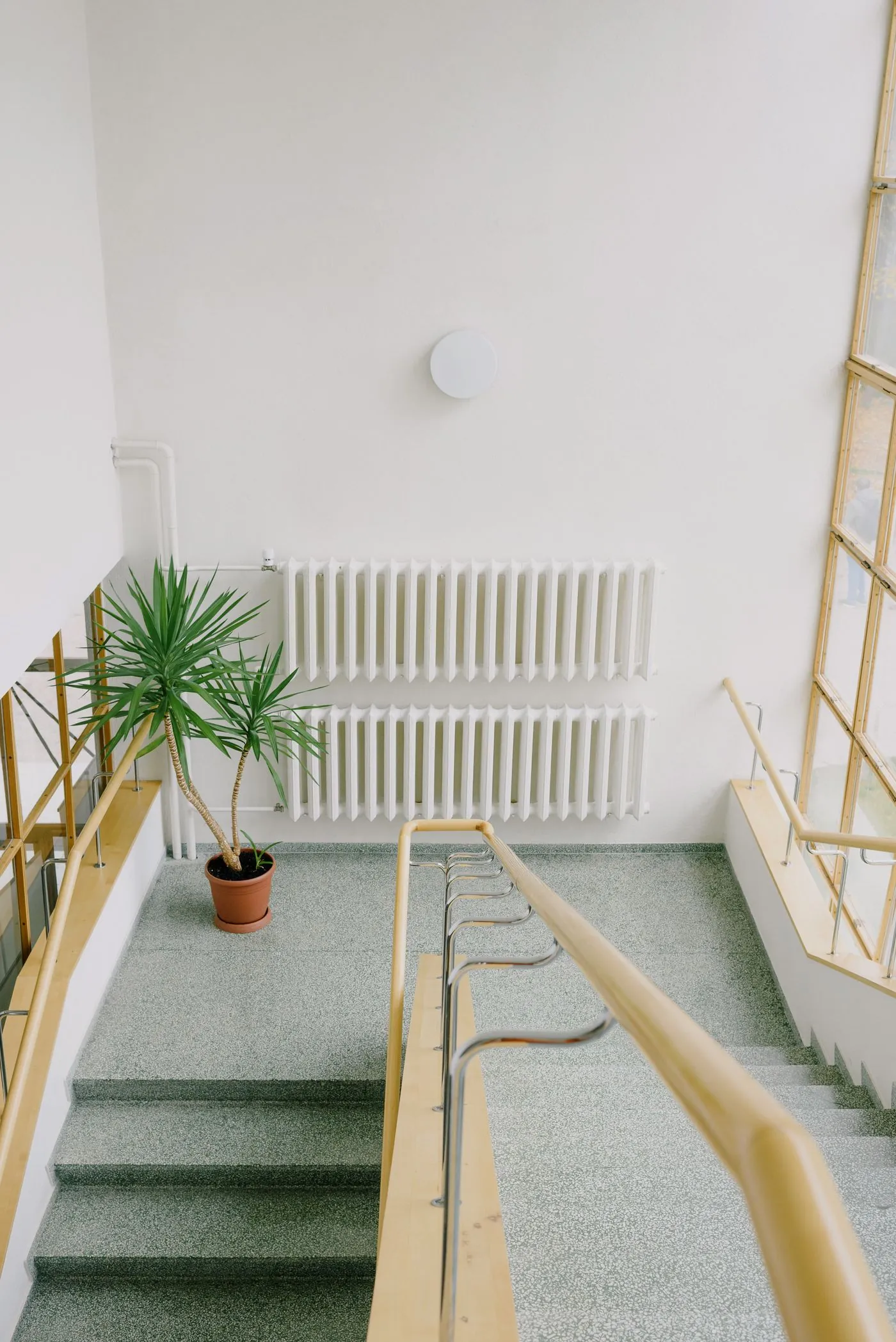
For the fundamentals of radiator settings, flow temperatures and night setbacks, our main article on heating an Altbau properly covers the details. One November ritual belongs here though: bleeding the radiators (Entlüften). If a radiator is hot at the bottom and cool at the top, air is trapped inside and the heating element gurgles. Open the bleed valve at the top end with a radiator key until water (not just air) hisses out — with the circulation pump off and the system cool, ideally before the heating season starts in earnest. Bleed radiators once at the start of the season and again whenever they start gurgling.
Ventilating without mould
Old buildings are not airtight, but they are not self-ventilating enough to forgive bad habits either. The rule that works in an Altbau is Stoßlüften — shock ventilation — done properly:
- Open the window fully, two to three times a day, for five to ten minutes. With a Kastenfenster or double window, open both sashes: the draft between the two panes flushes the old window gap and doubles the air exchange.
- Short and intense, never long and lukewarm. Ten minutes of wide-open window exchanges the room air almost completely while the walls barely cool. An hour of a tilted window cools the reveals, wastes far more heat — and is the classic mould trap.
- Tilted-window ventilation (Dauerlüften) is the Altbau's false friend. A continuously tilted window dumps heat into the reveal and the wall around it. Those surfaces cool below the dew point, moisture from the room air condenses exactly there — usually behind furniture or in the window reveal you never look at — and by February you have the black spots. Cross-ventilate instead: open windows on opposite sides of the flat for a few minutes and the air changes in half the time.
The physics is simple: mould grows where surfaces stay cold and humid. Warm air holds plenty of moisture; when it touches a cold inside surface — an unheated corner, the wall behind a wardrobe, a tilted-window reveal — the moisture condenses there. So the winter formula is: heat every room at least a little, air out hard and briefly, and keep furniture a few centimetres off exterior walls so the surface air can circulate. Our full guide on preventing damp and mould goes deeper.
Windows and seals: the November maintenance round
Before the hard frost, walk the flat window by window:
- Check the putty and gaskets. Crumbling window putty (Kitt) and hardened rubber gaskets let drafts through and let moisture into the wood. Small gaps in putty are a standard DIY repair; perished gaskets on a modernised window are usually replaceable by the tenant with the landlord's blessing.
- Self-adhesive seals work — if applied honestly. A clip-on or self-adhesive seal profile costs a few euros per window and can noticeably cut drafts on leaky single and box windows. Clean the frame, apply the seal without stretching it, and close the window on it briefly to set. Expect one or two seasons of life, not a decade. For the cost side of bigger window work, see what Altbau windows cost.
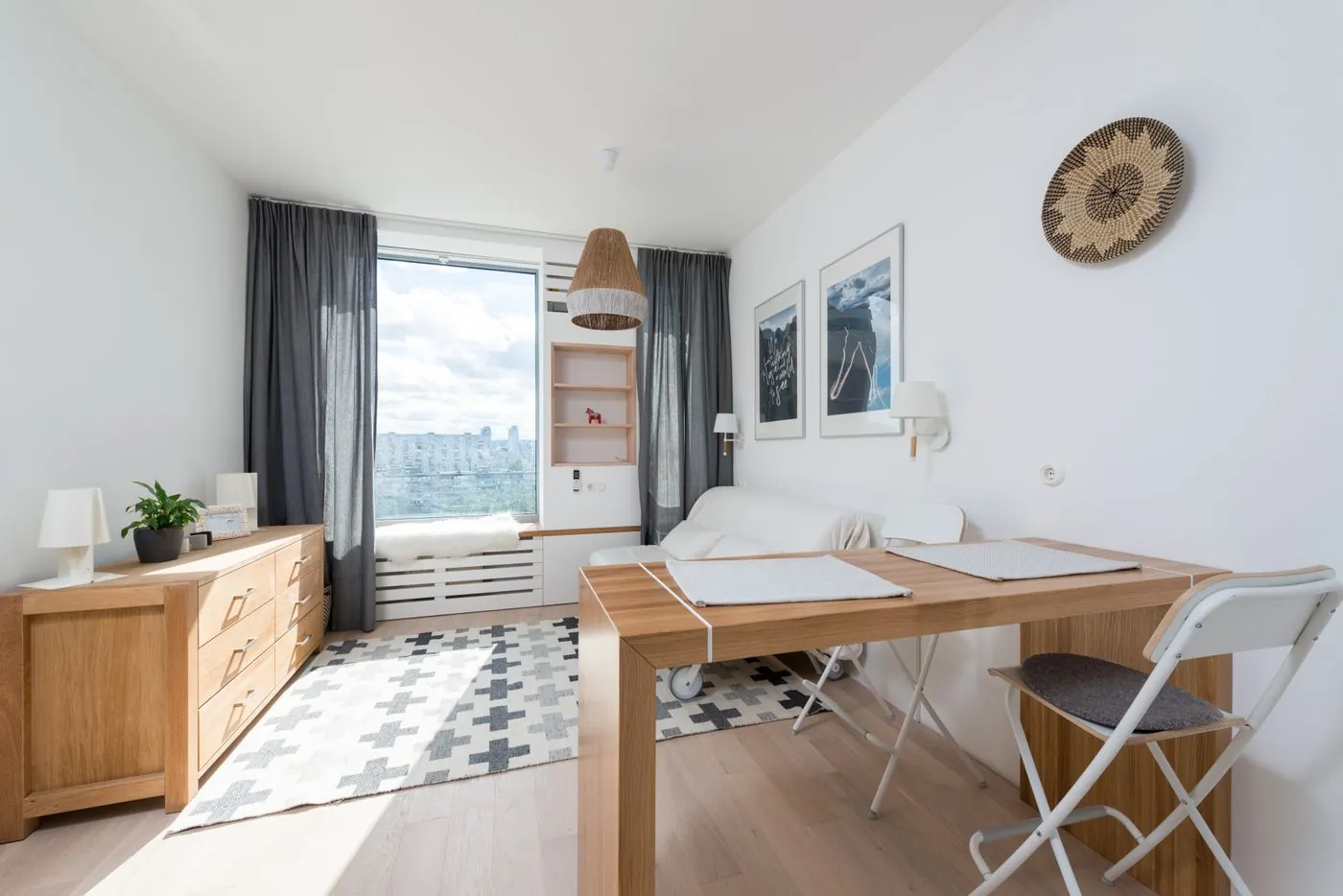
- The heavy curtain trade-off. Floor-length, dense curtains make an Altbau window wall genuinely cosy — and can cut radiant heat loss noticeably at night. But they also block the warmth rising from the radiator below, and a curtain hanging in front of a hot radiator drives warm, humid air against the coldest glass in the room: condensation, and eventually mould, in exactly the spot you cannot see. The compromise: keep curtains off the radiator during the day, close them after the evening airing, and never let them seal off the window recess completely.
Frost and absence: when you travel
A week away does not mean heating off. Keep the flat at a minimum of around 15–17 °C, even in rooms you do not use — the building fabric and the water pipes both depend on it. In old buildings the frost risk is real: supply lines running through unheated stairwells, exterior walls or badly insulated cellars can freeze, and a burst pipe in a pre-1949 building is an expensive kind of history lesson. If your flat has an exposed main tap or piping in a cold cellar, know where the shut-off valve is before you leave.
A short holiday checklist:
- Set radiators to the frost-protection or low level (roughly level 2, ~16 °C), everywhere — including the bedroom and hallway.
- Leave interior doors open so heat reaches the cold rooms.
- Shut off and drain the water supply if you are away for weeks in a hard-frost spell, or ask a neighbour to run the taps briefly on the coldest days.
- Air out once more before leaving; a closed, damp flat at 16 °C for two weeks is a mould incubator.
- If the trip spans a billing period, note the radiator and meter readings — it helps at the next utility cost settlement.
What the season roughly costs
Heating costs depend on the building's renovation state, your heating rhythm and the energy price of the day — any table here is a rough orientation, not a forecast. For an 80 m² Altbau in average condition, the winter months (roughly October to March) typically dominate the annual bill:
| Heat source | Typical setup in an Altbau | Rough winter share for 80 m² |
|---|---|---|
| Gas central heating | The most common case — a central boiler in the cellar, radiators throughout | Approx. €700–1,200 for the heating season, before any price swings |
| Night storage heaters | Electric storage units from the 1960s–80s, common in flats without gas lines | Very sensitive to the electricity tariff; can exceed €1,000–1,500 in a poorly insulated flat |
| Oil central heating | Shared building oil tank, metered per flat or estimated by floor space | Roughly comparable to gas, often €800–1,300 per season at typical tank prices |
| Storey heating / single ovens | Gas floor heaters (Etagenheizung) or tile stoves, common in smaller Altbau flats | Highly usage-dependent; the per-room heating rhythm matters most here |
How these figures reach your yearly statement, what landlords may pass on, and where the common disputes lie, we cover in detail in heating costs in the Altbau.
The November checklist
| Task | Why it matters | Time needed |
|---|---|---|
| Bleed all radiators (Entlüften) | Trapped air cuts radiator output noticeably and makes them gurgle | 10–15 min for a flat |
| Check putty and gaskets on every window | Small gaps now are drafts and moisture damage later | 30–45 min |
| Fit self-adhesive seals on drafty windows | Cuts heat loss on old single and box windows cheaply | 10–15 min per window |
| Move furniture 5+ cm off exterior walls | Prevents cold, humid surfaces behind wardrobes — the classic mould spot | 20–30 min |
| Set the heating rhythm: low and continuous | Cold walls pull heat out; on-off heating never catches up | 15 min (thermostat settings) |
| Establish the Stoßlüften routine | Two to three short, hard airings beat any tilted window | Ongoing habit |
| Check the main tap and cellar pipes | Frost-exposed lines in old buildings can burst when you travel | 10 min |
If the central heating stays off or the radiators stay cold for days in the heating season — despite you doing everything right — that is not a quirk of the old building, it is a defect. Landlords must keep the heating operational and supply heat within customary local hours; persistent failure to do so justifies a rent reduction. Document dates, room temperatures and your written requests, then read our guide to rent reduction (Mietminderung) before you deduct anything.
Warm through winter, the Altbau way
An old building rewards rhythm over force: heat low and continuously, air out hard and briefly, keep the window seals honest and the walls breathing. None of it is complicated, and almost all of it is free — the cost is attention, not money. Do the November round once and the flat will carry you to spring the way it has carried its residents for a century: solidly, and with high ceilings.
Planning work on an old building?
Windows, wiring, heating, floors — model every line item before you get quotes.
Open the calculatorSeasonal guide for orientation — minimum temperatures and landlord duties vary by state and lease. Questions for the editors: hello@altbau.com