Altbau in Bremen: the Weser city's quiet bargain quarters
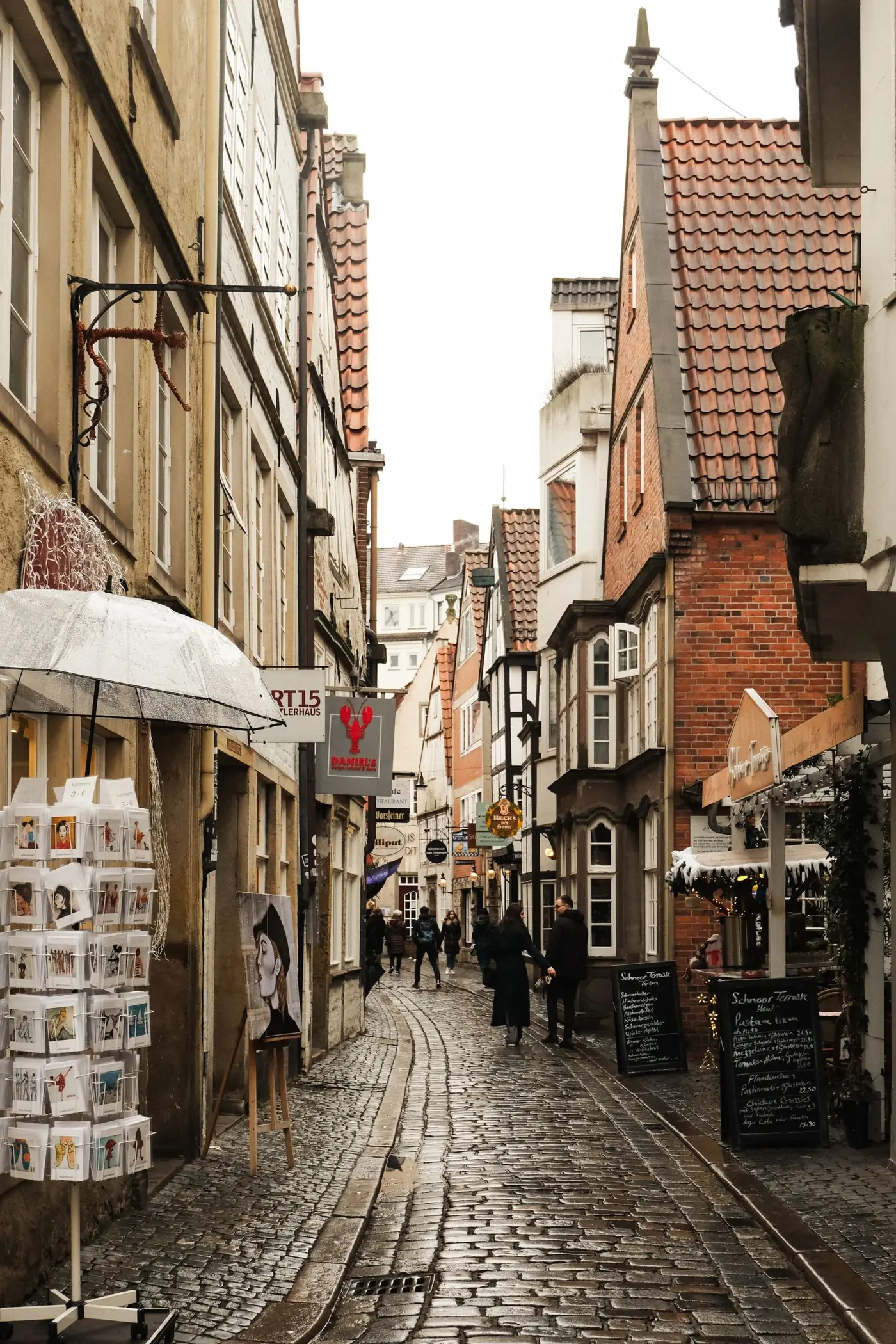
Bremen is a city-state of roughly 570,000 people with Hamburg's maritime brick tradition and a fraction of its price level. The Gründerzeit belt wraps tightly around the Weser, the university and the port-logistics economy (plus the Mercedes plant) keep demand steady without speculation, and the market moves slowly enough for buyers to actually inspect before they bid. Among Germany's larger cities, only Leipzig is comparably affordable — see the full city comparison.
Where the Altbau is
- Ostertor / Steintor — the classic Gründerzeit belt east of the Weser: tenement blocks, cafés, culture, the city's most wanted address.
- Neustadt — tenements west of the river: up-and-coming, the cheapest Altbau stock within walking distance of the center.
- Schwachhausen — elegant villas and bourgeois blocks, leafy streets, the conservative quality choice.
- Schnoor — the medieval lanes near the Weser: a protected ensemble, mostly commerce and boutique housing, not a tenement market.
Rents and prices
| Area | Typical rent (renovated) | Purchase, per m² |
|---|---|---|
| Ostertor / Steintor | 11–14 €/m² | 3.200–4.500 € |
| Schwachhausen | 10–13 €/m² | 3.000–4.200 € |
| Neustadt | 9–12 €/m² | 2.600–3.600 € |
| Schnoor (boutique) | 12–15 €/m² | 3.500–5.000 € |
Renovation specifics
- Clinker brick and storm exposure. Like Hamburg, much of the stock is brick rather than plaster: repointing with the correct lime mortar is the recurring task, and driving rain on the Weser makes façade joints the first thing to fail.
- Damp first, cosmetics second. The North German climate makes façade condition, roof drainage and window reveals the opening checks of any Bremen survey — see our guide to damp and mould before you commit.
- Cheaper trades, slower markets. Handwerker prices sit clearly below Hamburg's; that leaves budget for the moisture management work that North German buildings genuinely need. Window budgets are the usual swing factor — our window cost guide has the frames and glazing options.
In Bremen, start every inspection at the gutters and downpipes. Storm exposure and flat North German gradients mean failed roof drainage shows up as cellar damp and ground-floor mould within a few winters — and it's the cheapest defect to spot and the most expensive to ignore.
Who Bremen suits
First-time buyers who want real Altbau character without Munich or Hamburg money, tenants priced out of the big ports, and anyone anchored to the university, logistics or automotive employers. It doesn't suit capital-gains chasers — appreciation here is slow and steady. Take our viewing checklist to every appointment, and if you're planning works, the renovation budget planner reflects Bremen's moderate trade prices. Current rent and price momentum across all cities is tracked in the market radar.
Building history and fabric in Bremen
Bremen has a house type that defines the city like no other: the Bremer Haus. From the mid-nineteenth century, long terraces of narrow, usually three-storey houses appeared with a sunken basement, raised ground floor, classically detailed rendered facade and a deep, narrow garden behind. In Schwachhausen, the Ostertor and Steintor quarters, Findorff and the Neustadt, these houses form entire streets. They are neither tenement nor villa, but an independent type of bourgeois terrace house.
The basement level is the decisive part of the fabric: it sits partly below ground, was often originally kitchen and storage, and is nowadays frequently converted into living space. Without verified waterproofing, drainage and ventilation that is a damp risk. Add timber beam floors, lime plasters, narrow tall windows and stair openings closed off later. Because many Bremen houses sit in ensembles, facade rhythm, window divisions and front gardens are heritage-relevant too.
Renovating in Bremen: basement and terrace logic
Bremen's heritage authority protects numerous ensembles and individual buildings; because of the terrace construction, work on roof, facade or party wall almost always affects the neighbours. Before starting, clarify not only permissions but also party walls, shared drainage and the structural continuity of the row.
- Basement first — check waterproofing, drainage and ventilation before turning former service space into a flat.
- Coordinate the party wall — insulation and openings at the boundary affect the neighbouring house and need proper planning.
- Preserve facade rhythm — window divisions, cornices and front gardens are part of the protected character of ensembles.
- Use funding — federal grants for envelope and heating plus Bremen state programmes, applied for before commissioning.
The typical deep plot and narrow parcel reward renovation that works with the existing plan: natural cross ventilation, a retained stair and a dry basement achieve more than a radical conversion that disrupts both terrace structure and daylight.
Budget for a Bremen renovation
Tick "major city" in the calculator, then adjust down for Bremen's moderate trade prices.
Open the calculatorRent and price figures are researched indicative ranges (November 2026) and vary strongly by street, condition and floor. No paid recommendations.