Altbau in Hannover: the green city's quiet Gründerzeit belts
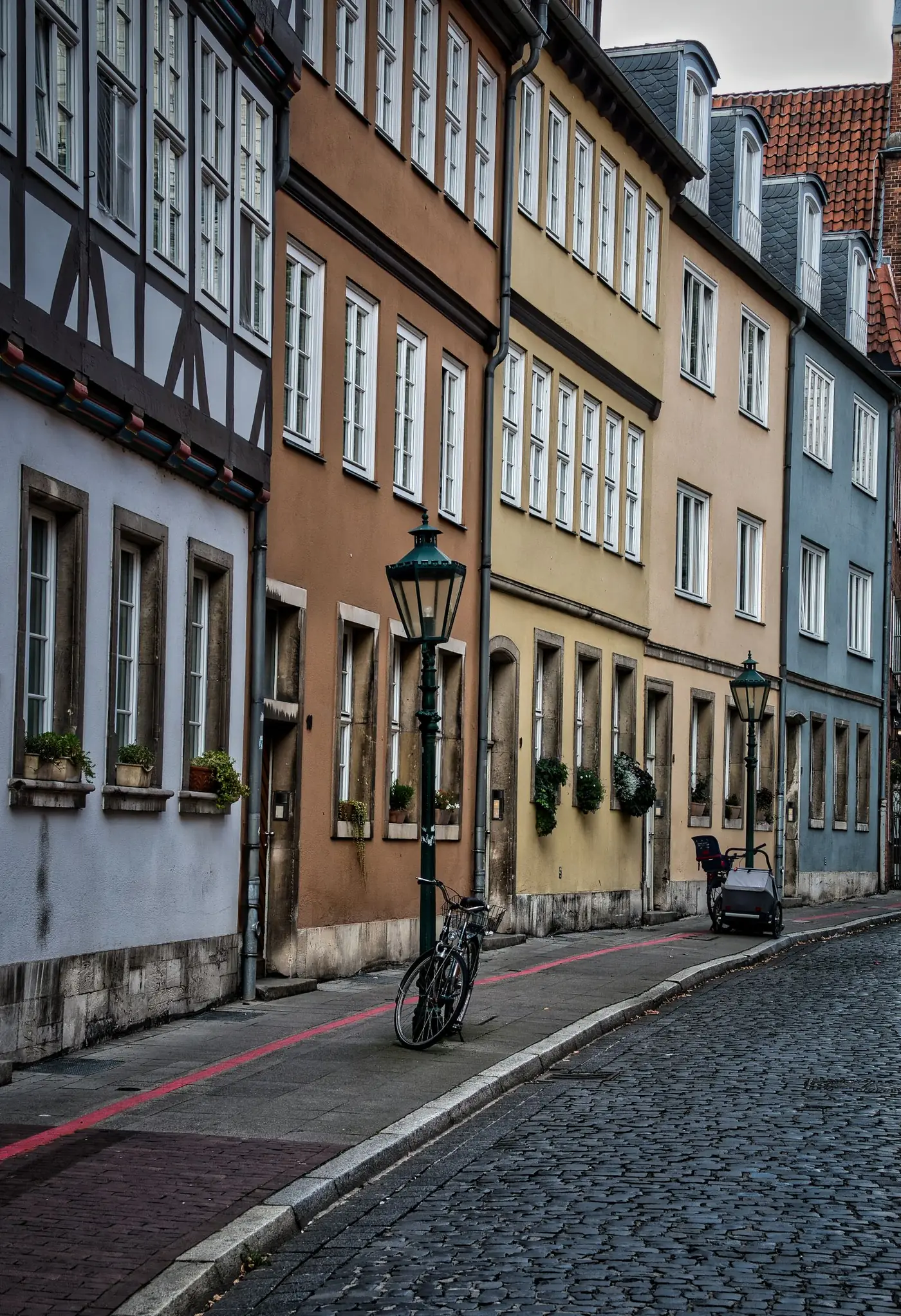
Hannover, Lower Saxony's capital with roughly 535,000 people, is not an Altbau city on first sight — wartime bombing destroyed most of the old fabric, and the post-war rebuild was thorough. Look closer and the Gründerzeit belts survive in concentrated, well-defined quarters: elegant blocks in List, a creative workers'-quarter belt in Linden, student tenements in Nordstadt. Rents sit moderately by German big-city standards, the Messe expo and state administration keep demand steady, and value for money is the honest headline.
Where the Altbau is
- List & Oststadt — the elegant belt: Gründerzeit blocks near the Eilenriede city forest, the city's most expensive Altbau addresses.
- Linden — the creative belt: a former workers' quarter with lively Limmerstraße, cafés and workshops, where Altbau character comes without Oststadt pricing.
- Nordstadt — dense tenements around the university: cheaper, rougher, plenty of student demand.
- Old town lanes — half-timbered and historic townhouses, mostly rebuilt or heavily restored, small in number and priced like the postcard they are.
Rents and prices
| Area | Typical rent (renovated) | Purchase, per m² |
|---|---|---|
| List / Oststadt | roughly 10–13 €/m² | roughly 3.800–5.200 € |
| Linden | roughly 8–11 €/m² | roughly 3.000–4.200 € |
| Nordstadt | roughly 7–9 €/m² | roughly 2.500–3.500 € |
| Old town / city centre | roughly 9–12 €/m² | roughly 3.300–4.800 € |
Indicative ranges only — Hannover sits in the mid-tier of German big cities, comfortably under Hamburg or Berlin.
Renovation specifics
- Lime plaster on older stock. The surviving 19th-century blocks are plastered in lime; painting or patching them with modern dispersion systems traps moisture — our damp and mould guide covers the consequences — and damage shows within a few winters.
- Check the building line. Because so much was rebuilt after the war, many "Altbau" streets mix surviving blocks with 1950s infill. Look at the street frontage as a whole, and at windows and façade details — the age of the neighbours matters for appearance, character and resale.
- Nordstadt's heating legacy. Coal heating was standard here well into the post-war decades; legacy systems, shared flues and outdated storage heaters are a recurring topic in Nordstadt surveys and should feed directly into your renovation budget.
In Hannover, never rely on the street name. A "Gründerzeit address" can be a 1950s building between two genuine Altbau blocks. Verify the construction year in the Energieausweis and look at the façade rhythm before assuming period quality.
Who Hannover suits
Buyers who want genuine Gründerzeit rooms at mid-tier prices; owners planning a patient renovation with real upside; anyone anchored by the Messe, state institutions, the university or the region's industrial employers. Who it doesn't suit: buyers chasing metropolitan glamour — Hannover trades quietly and reliably, not spectacularly.
Compare with our other city guides and track the wider market in the market radar. Before any viewing here, run through the viewing checklist — especially the heating questions.
Building history and fabric in Hannover
Hannover's Altbau concentrates in the Gründerzeit extensions: the List, Linden, Nordstadt and Südstadt, plus parts of Kleefeld. From the 1870s onwards, closed apartment blocks appeared with rendered and brick facades, often shaped by a north German brick tradition. The Südstadt and the List show the bourgeois face with bay windows and stucco, while Linden and the Nordstadt are denser and more mixed, with workshops in the courtyards.
Hannover too suffered heavy war damage, so many quarters are a mosaic of surviving Gründerzeit houses, simplified reconstruction and post-war architecture. The fabric therefore has to be established case by case: timber beam floors and lime plaster on one side, solid slabs and different wall materials on the other. For renovation that means one thing above all — do not infer the structure from the facade, but check floor build-up, wall thickness and moisture at the property itself.
Renovating in Hannover: fabric, tenancy law, funding
Heritage protection covers both individual monuments and ensembles such as closed Gründerzeit streets. For rented houses, the local rent index and modernisation levy rules apply; grant applications for envelope and heating must be submitted before commissioning to be effective.
- Structure per building — post-war reconstruction varies floors and walls; get structural sign-off before opening walls.
- Care for brick — with exposed masonry, agree mortar and cleaning methods with the heritage authority.
- Inspect courtyard vaults — former workshops and cellars often have different loads and moisture behaviour from flats.
- Envelope before heating — plan windows, roof and facade first, then calculate heat load and the funding package.
Hannover's Altbau is more down-to-earth than Munich's or Hamburg's — and that is an advantage when renovating: solid, repairable structures, well-lit floor plans and craft-built fabric reward careful restoration more than a complete gutting.
Budget for a Hannover renovation
Tick "mid-size city" in the calculator as a starting point, then refine with local quotes.
Open the calculatorRent and price figures are researched indicative ranges (November 2026) and vary strongly by street, condition and floor. No paid recommendations.