Altbau in Nuremberg: sandstone, spires and Franconian value
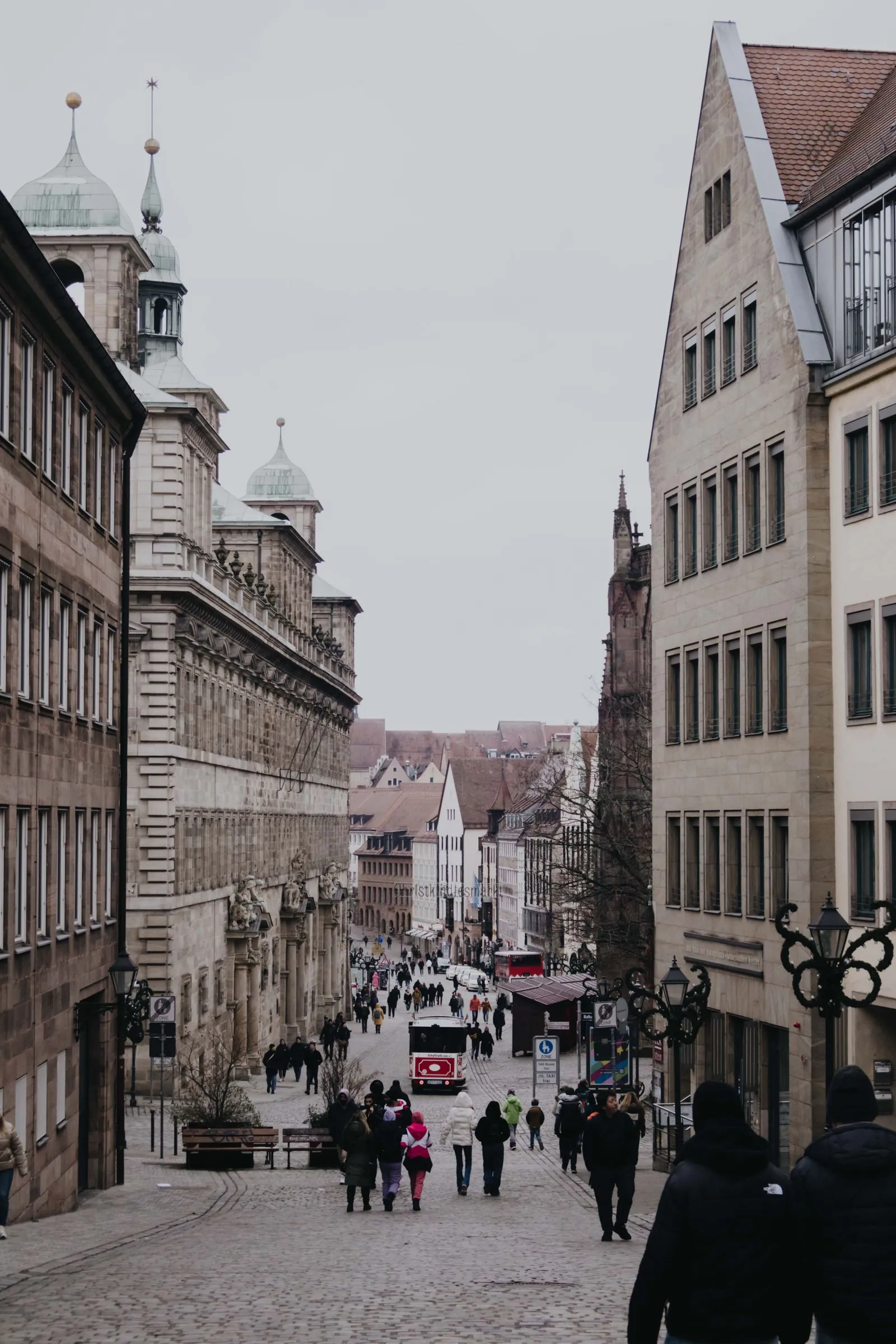
Nuremberg is Bavaria's second city and its most underrated Altbau market. Around 520,000 people live here, many working in the same firms that employ Munich commuters — but at rents far below Munich levels. The old town was heavily destroyed in 1945 and carefully rebuilt, and its local signature is the red Burgsandstone: warm, rough-hewed facades you won't find anywhere else in this density. If you want the value case for Nuremberg spelled out, start with our city comparison — it sits next to Leipzig on price, with less hype.
Where the Altbau is
- Altstadt / St. Sebald & St. Lorenz — the rebuilt core: postcard territory around the Rathaus, largely tourist-priced and mostly commerce, with a thin band of boutique housing above.
- Gostenhof ("GoSt") — the westside Gründerzeit belt: tenement blocks, creative scene, cafés and the city's best value-to-character ratio.
- St. Johannis — quiet, cobbled, with pockets of half-timbering and solid late-19th-century rows; popular with families.
- Wöhrd & Maxfeld — tenement blocks near Wöhrder See, leafy and central, still below the western quarters on price.
Rents and prices
| Area | Typical rent (renovated) | Purchase, per m² |
|---|---|---|
| Altstadt / Sebald–Lorenz | 13–17 €/m² | 5.500–7.500 € |
| Gostenhof | 10–13 €/m² | 3.800–5.200 € |
| St. Johannis | 10–13 €/m² | 3.800–5.000 € |
| Wöhrd / Maxfeld | 10–13 €/m² | 3.600–5.000 € |
Renovation specifics
- Sandstone breathes. Burgsandstone facades must never be sealed with dense paint or cement render: breathable systems and specialist lime pointing are the rule. Get a façade specialist early — see our renovation budget planner for realistic cost frames.
- Rebuilt fabric, mixed quality. Much of the core is post-war reconstruction with modern plinths under historic skin — check what's original before pricing stonework.
- Moderate Bavarian trade prices. Handwerker rates sit below Munich, roughly at western German mid-sized-city levels. Windows are often the biggest line item: our window cost guide covers Altbau-specific replacements.
Nuremberg shares Munich's labor market — ICE 29 minutes, regional employers aplenty — while its Altbau rents sit roughly a third lower. That gap, hedged by Franconian price discipline, is the structural argument for the city. Track it against the national picture in our market radar.
Who Nuremberg suits
Buyers and tenants who want genuine Gründerzeit stock at Franconian prices, anyone tied to the Nuremberg–Fürth–Erlangen job corridor, and value hunters priced out of Munich who still need its economy. It doesn't suit those chasing capital-gains hype — this market moves slowly and predictably. Before any viewing here or elsewhere, take our viewing checklist; in older Nuremberg stock, pay special attention to cellars and ground floors, the classic sites of damp and mould.
Building history and fabric in Nuremberg
Nuremberg's Altbau divides into two worlds: the stone old town with sandstone masonry, half-timbered sections and narrow lanes — and the Gründerzeit extensions such as Gostenhof, St. Johannis, Wöhrd and the Südstadt. From the 1870s, apartment houses appeared with sandstone or rendered facades, bay windows, deeply profiled reveals and deep plots with rear courtyards and workshops, fitting a city built on industry and craft.
Wartime destruction of the old town and subsequent rebuilding joined historic forms to new structures in many places. In the Gründerzeit quarters, original fabric survives more often: brick masonry, timber beam floors, lime plaster, floorboards and box windows. Sandstone connects both areas — and demands particular care, because weathered joints, the wrong mortar and aggressive cleaning can damage the stone permanently.
Renovating in Nuremberg: heritage and sandstone
The Bavarian state heritage office lists numerous monuments and ensembles in Nuremberg; the old town is additionally covered by municipal bylaws and design rules. Early agreement with the authority is advisable before facade work, window replacement or loft conversion, especially where sandstone is exposed.
- Do not seal stone — sandstone needs vapour-open joints and mortar; sealed coatings drive moisture into the stone.
- Plan for workshops — courtyard buildings have different floor loads and fire requirements from purely residential houses.
- Check windows — historic divisions and reveals are often protected in ensembles; refurbishment is usually possible.
- Combine funding — KfW/BAFA and Bavarian programmes coordinated with heritage conditions.
As in other war-damaged cities, the look of a facade says little about its structure. A proper survey of floors, walls and moisture is the basis for a renovation that keeps the historic effect without overburdening the fabric with incompatible modern systems.
Budget for a Nuremberg renovation
Tick "major city" in the calculator to reflect Bavaria's trade prices.
Open the calculatorRent and price figures are researched indicative ranges (November 2026) and vary strongly by street, condition and floor. No paid recommendations.