Altbau in Vienna: Europe's largest Gründerzeit city, and its own rent rules
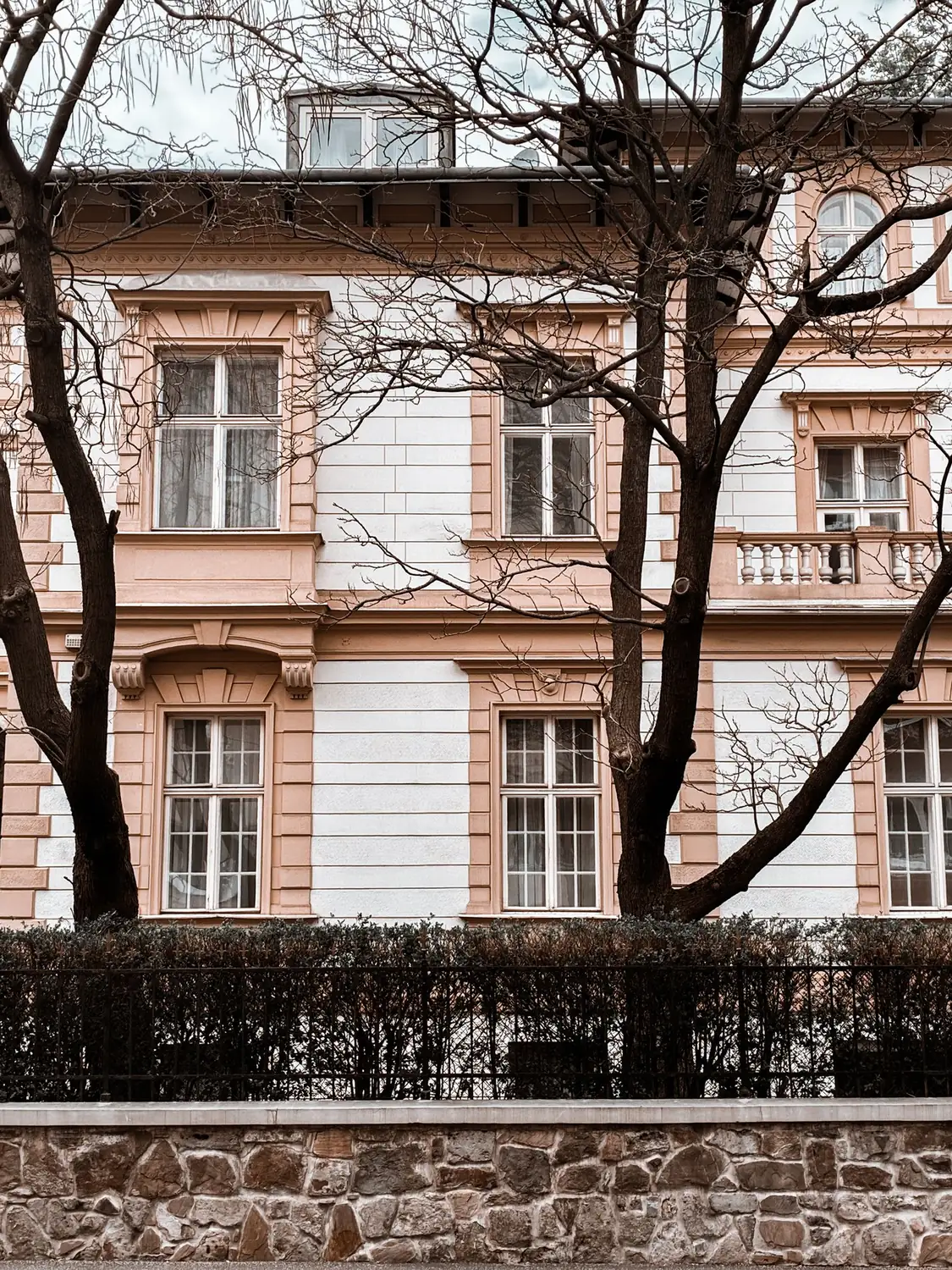
Vienna is the case that breaks the German Altbau playbook. Roughly two million people — the EU's fourth-largest city — living in a building stock where whole districts date from before 1914. Berlin has the louder mythology; Vienna has more connected Gründerzeit substance. The inner city and its belt were built in one long burst between the 1860s and the First World War, which is why you can walk from the Ring out to the Gürtel and never leave the same architectural era. And then comes the second difference, the one that decides every number on this page: rents here are governed by a law that most German landlords have never had to read.
Where the Altbau is
- Innere Stadt & the Ringstrassen zones — the prestige core: palace-scale façades, embassy addresses, and a stock that is now mostly offices, commerce and luxury flats rather than ordinary renting.
- Josefstadt & Alsergrund — the elegant bourgeois quarters: narrow streets, university life at the doorstep, consistently the highest demand for classic Altbau living.
- Währing & Döbling — the villa belts on the north-west slope: quiet, green, generous flats, and the most expensive addresses outside the first district.
- Leopoldstadt & Landstraße — the mixed belt near the Prater and the Danube canal: Gründerzeit blocks of very different quality, more turnover, and noticeably more supply than the inner districts.
- Favoriten & Ottakring — the workers' Gründerzeit: dense, plain, sometimes still with courtyard toilets in the unrenovated corners, and the most affordable entry into the stock — visibly gentrifying.
Rents and prices
Indicative ranges, not quotes. Vienna sits far below Munich or the German top-tier cities for comparable pre-1914 stock — not because the buildings are worse, but because a large share of the market never reaches a free negotiation. Under the MRG rent framework, an Altbau flat without a lift in original condition can cost roughly 40–50% less than an equivalent address in Germany's most expensive cities.
| Area | Typical rent (renovated) | Purchase, per m² |
|---|---|---|
| Innere Stadt / Ringstrassen zones | roughly 16–24 €/m² | roughly 7.000–11.000 € |
| Josefstadt / Alsergrund | roughly 13–19 €/m² | roughly 5.500–8.500 € |
| Währing / Döbling | roughly 13–18 €/m² | roughly 5.000–8.500 € |
| Outer belt: Leopoldstadt, Landstraße, Favoriten, Ottakring | roughly 9–16 €/m² (wide spread) | roughly 3.000–6.500 € |
The spread inside the last row is real: a renovated flat near the canal trades at the top of it, an unrenovated Ottakring block flat at the bottom. Treat any single figure you hear from an agent as a starting point for a conversation, not a valuation.
Renovation specifics
- Different codes, different paperwork. Austria works through the OIB guidelines, adopted by the federal provinces — not Germany's GEG. There are no German Energieausweis classes A–H here; the Austrian certificate reports the Heizwärmebedarf (HWB) in kWh/m²a, and roughly speaking an unrenovated Altbau sits in a high band while a properly renovated one drops by half or more. Ask for the HWB number, not for a letter.
- Schutzzonen: protection without listing. Under § 19 of the Bauordnung für Wien, the city designates protected street zones where the appearance of the street is what is protected — façade colour, window format, roofscape, shopfronts. A repaint or a new window in a Schutzzone can need approval even though the building is not a Denkmal.
- Listed buildings go through the Bundesdenkmalamt. Where the Denkmalschutzgesetz applies, the federal heritage office signs off on anything touching the substance: windows, doors, stucco, stairs, sometimes the colour of the hallway. Expect the approval to take longer than the trade work, and budget for it in the programme.
- Courtyard logic. Much of the stock is a street wing plus a Hofanbau — rear wings and courtyard infills added when the block was already dense. Those rooms are darker, colder and more prone to damp, and they are where the cheap square metres are. Read the plan before you fall for the stucco front.
- Fernwärme is the default. District heating covers much of the city, so many Altbau flats have no boiler of their own and no gas connection to argue about. That simplifies the heating question and complicates the efficiency one: you inherit the network's numbers, not your own.
Vienna protects a façade twice over. A Schutzzone protects the street picture — so a repaint, a new window or a changed shopfront may need approval while the flat behind it is yours to gut. Denkmalschutz protects the substance — so the same building, once listed, constrains the staircase, the doors and the stucco as well. Before you buy, ask both questions separately: is the address in a Schutzzone, and is the building listed? The two answers decide your budget more than the condition report does — and they are separate questions with separate offices behind them.
Who Vienna suits
Buyers who want scale and coherence rather than a single pretty house: an entire district built to one urban idea, with tram, theatre and market inside ten minutes. Tenants who value a regulated rent more than a free negotiation. Renovators who can live with approval processes and who understand that a Viennese Altbau is often a street wing plus a dark courtyard wing, not one clean volume. Who it doesn't suit: anyone chasing the fastest possible yield — the same rules that keep rents stable also cap what you can extract, and the MRG logic rewards patience over optimisation.
Compare the stock with our other city guides, price the work through window costs and the renovation budget guide, and take the viewing checklist to every appointment. Damp in a courtyard wing is the single most common surprise — read the damp and mould basics before you sign anything.
Building history and fabric in Vienna
Vienna's Altbau means the Gründerzeit Zinshaus. Between the mid-nineteenth century and the First World War, closed perimeter blocks appeared in today's inner districts with representative street facades, monumental stairwells, Pawlatschen courtyards and deep, often staggered rear wings. Alongside them stand Biedermeier houses and the representative buildings of the Ringstrasse era — a density of periods hard to find elsewhere in such a compact area.
Structurally, brick masonry, timber beam floors (often with infill), lime plaster, tall box windows, herringbone parquet and heavy double doors dominate. The courtyards with their Pawlatschen, the open access galleries, are not just architectural detail but part of the circulation and therefore often covered by heritage and fire regulations. Renovators also work within a distinctive legal framework: the Austrian Tenancy Act (MRG) distinguishes Altbau categories and influences rent, maintenance duties and the apportionment of improvements.
Renovating in Vienna: MRG, heritage, funding
Before work on facades, stairwells, roofs or windows, clarify listed status with the Federal Monuments Authority; protection zones and ensembles add municipal rules. In parallel, the MRG accompanies every modernisation of rented Altbau flats — maintenance obligations, category supplements and tenant consent are not side issues but part of the calculation.
- Legal position first — check the Tenancy Act, category classification and protection zone before planning building work.
- Keep the stairwell — steps, balustrades, gates and Pawlatschen define the building and are frequently protected.
- Refurbish box windows — repair and reveal sealing are more heritage-compatible than full replacement.
- Bundle funding — coordinate Vienna housing and renovation grants with federal programmes, applying before commissioning.
Thermal renovation of a Viennese Zinshaus is a balancing act: external insulation changes facade proportions and cornices, internal insulation moves the dew point into historic brickwork. An experienced planner and early agreement with the heritage authority matter more here than a fast conversion.
Budget for a Vienna renovation
Tick "major city" in the calculator to reflect Viennese trade prices, then add the approval time as a line of its own.
Open the calculatorRent and price figures are researched indicative ranges (November 2026) and vary strongly by district, street, condition and floor. Austrian rent regulation is complex and changes; nothing here is legal advice. No paid recommendations.