Repointing masonry in period buildings: why the mortar matters
Why the joint is a piece of evidence
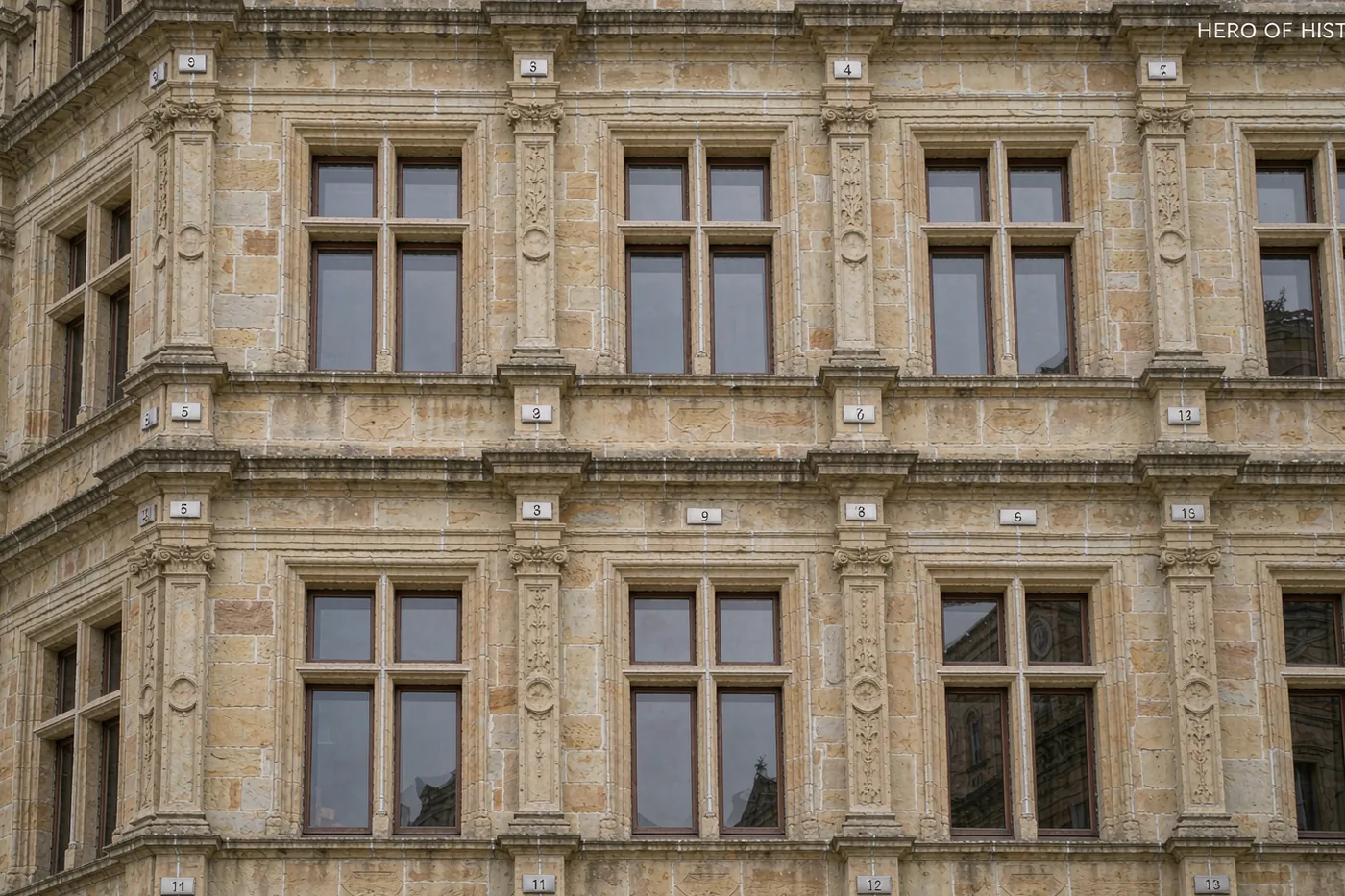
Masonry joints in period buildings show which mortar and which stone were used. They are not just filler but part of the fabric: they distribute loads, let moisture escape and protect the edges of the units. Replacing them with modern, very hard cement mortar changes the behaviour of the whole wall.
Historic mortar was often lime-based and therefore softer and more vapour-open than today’s cement mortar. That is not a deficiency but a property. The building history page explains why old constructions were designed around this interaction.
Three conditions that must be distinguished
The first is intact, slightly weathered joints with adequate bond. The second is crumbly, sandy joints that can be picked out with a finger. The third is hard, cracked cement joints that damage or split the stone itself.
These conditions call for different answers. Intact joints need rest, weathered joints need proper repointing, and hard joints need a close check on whether they must be removed. Judging by appearance alone confuses weathering with loss of fabric.
What happens when mortar is too hard
Mortar that is too hard no longer absorbs movement and moisture. Instead, stresses pass into the stone and moisture stays at the contact faces. In frost this can cause spalling that is wrongly sought in the stone rather than in the joint.
The damage is often delayed. After repointing with cement mortar the wall initially looks cared for; only after several winters do the consequences show. That is why the question about the old mortar is not a side issue but the core of any joint work. The monument protection guide explains why interventions in historic fabric are clarified in advance.
Trial first, then the full area
The sequence starts with a survey: photograph the joints, test hardness with a simple tool, look for moisture marks and earlier repairs. Then comes a trial area in an inconspicuous spot. Only when colour, texture and hardness are right is the full area worked.
This order feels slow but is the cheapest one. Applying a wrong mortar mix across a whole facade is a removal job nobody budgeted for. The measure matrix helps keep joint work, render work and moisture diagnosis as separate items.
Limits of DIY work
Observing, photographing and gently cleaning loose surface material are feasible. Removing very superficial, already loose joint material in small areas can be possible too. Once joints are raked out over an area and re-pointed, practical experience is needed.
The reason lies in the detail: joints must be evenly deep, clean and moist enough for new mortar to bond without staining the stone. With soft historic masonry, too much force can destroy more than the weathered joint was worth.
What proper repointing consists of
Sound work starts by choosing a mortar matched to the existing masonry, continues with careful removal of defective joints and ends with execution that protects the stone and lets moisture escape. The surface may recede slightly; it need not look polished.
Completion includes a walk-around after the first rainy period: does the mortar effloresce? Does moisture remain on the stones? Have cracks formed? Photographs of the trial and finished areas are later the basis for assessment and rework.
Use, care and records
In a tenancy, joints are usually part of the common fabric or the building substance. Damage from severe weathering or spalling should be reported in writing. Filling small areas with cement mortar yourself makes later professional assessment harder.
For owners the joint is an indicator of facade condition. Documented repointing with a trial area and material specification is worth more than the statement "repointed". At sale or during later works, traceability counts.
Cost types rather than prices
This guide deliberately gives no figures. The effort depends on the area, the depth of joints to be raked, the condition of the units, the scaffold and whether a trial area is needed. What holds up is the structure: survey, trial, material choice, raking out, repointing, recheck, documentation.
Two quotes are comparable only when they describe the same mortar and the same working depth. A quote that merely says "repoint" without naming the material is not a reliable quote for historic masonry.
Limits of this guide
Which mortar suits a specific case, how deeply joints must be raked and what applies under monument protection is decided by inspection on site and the responsible authority — not by an article online. Requirements can change; the linked institutions are the starting point for verification.
This is general orientation, not construction, monument or material advice. There are no paid recommendations and no links to contractors. What counts are the survey, a trial area, a written material specification and documented execution.
Sources and verification
- DIBt — German Institute for Building Technology (German original)
- dena — German Energy Agency: retrofitting historic fabric
- Verbraucherzentrale — consumer advice (German original)
These primary sources are starting points for verifying the framework; requirements and deadlines are set by the responsible authority in each case. No paid recommendations.
Frequently asked questions
Why not simply use cement mortar?
Because it is usually harder than historic lime mortar and does not absorb moisture or movement. The result can be cracking and spalling of the stone. Material choice belongs to the existing fabric, not to the shelf.
How do I recognise weathered joints?
They are sandy, crumble easily and can be picked out with a blunt tool. Intact joints resist. A finger test in an inconspicuous spot often says more than the colour.
Does the whole facade need repointing?
Not necessarily. Often one section is enough when the cause is clear and the mortar matches. A trial area before the full job is decisive — otherwise you risk a removal job.
Planning work on an old building?
Windows, wiring, heating, floors — model every line item before you get quotes.
Open the calculatorFor orientation only — requirements depend on the building, the state and the lease. No legal, tax or energy advice. Questions for the editors: hello@altbau.com