Altbau in Graz: Austria's quiet university bargain
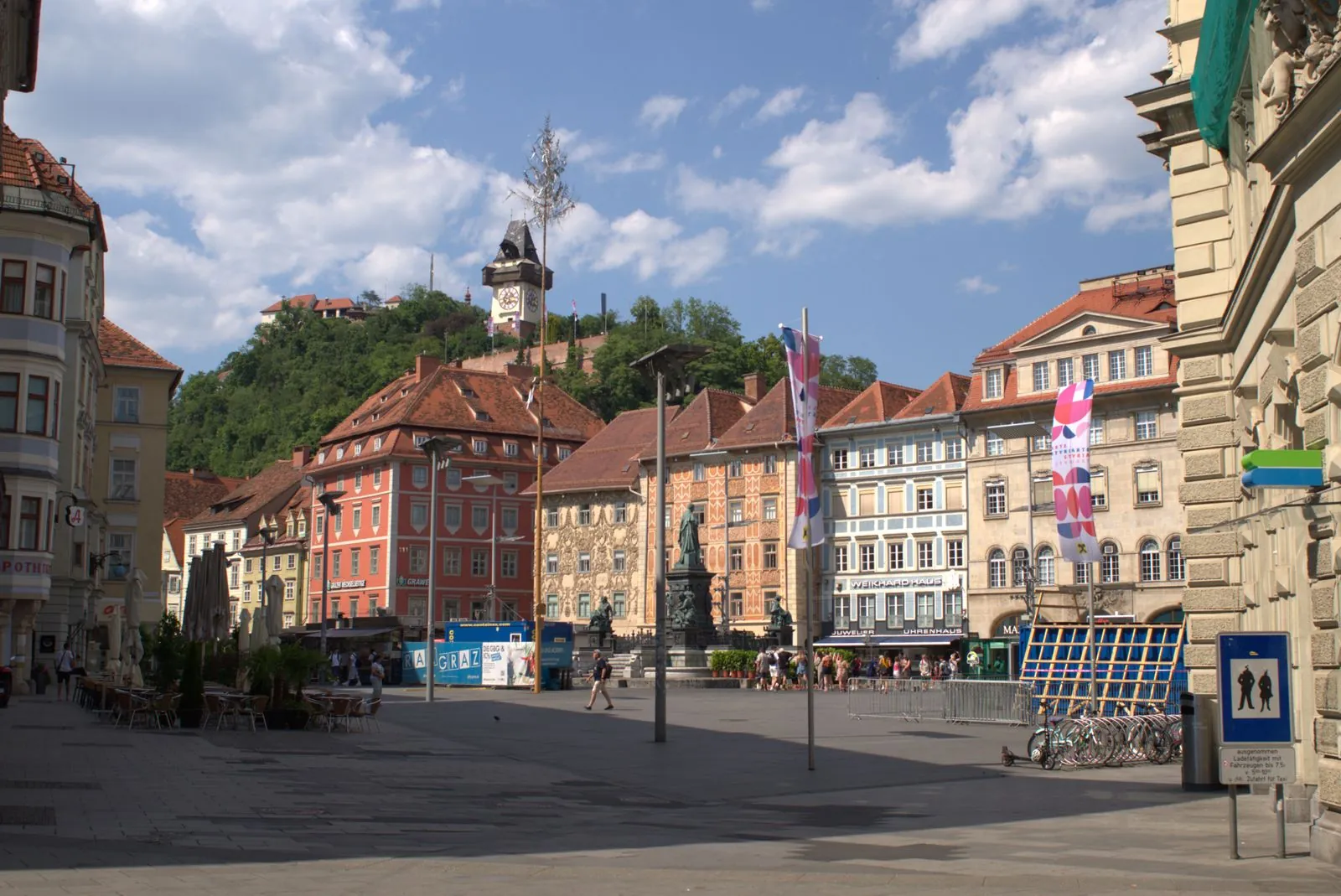
Graz is Austria's second city and its student capital: roughly 300,000 people, four universities and some 60,000 students — the largest student city in the country after Vienna. The UNESCO-listed old town sits below the Schlossberg, the Mur runs along its western edge, and the housing stock is a dense mix of Habsburg-era tenements and Gründerzeit blocks. What makes Graz interesting for buyers is simple: Altbau here is plentiful and roughly a third cheaper than Vienna, with none of Salzburg's scarcity premium.
Where the Altbau is
- Innere Stadt — the UNESCO core: Renaissance courtyards and painted façades, but mostly commerce and boutique retail. Residential stock is scarce and prestige-priced.
- Lend — the creative belt along the Mur: galleries, studios and student bars in 19th-century blocks, the best value inside the ring.
- Gries — the roughest quarter and the cheapest: dense workers' tenements, high turnover, visibly gentrifying street by street.
- St. Leonhard & Geidorf — the university quarter: elegant Gründerzeit flats, tall ceilings, the addresses academics and doctors keep.
Rents and prices
| Area | Typical rent (renovated) | Purchase, per m² |
|---|---|---|
| Innere Stadt | roughly 9.50–13 €/m² | roughly 3.500–5.200 € |
| St. Leonhard / Geidorf | roughly 9–12.50 €/m² | roughly 3.200–4.800 € |
| Lend | roughly 8.50–11 €/m² | roughly 2.800–4.200 € |
| Gries | roughly 7.50–9.50 €/m² | roughly 2.300–3.500 € |
Indicative ranges only. Graz trades well below Vienna and far below Salzburg; the spread between Gries and the Innere Stadt is wide enough to change the whole calculation.
Renovation specifics
- Render, not brick. Graz façades are historic lime plaster, often over soft-fibre render layers. Repairs have to stay breathable — cement patching traps moisture and pushes damp inward. Read the damp and mould basics before you plan a façade budget.
- Austrian rules, regional money. Energy upgrades follow the OIB guidelines, and Styria's housing funding sets its own conditions for window replacement and insulation. Get the U-values documented before you order — the subsidy file is checked, not assumed.
- Rent regulation shapes the yield. The Mietrechtsgesetz covers most pre-1945 stock, so a renovated flat often cannot be let at open market rent. Model the return on regulated tenancies, not on asking rents, before you buy.
- Old services, mild climate. Single-glazed windows, gas stoves and two-wire electrics are common in the unrenovated segment. The climate is gentle, so façades survive better than in the Alps — but cellars in Gries sit close to the Mur's groundwater.
Two addresses a block apart can differ by decades of maintenance. Judge the building — roof, staircase, cellar, façade — rather than the postcode. The cheap entry price in Gries is real, but it assumes you buy the right house, not the cheapest one on the street.
Who Graz suits
First-time buyers and small budgets that still want UNESCO-fabric; parents buying a flat for a student child and letting it to the next cohort; remote workers who want an Austrian city without Vienna's price or Salzburg's queues. Who it doesn't suit: anyone needing deep liquidity or premium new-build finishes — Graz rewards patience, not speed.
Compare with our other city guides, including Vienna for the capital's regulated market, and take the viewing checklist to every appointment.
Building history and fabric in Graz
Graz combines a medieval old town protected as a UNESCO World Heritage site with Gründerzeit extensions. In the Innere Stadt, narrow plots, inner courtyards, arcaded galleries and powerful roofscapes set the tone; across the Mur and in quarters such as Lend, Gries, Geidorf and St. Leonhard, nineteenth-century apartment houses appeared with stucco facades, tall windows and representative stairwells. The city grew along the river and the arterial roads, not in closed big-city blocks.
The fabric is correspondingly mixed: brick masonry with lime plaster, timber beam floors, vaults at ground level in places, plus steep roofs with dormers added later. The old town adds irregular floor plans, varying storey heights and shared party walls. For renovation that means resolving damp and structural questions in the existing building before changing plans — particularly in attached houses, where an intervention in a load-bearing wall affects the neighbour.
Renovating in Graz: protection zone and roofscape
The Federal Monuments Authority and Graz old-town preservation set tight standards in the inner city; protection zones and design rules additionally govern roof form, facade and window divisions. For rented Altbau flats, the Austrian Tenancy Act accompanies modernisation, and Styria state funding can be combined with federal programmes.
- Check protection status — World Heritage, monument and protection zone need agreement before any facade or roof work.
- Preserve roof form — pitch, covering and dormers define the old town and are permission-relevant.
- Vaults and walls — have ground-floor vaults and shared party walls assessed structurally before alterations.
- Plan the sequence — moisture and envelope first, then heating; grant applications before commissioning.
The quality of Graz's Altbau lies in its proportions and its roofscape. Careful repair with vapour-open materials preserves both and avoids the building damage sealed modern systems cause in historic masonry.
Budget for a Graz renovation
Tick "major city" in the calculator to reflect Graz's trade prices, or plan line by line in our renovation budget guide.
Open the calculatorRent and price figures are researched indicative ranges (November 2026) and vary strongly by street, condition and floor. No paid recommendations.