Altbau in Linz: the Danube city rewriting itself
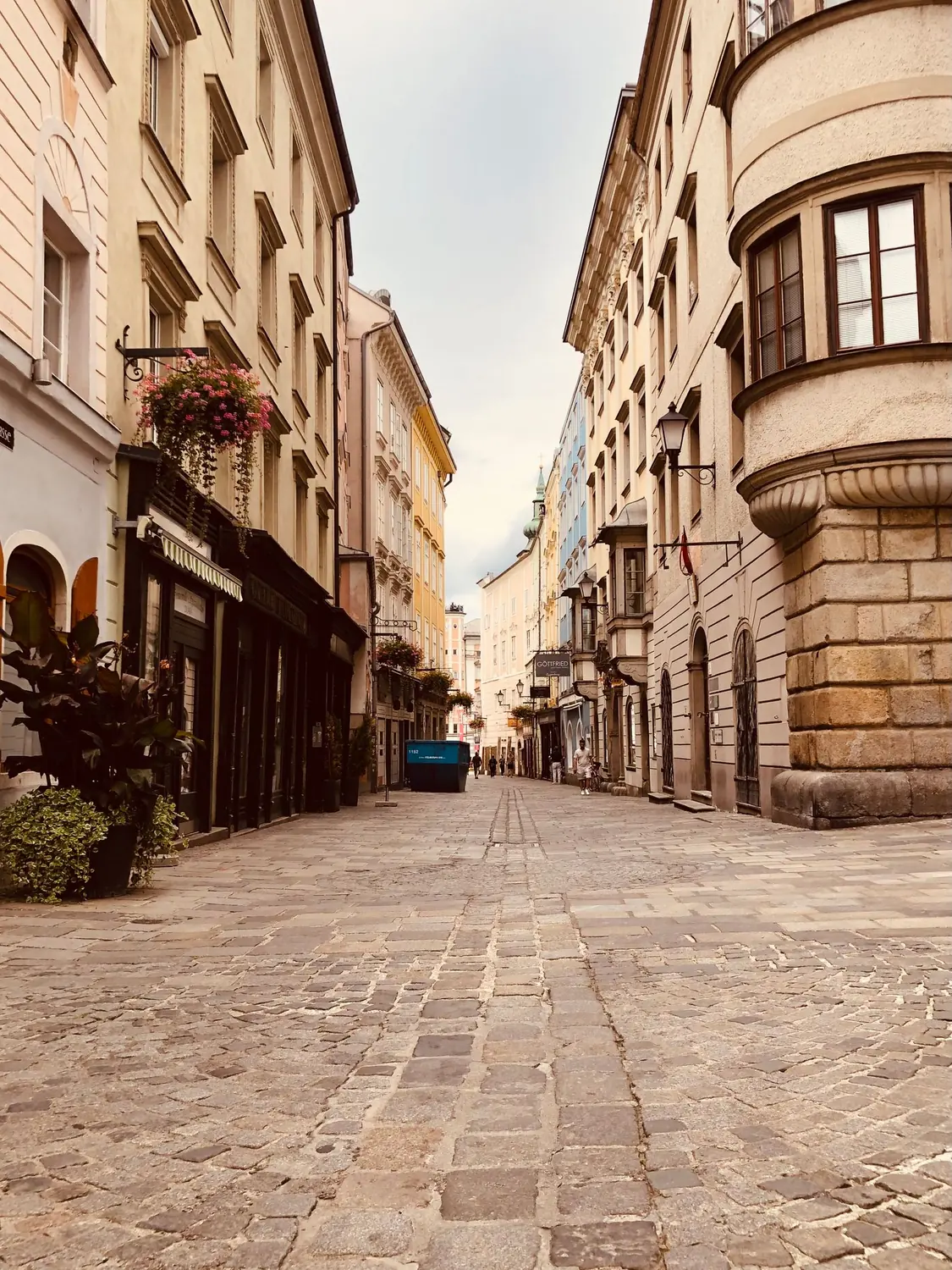
Linz spent decades as Austria's smoky steel town — the VOEST works defined it the way the Opera defines Vienna. That story is over. Upper Austria's capital of roughly 210,000 has reinvented itself as a UNESCO City of Media Arts, with the Lentos museum on the Danube, Ars Electronica drawing a tech crowd every autumn, and a compact old town most cities twice its size would envy. The remarkable part for buyers: the real estate market hasn't caught up with the city. Altbau here still trades well below Vienna or Salzburg levels, with culture, jobs and a river promenade already in place.
Where the Altbau is
- Innenstadt & Altstadt — the baroque core around the Hauptplatz: restored façades, cobbled lanes, the city's most expensive addresses and the smallest stock.
- Urfahr — the north bank: leafy Gründerzeit streets, the university side, Linz's creative quarter and its best value near the centre.
- Froschberg & Makartviertel — solid bourgeois blocks south of the centre, quiet, family-sized flats, popular with owner-occupiers.
- Kaplanhof & Neue Heimat — the workers' quarters: the cheapest Altbau in town, generous rooms, steady gentrification from the east.
Rents and prices
| Area | Typical rent (renovated) | Purchase, per m² |
|---|---|---|
| Innenstadt / Altstadt | roughly 11–14 €/m² | roughly 4.200–6.000 € |
| Urfahr | roughly 9–12 €/m² | roughly 3.500–5.200 € |
| Froschberg / Makartviertel | roughly 8–11 €/m² | roughly 3.300–4.800 € |
| Kaplanhof / Neue Heimat | roughly 7–10 €/m² | roughly 2.600–4.000 € |
Indicative ranges only — Linz sits clearly under Vienna and Salzburg, with a catch-up trend visible in the central districts.
Renovation specifics
- Industrial legacy deserves respect. Near the former industrial zones, historical contamination — soil, groundwater, airborne deposits on façades — should be part of due diligence. Ask for existing reports before you price a renovation.
- Strong state funding. Upper Austria runs some of the country's most active renovation subsidy programmes; combined with federal schemes, a properly planned renovation budget can be offset noticeably.
- OIB rules and rent regulation apply. Austrian OIB technical guidelines govern energy, moisture and window work, and older stock falls under rent regulation (MRG) — relevant for anyone buying to let. Check the building's status early.
The river is Linz's best feature and its practical question: streets near the bank can show damp basements and higher groundwater. Cellar condition and drainage belong in every survey here — our damp and mould guide tells you what to look for.
Who Linz suits
Buyers who want genuine Altbau character at Central-European prices rather than Austrian premium levels; investors looking for yield in a city with real jobs and a university; anyone tied to Upper Austria's industrial economy. Who it doesn't suit: those who need Vienna's depth of amenities — Linz is a mid-size city with big-city culture, not a big city.
Compare with our other city guides, see how Linz stacks up against Vienna, and run the viewing checklist before you commit.
Building history and fabric in Linz
Linz is a Danube and industrial city, and that shapes its Altbau. The compact old town with Baroque townhouses and inner courtyards contrasts with the Gründerzeit residential quarters in Urfahr, near the Römerberg or towards Bulgariplatz, where apartment houses with rendered facades, stucco and tall windows appeared. Between them lie workshop, railway and harbour sites now often repurposed — with different floor loads and completely different floor plans from classic apartment houses.
In residential buildings, brick masonry, timber beam floors, lime plaster and floorboards dominate; the old town adds vaults, thick walls and irregular circulation. The Danube setting and industrial past bring two permanent themes: damp in plinths and cellars, and filled ground or legacy conditions on former commercial plots. Before converting cellars or ground floors, a detailed survey is worthwhile.
Renovating in Linz: Danube, conversion, funding
The Federal Monuments Authority covers historic fabric; conversions and loft work additionally fall under Upper Austria's building code. Near the Danube, flood preparedness and moisture management are part of every plan; for rented property the Tenancy Act applies, and state programmes can be combined with federal grants for thermal renovation.
- Check the ground — on formerly commercial plots, investigate soil, cellars and fill before alteration.
- Manage moisture — renovate plinths and cellars with vapour-open systems and avoid sealed coatings.
- Plan conversion — workshop and hall buildings need different structural, fire and acoustic concepts from housing.
- Bundle funding — coordinate state and federal programmes before commissioning work.
The appeal of Linz's Altbau lies in the mix: compact historic rooms on one side, generous Gründerzeit flats and converted industrial buildings on the other. In all three cases the sequence is the same — dry fabric, intact envelope, then efficient services.
Budget for a Linz renovation
Tick "mid-size city" in the calculator to reflect Linz's trade prices, or plan line by line in our renovation budget guide.
Open the calculatorRent and price figures are researched indicative ranges (November 2026) and vary strongly by street, condition and floor. No paid recommendations.