Altbau in Salzburg: baroque stage set, tight supply
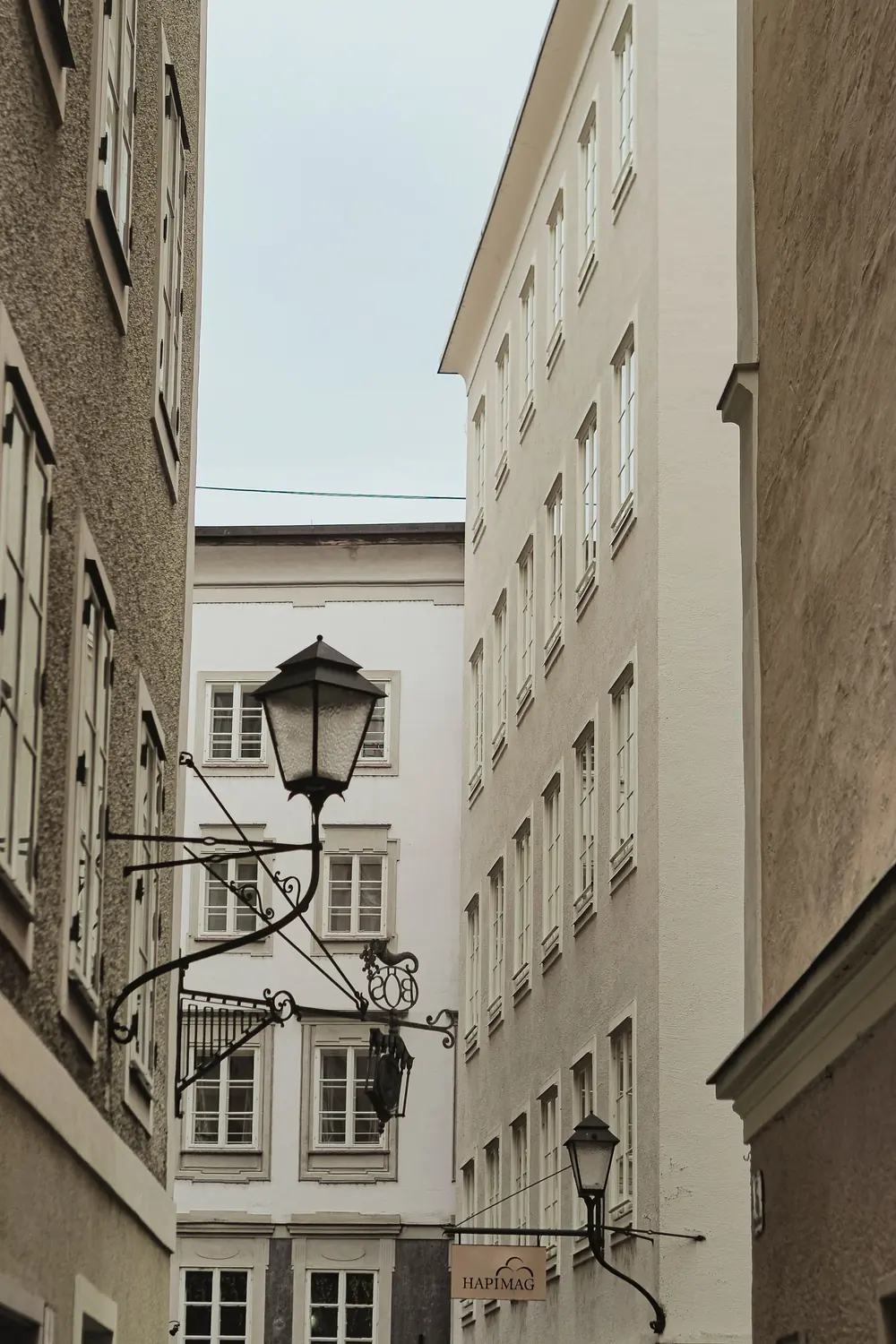
Salzburg is a city-state of roughly 160,000 people wrapped around one of Europe's most complete baroque centres — a UNESCO ensemble of churches, squares and burgher houses pressed between the fortress and the river. The consequence for housing is brutal arithmetic: almost no new supply inside the protected core, strong second-home and tourism demand, and viewlines to the Hohensalzburg that constrain anything taller than a roof ridge. Rents per square metre rank among the highest in Austria, and Altbau is traded more like a scarce collectible than a normal flat.
Where the Altbau is
- Altstadt — the UNESCO core on both banks: painted façades, arcaded courtyards, mostly commerce and prestige. Residential units rarely reach the open market.
- Neustadt — the right-bank bourgeois quarter: solid 19th-century blocks, wide streets, the city's most expensive ordinary addresses.
- Elisabeth-Vorstadt — 19th-century tenements around the station: plain façades, generous floor plans, the most attainable Altbau inside the city.
- Lehen & Schallmoos — the workers' quarters north of the centre: the cheapest stock, roughly 20 minutes on foot from the Altstadt, increasingly discovered by young buyers.
Rents and prices
| Area | Typical rent (renovated) | Purchase, per m² |
|---|---|---|
| Altstadt | roughly 16–22 €/m² | roughly 7.000–11.000 € |
| Neustadt | roughly 14–19 €/m² | roughly 5.800–9.000 € |
| Elisabeth-Vorstadt | roughly 12–16 €/m² | roughly 4.500–6.800 € |
| Lehen / Schallmoos | roughly 10–14 €/m² | roughly 3.800–5.800 € |
Indicative ranges only, and thin ones: with so few transactions per year, a single sale can move the visible level. Treat every Salzburg price as a negotiation, not a benchmark.
Renovation specifics
- Ensemble rules, not just monument rules. Even buildings that are not individually listed sit inside the protected ensemble: roofs, windows, colours and shopfronts need approval. Plan months for the file, not weeks.
- View axes are protected. Sightlines to the fortress and the cathedral dome limit dormers, roof terraces and solar arrays. A permission that would be routine elsewhere can be refused here — check before you design.
- Salzburg Land funding. Regional housing funding supports refurbishment under its own conditions, often tied to energy and heritage requirements. Get advice before tendering, not after.
- Slim walls and mountain weather. Older stock here often has walls of only 25–40 cm, unlike the massive German Altbau. Internal insulation is therefore riskier: driving rain, snow load and freeze-thaw cycles put moisture management at the centre of every refurbishment. Start with the damp and mould basics.
Salzburg restricts secondary residences, and the rules differ between zones and buildings. If you are buying a pied-à-terre rather than a permanent home, confirm in writing how the unit may be used — and whether short-term letting is permitted at all — before you sign. It decides the value of the asset, not just its paperwork.
Who Salzburg suits
Capital-strong buyers who want a genuinely scarce asset in a city that cannot build more; owner-occupiers who value the Altstadt on foot and accept slow approvals; anyone treating property as a long hold rather than a yield play. Who it doesn't suit: yield hunters, first-time buyers on a normal budget, and anyone impatient with heritage offices — Salzburg is beautiful precisely because it says no.
Compare with our other city guides, including Vienna for a larger, regulated market, and take the viewing checklist to every appointment.
Building history and fabric in Salzburg
Salzburg's old town is Baroque and protected as a UNESCO World Heritage site: narrow lanes, tall townhouses with inner courtyards and passageways, and substantial roof structures, joined by the prince-archbishops' representative buildings. Outside the old town, the Neustadt and quarters such as Andräviertel, Nonntal and Mülln gained Gründerzeit apartment houses in the nineteenth century — more generously cut, with stucco facades, tall windows and front gardens.
In the old town the fabric is layered: medieval and Baroque walls, frequently reworked floor plans, timber beam floors, lime plasters and steep roofs converted more than once. Proximity to the Salzach and the tight lanes bring damp and limited ventilation; adjoining houses add sound and fire protection questions. Anyone renovating here faces a demanding heritage baseline — and the fact that almost every visible change touches the World Heritage design framework.
Renovating in Salzburg: World Heritage and old-town rules
The Federal Monuments Authority, the State of Salzburg with its old-town preservation rules and the city administration are involved in practically all building work. Alongside listed status, flood protection by the Salzach, plinth damp and the structural condition of historic roof frames matter; grants for preservation and thermal improvement must be applied for before commissioning.
- Clarify permissions — World Heritage, monument protection and old-town preservation law act simultaneously and need early coordination.
- Assess the roof frame — historic roofs are often altered repeatedly; check structure and fire safety before conversion.
- Manage moisture — lime plaster and vapour-open materials rather than sealed systems, especially in lanes with little air exchange.
- Combine grants — bundle heritage, state and federal programmes for preservation and energy in one plan.
In Salzburg, conserving original fabric is usually the more economical route: every preserved plaster surface, repaired window reveal and fixed roof frame replaces a permission process — and keeps the proportions that define the World Heritage site.
Budget for a Salzburg renovation
Tick "major city" in the calculator to reflect Salzburg's trade prices, or plan line by line in our renovation budget guide.
Open the calculatorRent and price figures are researched indicative ranges (November 2026) and vary strongly by street, condition and floor. No paid recommendations.