Renovating an Altbau in Austria: funding, heritage rules and how they differ from Germany
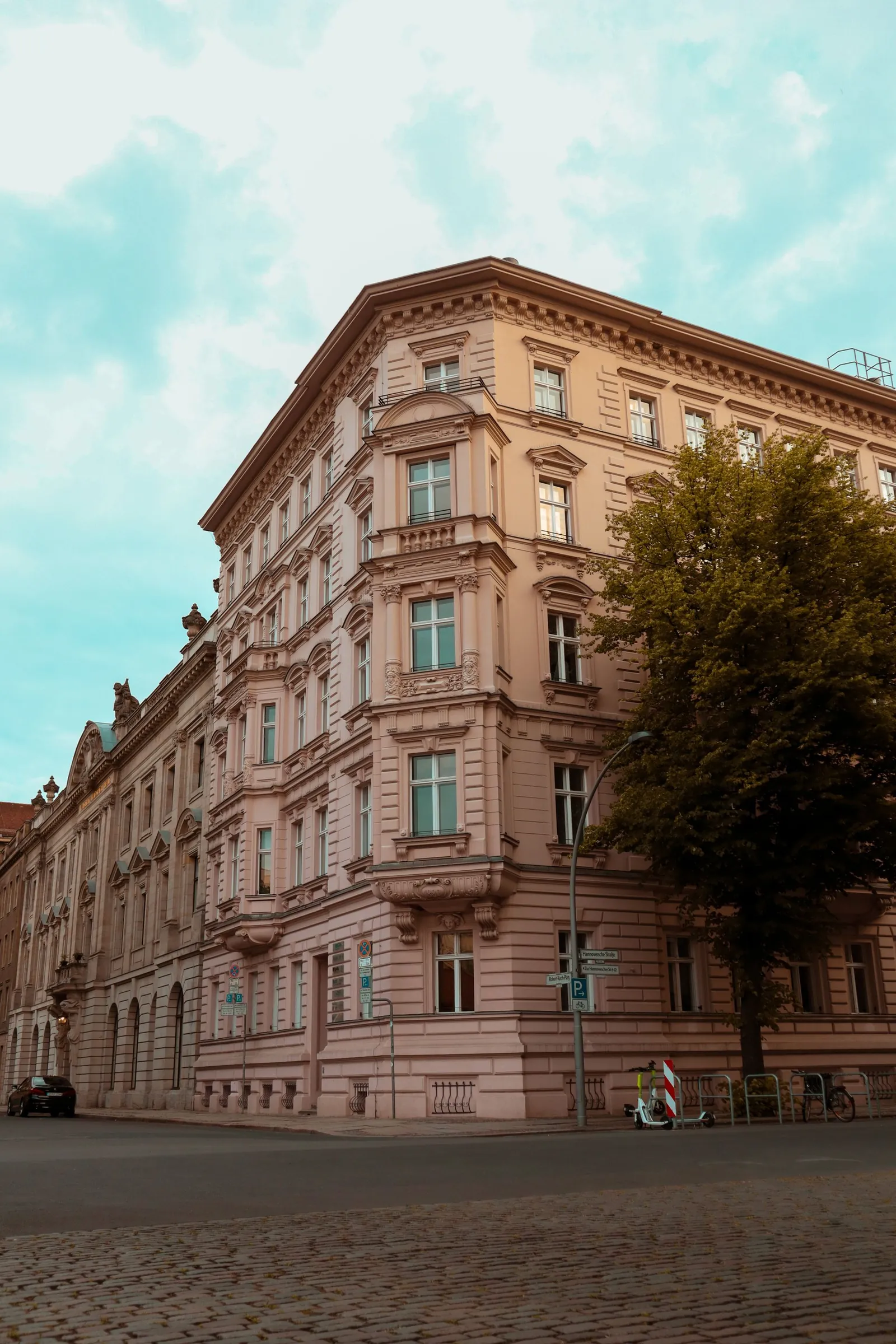
The border between Bavaria and Salzburg is a formality for drivers and a hard reset for anyone renovating. The building on the Austrian side is the same type you know: nineteenth-century brick, Kastenfenster, ceilings well over three metres, a courtyard behind the street wing. Almost everything that governs work on it, however, comes from a different legal system, a different funding architecture and — in Vienna — a different rent law. German owners and German-trained planners arrive with the right instincts and the wrong paperwork. They ask for the energy class, look for the national development bank and assume that a modernisation surcharge will carry the cost. None of those three things exists here in the form they expect.
A different renovation universe, in nine parts
In Germany one federal law, the Gebäudeenergiegesetz, sets the energy requirements for every building in the country, and one national bank, the KfW, sits behind most subsidy programmes. Austria has neither a single code nor a single bank. The OIB-Richtlinien — the model construction guidelines issued by the Austrian Institute of Construction Engineering — are exactly that: models. They become binding only when one of the nine Bundesländer writes them into its own Landesbauordnung, and each Land does so in its own wording and with its own exemptions. All nine have adopted the energy chapter in some form, but the detail that decides your project — the required U-value, the treatment of buildings under protection, whether a heating swap triggers a mandatory package — lives in Land law, and is read by a district authority or a municipal magistrate rather than by a national agency.
The second break with German habit is the metric. An Austrian Energieausweis is built around the HWB, the Heizwärmebedarf, expressed in kWh per square metre and year. It is a calculated demand under a reference climate, not a measured consumption, and it comes with a letter scale that does not map onto the German A+ to H classes. Beside it sits the fGEE, a factor that folds heating, hot water and ventilation into one overall number. Comparing an Austrian HWB figure with a German consumption certificate is comparing a design calculation with a billing history — the numbers can differ by a factor of two for the same building. If you are moving a renovation project across the border, budget for a new assessment rather than a translation.
The third difference is institutional. There is no Austrian KfW. Money for renovation comes through three separate doors — the federal government, the Land, and often the city or the local energy utility — each with its own application form, its own deadline and its own definition of what counts. That is not a detail of administration; it shapes what gets built, because a measure that no programme recognises tends not to happen.
Heritage: the BDA above, the Schutzzone below
Austria's monument protection is federal. The Bundesdenkmalamt (BDA) administers listed buildings under the Denkmalschutzgesetz, which was recast in 2023 — the procedure was reorganised and some deadlines were tightened, but the practical rule did not change: consent comes before the work, not after it. Listing is issued by official decision, and it covers more than the street facade. Stucco ceilings, historic doors, stair rails and even the layout of a representative flat can be part of the protected substance, so an interior refurbishment in a listed building is a heritage procedure as much as a construction project.
Underneath that federal layer sits a municipal one that catches far more buildings. Vienna protects whole quarters through Schutzzonen under § 19 of the Bauordnung für Wien: zones in which the exterior appearance and the characteristic structure of the district are preserved, regardless of whether any individual house is listed. In the Innere Stadt and large parts of the inner districts this means that changing windows, altering the window colour, adding a balcony, replacing a shopfront — sometimes even mounting a solar panel on the street roof — needs approval from the city. The building does not appear in any BDA list. The protection is attached to the street, not to the house. Salzburg, Graz, Linz and Innsbruck run comparable old-town and townscape regimes under their own statutes, usually with a commission that reviews facade changes.
The German comparison is instructive but not transferable. There, monument protection is sixteen separate Land laws, and the tax code offers a deduction under § 7i EStG for heritage work on owner-occupied monuments. Austria's protection is federal and its main incentive is a direct grant rather than a tax deduction, which changes the cash flow of a project entirely. Our guide to Denkmalschutz in the Altbau covers the German side in detail; the Austrian side is best understood as two separate permissions that can both apply to the same window.
The funding landscape: three doors, not one
Start with the federal level. The Sanierungsoffensive bundles the federal renovation programmes, and its best-known instrument is the Sanierungsabsetzbetrag — a time-limited tax credit for thermal renovation. In rough terms it returns a defined share of eligible costs up to a fixed cap, and it runs inside a defined multi-year window rather than permanently. The important structural point is that it is a credit, not an advance payment: you commission the work, pay the invoice, and claim the share back through the tax office. For a project with tight liquidity that matters more than the percentage.
The second door is the Wohnbauförderung of each Land — historically the largest pool of housing money in the country. For renovation it typically offers grants or low-interest loans for thermal measures, frequently with income limits, a minimum building age and a rule that the application must be filed before the work begins. The third door is smaller and more specific: the energy utilities and the climate fund run measure-based programmes — a boiler swap, a photovoltaic system, an energy advice session — that open and close on their own schedule. For listed buildings there is a fourth, the BDA's Denkmalförderung and Städtebauförderung, which typically covers part of the extra cost that heritage-compliant work causes: the difference between a standard window and a restored Kastenfenster, not the whole invoice.
| Programme level | Who runs it | What it typically funds |
|---|---|---|
| Federal — Sanierungsoffensive, Sanierungsabsetzbetrag | Federal climate ministry; claimed through the tax office | Thermal envelope measures and heating swaps, as a share of eligible costs up to a cap, within a fixed multi-year window |
| Land — Wohnbauförderung | Each of the nine Bundesländer | Thermal renovation grants or low-interest loans; often income-capped, usually for the primary residence, application before work starts |
| Utility and climate fund | Wien Energie and the other regional utilities; Klima- und Energiefonds | Single measures — heating replacement, PV, advice — in calls that open and close |
| Heritage — Denkmal- and Städtebauförderung | Bundesdenkmalamt | The additional cost of heritage-compliant work on listed buildings, subject to restoration conditions |
Stacking is normal; exceeding the cost is not. The federal credit, the Land grant and a utility bonus can usually be claimed for the same measure, but the combined support is capped at the eligible cost, and each programme defines eligibility differently — a heat pump that the Land counts may not count as a thermal measure for the federal credit, and a facade repair that satisfies the Schutzzone may not satisfy an insulation requirement. The sequence that works is unglamorous: Land approval before you sign the contract, utility application before installation, federal claim in the following tax return.
What the work looks like on an Austrian Altbau
On a Gründerzeit block in Vienna the package is usually the same five items, and the order of difficulty is almost always the facade. In a Schutzzone a full external insulation system on the street elevation is generally refused, because it changes the depth of the reveals and the profile of the cornices. What passes instead is careful repair of the plaster, cornices and window surrounds, insulation on the courtyard side, and — where the street wall really has to improve — interior insulation. That last one is a specialist job in a brick Altbau: the build-up has to be vapour-open and capillary-active, or the wall behind it sits wet and the stucco on the outside starts to fail. Our guide to interior insulation sets out the build-ups that work.
Windows are the second constraint and the first place where heritage and energy performance actually collide. Overhauling the existing Kastenfenster — new cords, putty, seals and an inner pane — keeps the appearance and usually satisfies the Schutzzone. Replacing them needs approval, matching profiles and a reveal depth that accepts a modern frame. The cost side is in our guide to window costs. Roof and upper-floor insulation is the cheapest kilowatt-hour in the building and rarely controversial. Basement ceiling insulation is invisible, inexpensive and fixes the cold ground floor that tenants complain about. Heating is the last and largest decision: Vienna's district heating network reaches much of the city and is often the pragmatic swap, while a heat pump in an old core needs an outdoor unit that cannot go on the street facade in a Schutzzone and, in a listed building, needs BDA consent as well as a neighbour-law check on noise.
| Measure | Rough indicative cost | Typical funding touchpoint |
|---|---|---|
| Facade repair, courtyard insulation, paint | Roughly €150–350 per m² of facade area, scaffolding included | Land Wohnbauförderung plus the federal credit; Schutzzone approval first |
| Kastenfenster overhaul or window replacement | Roughly €400–800 per overhauled element; €700–1,300 per new timber window | Federal credit and Land programme; heritage conditions if listed |
| Roof or upper-floor insulation | Roughly €60–130 per m² of insulated area | Land programme, sometimes a utility bonus |
| Basement ceiling insulation | Roughly €35–80 per m² | Usually only inside a larger Land package |
| Heating swap — gas to district heating or heat pump | Roughly €12,000–30,000 for a building-scale system; less for a flat-level unit | Federal and Land programmes, utility call; BDA consent if listed |
Add the soft costs that Austrian projects carry — permits, Energieausweis, a technical survey before the funding application — and the total lands where our renovation budget guide puts a full Altbau package. The percentages shift, the structure does not.
The MRG wrinkle: why Vienna calculates differently
Here is the difference that surprises German landlords most. In Germany a modernisation surcharge allows a defined share of the cost to be passed into the rent, capped and spread over years; the building pays for itself through the tenancy. Austria's Mietrechtsgesetz works the other way around. In the regulated Viennese stock — Richtwertmiete and Kategoriemiete, which cover most old flats — the rent is fixed by law, and keeping the building in sound condition is the landlord's obligation, financed out of that rent rather than through a surcharge. There are instruments to raise rent after improvements, and a procedure for larger renovation packages agreed with the majority of the house, but both are narrow, procedurally demanding and calculated in their own way. Neither is a general pass-through of construction cost.
The practical consequence is visible on every second street corner: a heritage-compliant facade that cannot be amortised through rent tends not to be built unless grant money closes the gap. That is why the funding landscape in Austria is not a nice-to-have on top of the project — it is the project's business case. How the rent instruments actually work, and what a tenant can and cannot be asked to pay, is set out in our guide to Austrian tenancy law.
The practical path
- Check the Schutzzone before anything else. The city's building authority can tell you whether the address falls inside a designated zone, and which facade changes are treated as approval-worthy. In Vienna this is a five-minute question with a long consequence.
- Ask the BDA whether the building is listed. A written enquiry is better than a look at a database, because listing can cover parts of a building that no photograph shows.
- Identify the Land programme and read its deadlines. Income limits, building age, owner-occupancy and the rule that the application precedes the contract decide whether the project is eligible at all.
- Check the stacking rules before promising yourself the sum. Federal, Land and utility money can usually be combined, but the total is capped at eligible cost and each pot defines eligibility differently.
- Bring the energy assessor in early. The HWB baseline, the measure package and the proof required for the funding file are one document set; an assessor who knows the programmes writes it once instead of three times.
- Do not demolish anything before the approvals exist. In a listed building, removing a door or a stove can be a heritage offence; in a Schutzzone, an unauthorised window can be ordered back out.
Is the building listed by the Bundesdenkmalamt? Is it inside a Schutzzone designated by the city? Which Land's Wohnbauförderung applies to the address — and does the programme still accept applications this year? Answer those three before you request a single quote. The answers decide the approval route, the funding route and, in Vienna, whether the project can be financed at all.
Paperwork first, then scaffolding
Renovating across the border is less about different bricks than about a different sequence. In Germany the reflex is to design, then apply for the permit, then look for the subsidy. In Austria the order is closer to: establish which protections apply, establish which programmes apply, then design something that satisfies both. Do that and the Austrian Altbau is a generous building to work with — thick walls, repairable windows, rooms that forgive a lot. Skip it and you will meet the Bundesdenkmalamt, the Schutzzone and the tax office in the wrong order, which is the expensive order.
Funding programmes and tax rules change — check the current terms with the relevant Land or authority and a tax advisor before you sign anything. For the vocabulary of the Austrian system, from HWB to Wohnbauförderung, see our glossary; for the question of what an old building may and may not be asked to do, our piece on grandfathering and Bestandsschutz is the place to start.
Planning work on an old building?
Windows, wiring, heating, floors — model every line item before you get quotes.
Open the calculatorCountry guide for orientation — funding programmes and tax rules change; confirm current terms with the relevant Land or authority and a tax advisor. Questions for the editors: hello@altbau.com